Hearing the terrifying sounds of a violent dog attack instantly triggers a massive, biological urge for humans to physically intervene and save lives. Rushing directly into the middle of a high-arousal canine conflict with completely bare hands places the rescuer directly in the path of lethal, involuntary aggression. A single redirected snap can easily catch a wrist or thigh, instantly severing major arteries and causing a rapid, catastrophic loss of life before paramedics ever arrive.

The definitive solution requires completely bypassing human emotion and strictly deploying advanced, mechanical separation tactics during an active crisis. By understanding the terrifying biology of adrenaline blindness, utilizing heavy environmental shields, and recognizing lethal bite zones, bystanders can safely stop a violent attack. Maintaining absolute physical distance and deploying the correct safety hardware guarantees handlers survive the encounter without becoming the next tragic victim.
Newark Dog Attack: Overview Mind Map
- The Incident: The fatal April 2026 mauling of 54-year-old Kenney Leake involving three pit bulls at the Georgia King Village complex.
- The Biological Threat: Massive canine adrenaline spikes causing complete “adrenaline blindness” and immediate loss of social recognition.
- The Lethal Strike: How a seemingly minor defensive bite to the wrist or forearm can instantly sever the radial or brachial artery.
- Mechanical Separation: Deploying break sticks, slip leads, and the two-person “wheelbarrow” technique to safely pry fighting dogs apart.
The Kenney Leake Tragedy: Understanding The Conflicting Reports
The April 2026 fatal dog attack involving Kenney Leake in Newark’s Georgia King Village remains heavily clouded by conflicting eyewitness reports and ongoing police investigations. Initial public safety statements claimed the fifty-four-year-old father bravely intervened to break up a violent fight between three pit bulls known to him. According to this original narrative, the dogs completely turned their aggression toward Leake, severely mauling him before he managed to temporarily escape and lose consciousness.+1
However, subsequent reports from local animal control personnel completely challenged this specific sequence of events. The alternate account suggests the dogs were not actively fighting each other, but rather a heated argument broke out between family members and the dogs’ owner. In the ensuing chaos, one of the dogs allegedly bit Leake defensively on the wrist, accidentally striking a main artery and causing immediate, fatal exsanguination.
Regardless of which specific narrative ultimately proves true in court, the underlying behavioral lesson remains incredibly urgent and absolutely vital. High-stress environments, whether it involves dogs fighting each other or humans violently arguing, actively push canines completely over their cognitive thresholds. Once a dog crosses into pure survival mode, their bite placement becomes completely unpredictable, turning seemingly minor scuffles into highly lethal encounters.
🚨 Vet Fact: During a highly aggressive fight, a dog’s internal nervous system floods with massive amounts of cortisol and adrenaline. This intense chemical cocktail drastically dulls their perception of pain, meaning physical blows or kicks from humans will absolutely not stop the attack and will likely escalate the dog’s defensive ferocity.
Advanced Insight 1: The Physiology of a Fatal Wrist Bite
Generic pet safety articles constantly warn about dogs biting the face or neck, entirely ignoring the massive vulnerability of human extremities. The Newark tragedy brutally highlights how incredibly fragile the human wrist and forearm truly are during a severe canine encounter. The radial and ulnar arteries run exceptionally close to the surface of the skin, completely unprotected by thick muscle or heavy bone structure.
When a powerful breed with massive jaw pressure bites down on a human wrist, the canine teeth easily slice directly through these critical blood vessels. A completely severed radial artery causes catastrophic, massive blood loss in a matter of mere minutes. Bystanders frequently panic at the sight of heavy arterial bleeding, entirely failing to apply the immediate, life-saving tourniquet required to halt the exsanguination.
Understanding this severe anatomical vulnerability dictates exactly why humans must never use their hands to separate fighting dogs. Reaching into a chaotic dog fight essentially places the most fragile, highly vascular part of the human body directly into a fast-moving meat grinder. Elite handlers absolutely refuse to risk their hands, opting strictly for long-handled tools or heavy physical barriers to execute the separation.
Advanced Insight 2: The Reality of Adrenaline Blindness
A massive, highly dangerous misconception exists that a beloved family dog will never bite their primary owner, even during a violent fight. Elite behaviorists understand a terrifying physiological state clinically known as “adrenaline blindness.” When a dog engages in heavy combat or perceives a massive physical threat, their amygdala completely hijacks the logical brain.
In this hyper-aroused state, the dog completely loses all social recognition and cognitive processing capabilities. They literally do not know who is grabbing their collar; they simply register a brand-new, highly aggressive physical threat entering the combat zone. A dog experiencing absolute adrenaline blindness will violently bite their owner, a random bystander, or a familiar family friend without a single second of hesitation.
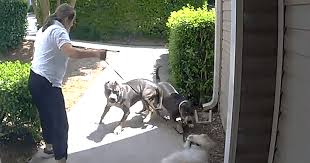
Consider the highly terrifying reality of an animal control officer responding to a frantic neighborhood dispute in Texas. Two massive mastiff mixes began violently fighting, and a well-meaning neighbor attempted to grab one of the dogs directly by the leather collar. The highly aroused dog instantly whipped around and severely crushed the man’s forearm, operating entirely on pure, involuntary bite redirection.
Had the neighbor utilized a simple pop-up umbrella as a visual shield instead of bare hands, the devastating emergency room visit would have been completely avoided.
🐾 Snoutbit Pro-Tip: Never attempt to pull a dog backward by their tail or hind legs if you are entirely alone during a severe attack. Pulling a highly aroused dog backward without a secondary person controlling the other animal simply gives the opposing dog a free, completely undefended target to aggressively maul.
Advanced Insight 3: The Threat of Human Argument Escalation
If the secondary reports surrounding the Newark tragedy are completely accurate, it highlights how intensely dogs absorb chaotic human conflict. Dogs are highly empathetic pack animals that constantly monitor the emotional state and physical body language of their handlers. When humans begin screaming, posturing aggressively, or violently arguing, the dog’s own nervous system instantly spikes in direct sympathy.
Certain specific breeds, especially highly loyal working dogs and powerful guardian breeds, possess a massive genetic drive to protect their perceived pack. A loud human argument easily triggers this deep biological guarding instinct, causing the dog to aggressively intervene to stop the perceived threat. The dog does not understand human words; they only recognize the intense, highly threatening energy radiating across the room.
To prevent devastating escalation, handlers must immediately isolate their dogs the exact second a human confrontation begins to heavily escalate. Securing the dog behind a solid bedroom door completely removes them from the highly volatile emotional crossfire. Failing to manage the environment practically guarantees the dog will attempt to forcefully neutralize the chaotic human behavior using their teeth.
Take the sobering reality of a rescue volunteer attempting to manage a highly tense dog introduction at a local community park. When two terriers began stiffly posturing, the owners completely panicked and started screaming hysterically at one another. The massive influx of chaotic human energy instantly pushed the dogs over the edge, turning a simple posturing display into a violent, bloody brawl.
By the time professional animal control arrived, both owners had sustained severe, highly preventable bite wounds strictly due to their own emotional escalation.
🚨 Vet Fact: Puncture wounds from canine teeth are incredibly deceptive, often looking like tiny, harmless holes on the surface of the human skin. Below the surface, the violent shaking motion completely detaches the underlying muscle and fatty tissue, creating massive “dead space” pockets highly prone to catastrophic, rapid bacterial infections.
Mechanical Separation: Break Sticks and Barriers
Safely stopping a severe dog attack requires entirely abandoning bare hands and aggressively deploying specialized mechanical tools. For powerful, “gripping” breeds that possess an intense biological drive to grab heavily and absolutely refuse to let go, a specialized tool known as a break stick becomes an absolute necessity. A break stick is a dull, wedge-shaped piece of highly durable wood or heavy-duty plastic safely inserted directly behind the dog’s large canine teeth.
By forcefully twisting the stick exactly like a motorcycle throttle, the wedge physically pries the incredibly powerful jaw muscles open. This specific tool completely forces the dog to release their grip without causing severe physical damage to the animal’s mouth. Professional dog walkers and elite shelter staff routinely carry a break stick directly on their belt when managing heavy-duty, powerful breeds in public spaces.
When caught entirely alone during a violent dog attack without professional tools, handlers must rapidly scan the environment for massive physical barriers. Elite shelter volunteers frequently utilize large, flat pieces of plywood, heavy plastic garbage cans, or thick winter coats to aggressively shove directly between fighting dogs. Pushing a highly solid object directly into the combat zone completely severs the dogs’ visual line of sight, frequently shattering the deadly, locked-on predatory focus.
🐾 Snoutbit Pro-Tip: If a loose, highly aggressive dog approaches while walking down the street, aggressively toss a massive handful of incredibly high-value treats directly at their face. This brilliant “treat bomb” tactic frequently completely breaks their predatory focus, forcing their brain to instantly switch from fighting mode to scavenging mode, allowing safe escape.
The Wheelbarrow Method For Coordinated Separation
If professional tools are unavailable, the safest, most widely recommended professional strategy for separating two actively engaged dogs is the “Wheelbarrow Method.” This highly specific tactic absolutely requires exactly two relatively calm adults acting in complete, simultaneous synchronization. Attempting this method entirely alone practically guarantees severe, involuntary bite redirection from the unsecured animal.
Each person slowly approaches a dog from the very rear, completely keeping their hands entirely away from the highly dangerous mouth and neck area. The handlers firmly grab the dogs directly by the back legs, lifting the hind paws entirely off the ground exactly like lifting a heavy wheelbarrow. Both handlers then rapidly walk backward, physically forcing the dogs to immediately release their grip simply to catch their balance.
Once the dogs are successfully pulled apart, handlers must immediately turn their bodies in a tight circle while continuously walking backward. This highly specific circular motion forces the dog to constantly cross their front legs to avoid falling entirely flat on their face. A dog furiously scrambling to stay upright physically cannot whip around to bite the handler firmly holding their rear legs.
What To Do Next
- Construct a Tactical Go-Bag: Immediately purchase a highly durable, automatic pop-up umbrella and a specialized wooden break stick online today. Attach these specific items directly to the daily walking gear; the umbrella acts as an instant, terrifying visual shield capable of entirely stopping a charging dog, while the break stick serves as the ultimate fail-safe for locked jaws.
- Take a Human First-Aid Course: Sign up for an emergency “Stop the Bleed” or basic trauma first-aid class hosted by a local hospital or community center this week. Learning exactly how to properly apply a tactical tourniquet to a severely bleeding human extremity is the absolute most critical skill required to save a life following a catastrophic canine bite.
Disclaimer: The content on Snoutbit.com is for informational and educational purposes only and is not intended to replace professional veterinary advice, diagnosis, or treatment. Always consult with your veterinarian before making significant changes to your dog’s diet, exercise routine, or health regimen.