
Bringing a brand-new, completely adorable puppy into the living room frequently triggers an intense, unexpected wave of sheer exhaustion. The joyful daydream of peaceful neighborhood walks rapidly dissolves into the harsh reality of shredded baseboards, bleeding ankles, and constantly scrubbing urine out of the expensive rug. Sleep deprivation heavily sets in, causing severe emotional breakdowns and making exhausted handlers desperately wonder if bringing a dog home was a massive mistake.

The definitive solution requires immediately stepping entirely away from outdated, highly forceful punishment techniques or generic internet advice. Successful puppy training strictly demands deploying a highly clinical, biologically appropriate behavioral blueprint that actively sets the young canine up for flawless victories. By engineering a highly structured daily routine and brilliantly managing the environment, handlers can effortlessly transform a chaotic landshark into a deeply bonded, highly obedient companion.
The Desperate Owner’s Blueprint: Overview Mind Map
- The Sleep Deficit Trap: Understanding exactly why keeping a puppy awake to “tire them out” violently backfires into severe aggression.
- The Umbilical Protocol: Why giving a brand-new puppy free roaming access to the hallway practically guarantees massive housebreaking failure.
- Prey-Drive Triggers: Recognizing why outdated advice like “yelping like a puppy” actively encourages significantly harder, more painful human biting.
- Extinction Bursts: Decoding the psychological reality of crate crying and learning exactly when to completely ignore the tantrums.
🚨 Vet Fact: A rapidly growing puppy biologically requires an absolute minimum of eighteen to twenty hours of deep, uninterrupted sleep every single day. When a young dog entirely fails to secure this massive amount of rest, their developing brain violently floods with raw cortisol, severely compromising their immune system and triggering highly erratic hyperactivity.
Advanced Insight 1: The “Two-Down” Forced Nap Schedule
Generic pet blogs constantly instruct overwhelmed owners to simply play with their hyperactive puppy until the dog is completely exhausted. Elite behaviorists understand this is a massive tactical error that completely destroys the fragile canine nervous system. Puppies are the exact biological equivalent of overtired human toddlers; they entirely lack the mental off-switch required to voluntarily put themselves to sleep when exhausted.
When a puppy stays awake for too long, their central nervous system crosses a highly dangerous threshold of severe over-arousal. This specific exhaustion perfectly mimics aggressive behavior, resulting in the dreaded evening “zoomies,” violent leash biting, and relentless nipping at human clothing. Handlers must aggressively implement a strict, non-negotiable “Two-Down” daily schedule to safely regulate the puppy’s internal brain chemistry.
For every single hour the puppy is actively awake, playing, or training, they must be safely placed in a covered, quiet crate for exactly two full hours of mandated sleep. This highly clinical routine forcefully drops the puppy’s baseline adrenaline levels, completely preventing the violent meltdowns entirely caused by severe biological fatigue. A fully rested puppy possesses massive cognitive focus, becoming incredibly eager to learn complex obedience commands without throwing a highly frustrating temper tantrum.
Advanced Insight 2: The Umbilical Cord Potty Strategy
The absolute biggest, highly destructive mistake new owners make is granting a tiny puppy completely free, unsupervised access to the entire living room. A young dog physically lacks full biological bladder control until they are roughly sixteen weeks of age. Allowing them to wander entirely out of sight practically guarantees they will quietly squat behind the sofa, permanently establishing the living room as an acceptable indoor bathroom.
To completely shortcut the housebreaking process, handlers must instantly deploy the highly advanced “umbilical cord” tethering method. The exact second the puppy is outside of their secure sleeping crate, they must be physically attached to the human handler using a standard six-foot nylon leash. This brilliant spatial management entirely prevents the puppy from secretly sneaking away to heavily soil the dining room floorboards.

Consider the highly realistic reality of raising a brilliantly intelligent, energetic Village Dog and Shiba mix named Anggu. During early puppyhood, Anggu was entirely restricted from free-roaming the house and remained physically tethered to the handler’s waist belt during all active waking hours. Because the handlers were forcefully required to notice every single subtle physical sniff or sudden circle, Anggu was rushed outside instantly, resulting in a completely fully housebroken dog in exactly fourteen days.
🐾 Snoutbit Pro-Tip: Never clean a massive indoor urine puddle using standard grocery store bleach or heavy ammonia-based floor soaps. The canine olfactory system violently misinterprets chemical ammonia as a highly aggressive territorial marker left behind by a strange animal, heavily encouraging the puppy to aggressively pee in the exact same spot tomorrow.
Advanced Insight 3: The “Reverse Time-Out” for Severe Biting
The modern pet industry remains heavily saturated with completely unregulated, highly dangerous advice regarding severe puppy biting. Countless trainers instruct owners to loudly yelp or aggressively squeal exactly like an injured littermate when the puppy’s sharp teeth physically contact human skin. This completely outdated strategy acts exactly like biological rocket fuel, violently triggering the puppy’s primitive predatory drive and making the human hand seem like a highly exciting squeaky toy.
True bite inhibition strictly requires executing a completely emotionless, highly robotic behavioral response universally known as the “Reverse Time-Out.” The exact micro-second the puppy’s sharp teeth physically make contact with skin or clothing, the human must immediately become entirely boring. The handler must instantly stand up, silently cross their arms, and completely step over a physical baby gate, entirely removing all physical access to the fun human playmate.
This highly intense, deeply repetitive training completely rewires the dog’s central nervous system and entirely shatters the biting loop. The puppy brilliantly learns that violent teeth contact acts as a massive negative punishment, entirely turning off the exciting game. Over several highly consistent days, the puppy organically chooses to utilize a highly soft mouth to successfully keep their beloved human entirely engaged in the play session.
Surviving the Crate Training Extinction Burst
Crate training is an absolutely non-negotiable safety tool, yet massive amounts of desperate owners completely abandon the process the exact moment the puppy begins violently screaming. This severe crying frequently causes immense human guilt, convincing handlers that the puppy is suffering from severe psychological trauma. Elite behaviorists recognize this initial screaming completely differently: it is a highly predictable psychological phenomenon clinically known as an extinction burst.
When a puppy realizes that crying inside the crate no longer successfully results in immediate human rescue, their brain attempts to escalate the behavior. They will cry significantly louder, aggressively dig at the plastic pan, and violently bite the metal bars in a final, desperate attempt to secure freedom. Handlers absolutely must wear heavy noise-canceling headphones and completely ignore this violent escalation, provided the puppy’s physical safety is completely secure.
Take the intense reality of managing a highly traumatized rescue puppy successfully pulled from a chaotic, deeply neglected stray environment. The terrified puppy originally screamed for three consecutive hours inside the crate during the first night, aggressively testing the new environmental boundaries. By completely feeding all daily meals directly inside the crate and entirely ignoring the frantic tantrums, the handlers beautifully transformed the terrifying metal box into a highly comforting, deeply secure biological den.
🚨 Vet Fact: A rapidly growing puppy physically loses their sharp, needle-like deciduous baby teeth exactly between four and six months of age. This highly painful biological process causes severe, relentless gum inflammation, heavily driving the massive urge to violently chew on completely inappropriate household items like wooden baseboards and dangerous electrical cords.
The Power of Environmental Management
The ultimate secret to raising a completely flawless adult dog is strictly preventing the puppy from ever rehearsing bad behaviors in the first place. Every single time a puppy successfully steals a shoe or aggressively counter-surfs for dropped food, the behavior becomes heavily neurologically hardwired. Handlers must aggressively utilize tall exercise pens, secure baby gates, and completely clear floorboards to actively deny the puppy the biological opportunity to make the wrong choice.
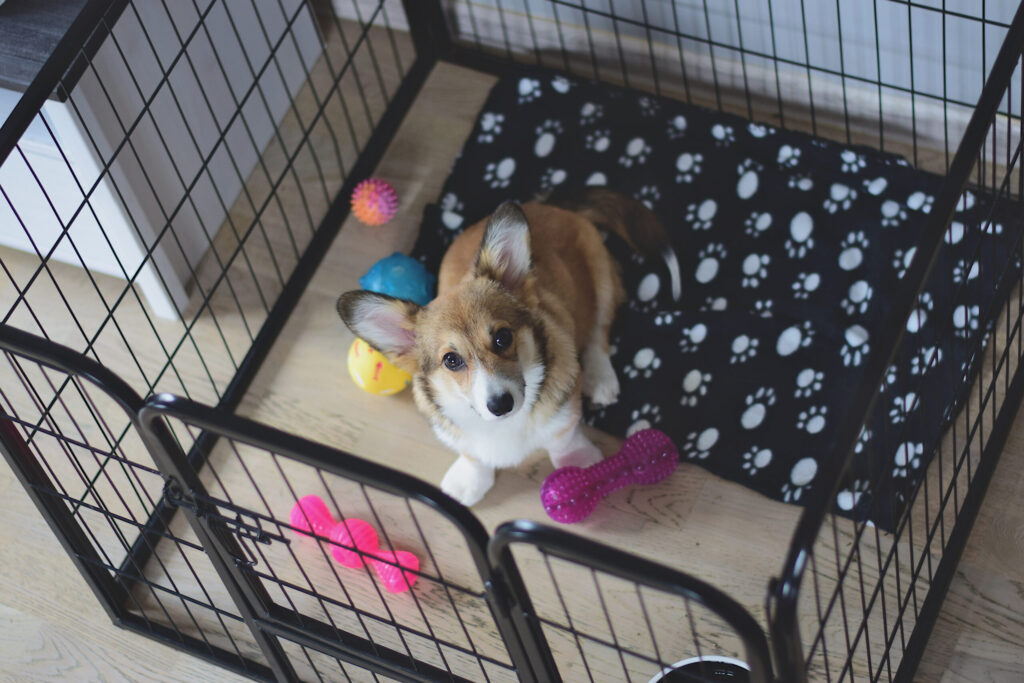
Puppy proofing is absolutely not a one-time event; it is an incredibly fluid, daily lifestyle change required to successfully protect the fragile animal. Actively picking up laundry, securing dangerous trash cans behind heavy cabinet doors, and removing all toxic houseplants guarantees absolute physical safety. This massive environmental control completely eliminates the highly frustrating need to constantly yell “no,” gracefully preserving the deep bond of trust between the handler and the dog.
When the environment is flawlessly managed, training simply becomes a highly joyful game of aggressively rewarding the correct choices. Utilizing pungent, insanely high-value rewards like plain boiled chicken completely overrides a distracted puppy’s highly chaotic attention span. The biological payout must be massive enough to easily and entirely override any lingering environmental distractions the puppy might physically experience during a session.
What To Do Next
- Deploy the Leash Tether: Take a standard, completely lightweight six-foot nylon leash and physically clip it directly to a sturdy belt loop right now. Ensure the puppy remains entirely tethered to the handler’s physical body whenever they are freely awake inside the house today, flawlessly guaranteeing the rapid detection of every single pre-potty warning sign.
- Establish the Nap Sanctuary: Walk directly to the puppy’s wire crate this exact afternoon and heavily drape a dark, completely breathable blanket entirely over the top to violently block out visual stimulation. Actively enforce exactly one highly structured, mandatory two-hour nap inside this darkened sanctuary immediately following their next aggressive play session to successfully prevent a massive, over-tired behavioral meltdown.
Disclaimer: The content on Snoutbit.com is for informational and educational purposes only and is not intended to replace professional veterinary advice, diagnosis, or treatment. Always consult with your veterinarian before making significant changes to your dog’s diet, exercise routine, or health regimen.