Key Takeaways
- The Reality of Confinement: Senior dogs rescued from commercial breeding or testing facilities often suffer from severe physical atrophy and profound sensory deprivation.
- Understanding Neophobia: An intense, paralyzing fear of novel stimuli is the most common behavioral hurdle for dogs that have lived in sterile, unchanging environments.
- The Healing Power of Patience: True rehabilitation cannot be rushed or forced; it relies entirely on empowering the dog to make their own independent choices.
- Unbreakable Resilience: Even after a decade of severe neglect, the instinctual joy of a dog can be miraculously reawakened with the right environmental support.
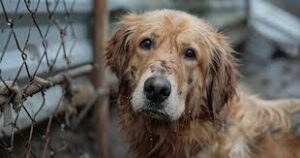
His paw pads were as smooth and pink as polished glass. For ten agonizing years, they had never touched anything except the freezing, rusted wire of a commercial breeding cage. He pressed his trembling, emaciated body against the back of the plastic transport crate, his oversized ears pinned flat against his scarred skull.

The bright afternoon sun aggressively pierced his cloudy, cataract-filled eyes, forcing him to squeeze them tightly shut against the glare. The deafening chirp of a nearby robin caused him to violently flinch, a heartbreaking reflex born from a decade of sterile, terrifying silence. He was completely paralyzed by the overwhelming, unpredictable vastness of the outside world.
The Invisible Prisoner of a Metal World
They simply called him Number 84, a cold designation tattooed directly into the delicate skin of his inner ear. He was an older beagle, finally discarded by an animal testing facility after his failing, exhausted body could no longer endure the grueling schedule. His entire existence had been heavily confined to a barren metal box, devoid of soft blankets, squeaky toys, or a single shred of human compassion.
Beagles are notoriously targeted for these harsh environments specifically because of their incredibly sweet, deeply forgiving, and docile genetic nature. This extreme, prolonged isolation induced a profound state of learned helplessness within the senior hound’s central nervous system. He no longer barked, whimpered, or fought against the heavily gloved hands that occasionally pulled him from his tiny, rusted enclosure.
He had simply surrendered his fragile body to his bleak reality, his spirit entirely broken by the cruel, repetitive machinery of his daily life. His back muscles were severely atrophied from a lifetime of extreme physical restriction, making his hind legs constantly shake under his own meager weight. The rescue team knew that physically pulling him from the facility was only the very first step in an incredibly massive behavioral mountain.
The Overwhelming Weight of Freedom
When the rescue transport van finally parked in a quiet, deeply shaded suburban driveway, Barnaby completely refused to move. The dedicated volunteers gently opened the crate door, offering a clear, unobstructed path to a sprawling, securely fenced-in backyard. Barnaby just stared blankly at the vibrant green lawn, his breathing shallow and rapid as he experienced a severe episode of sensory overload.
To a dog raised in a sterile, temperature-controlled laboratory, the soft, swaying blades of grass looked like a terrifying, unpredictable ocean. The gentle breeze carrying the complex scents of damp earth, blooming jasmine, and distant wildlife completely short-circuited his highly deprived olfactory system. He retreated further into the plastic shell, aggressively tucking his tail between his trembling back legs in a desperate bid for invisibility.
A seasoned foster volunteer sat quietly on the grass a full ten feet away, deliberately avoiding all direct eye contact with the terrified hound. She didn’t use a high-pitched, coaxing voice or attempt to physically drag the trembling beagle out of his safe, plastic sanctuary. She simply waited in the warm sun, allowing the dog to safely process the massive influx of environmental data at his own excruciatingly slow pace.
Snoutbit Tip: Understanding Canine Neophobia in Rescue Dogs
What is Neophobia? Neophobia is an intense, completely paralyzing fear of anything new or unfamiliar in a dog’s immediate environment. For dogs raised in barren environments like testing labs or commercial puppy mills, the sudden introduction of normal household sights, sounds, and textures triggers a massive cortisol dump and sheer panic.
How it Manifests in Trauma Survivors: A highly neophobic dog will not curiously explore a new yard or enthusiastically sniff a new toy. They will often “pancake” completely flat to the floor, violently shake, or attempt to aggressively retreat into dark, tight spaces like closets or the very back of a crate.
The Best Clinical Rehabilitation Strategy: Never force a traumatized dog into a terrifying situation using the outdated “flooding” technique. You must absolutely practice extreme, silent patience, allowing the dog to slowly approach the new stimulus entirely on their own terms. Rewarding the tiniest, almost invisible increments of bravery with high-value treats is the only way to permanently rewire their terrified brains.
The Chemistry of Canine Courage
Forty-five agonizing minutes slowly ticked by in the quiet, peaceful afternoon heat. Finally, the intoxicating, primal scent of the natural earth began to overpower Barnaby’s deeply ingrained, paralyzing fear of the unknown. He slowly lowered his graying, scarred muzzle to the very edge of the plastic crate, sniffing the fresh air with frantic, twitching urgency.
He extended one frail, trembling front paw, letting it hover mere inches above the soft turf for what felt like an absolute eternity. When his smooth paw pad finally made direct contact with the cool, damp grass, his entire body violently jolted in shock. He didn’t pull away; instead, he left his paw firmly planted, his wide eyes rapidly processing the soft, supportive texture he had been denied his entire life.
Slowly, deliberately, he pulled his shaking back legs out of the crate, his belly hovering just millimeters above the green lawn. He took three clumsy, heavily wobbling steps forward, his atrophied muscles struggling to properly balance on the uneven, natural terrain. Barnaby suddenly stopped dead in his tracks, his wet nose dropping deeply into the roots of a small, fragrant clover patch.
A Rebirth in the Suburbs
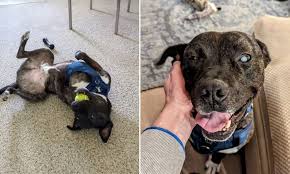
What happened next left every single seasoned rescue volunteer on the lawn in uncontrollable, quiet tears. Barnaby let out a long, shuddering sigh, and his frail front legs suddenly buckled beneath him onto the soft earth. He didn’t fall out of fear; he intentionally dropped his chest into the grass and began to frantically, joyously rub his face against the ground.
He rolled entirely onto his back, bravely exposing his vulnerable, bare belly to the bright, warm sky for the very first time. His back legs kicked wildly in the air, a beautiful, deeply instinctual canine behavior that had been buried alive for an entire decade. The sterile, cruel metal cage was permanently gone, violently replaced by the intoxicating, infinite smells of the living, breathing natural world.
A soft, raspy sound escaped his throat, slowly building into a quiet, joyful beagle bay that he had likely never used before. He scrambled clumsily back to his feet, his tail—previously tucked tightly between his legs—giving a tiny, hesitant, rhythmic wag. The heavy ghost of the commercial testing facility was finally shedding its invisible chains right there in the bright suburban sunshine.
The Golden Years He Always Deserved
Today, Barnaby is entirely unrecognizable from the terrified, shaking shell of a dog that arrived in that dark plastic transport crate. He was officially and permanently adopted by the incredibly patient foster mother who sat in the grass with him on that very first day. His smooth paw pads have finally developed healthy, tough callouses from months of confident, happy strolls around the local neighborhood park.
He still heavily possesses a few lingering quirks from his dark past, occasionally hoarding his plush squeaky toys in the far corner of the living room. But when the glass back door slides open every single morning, he charges out onto the lawn with the unadulterated, chaotic enthusiasm of a young puppy. He spends his hard-earned golden years heavily napping in the brightest sunbeams, completely surrounded by premium orthopedic beds and absolute, unconditional love.
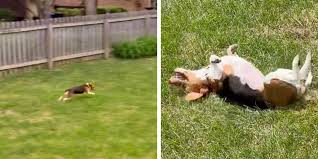
Barnaby’s breathtaking physical and emotional transformation is a powerful, living testament to the sheer, undeniable resilience of the senior dog. They are absolutely never too old to heal, and their shattered spirits are never entirely beyond repair if given the right environment. He survived a decade of humanity’s absolute worst, only to eagerly embrace the beautiful, grassy freedom he was always meant to experience.
FAQ: Helping Senior Rescue Dogs Decompress
Why do laboratory rescues or puppy mill dogs walk so strangely on grass? Dogs that spend their entire developmental lives on suspended wire flooring or flat concrete entirely fail to develop proper proprioception, which is the awareness of their body in physical space. When they finally encounter the uneven, soft texture of grass, dirt, or living room carpet, it feels incredibly alien and unsteady. This sensory confusion initially causes them to high-step, stumble, or heavily wobble until their leg muscles finally adapt to the new terrain.
How long does it take for a severely traumatized senior dog to adjust to a home? The timeline for behavioral decompression varies wildly depending on the severity of the neglect, but adopters should expect a strict minimum of three to six months for a senior trauma survivor to feel truly secure. Healing is a deeply non-linear journey filled with minor setbacks and sudden breakthroughs. It absolutely requires an iron-clad daily routine and a quiet, incredibly predictable household to lower their chronic cortisol levels.
Is it harder to successfully bond with an older, previously neglected dog? While it absolutely requires significantly more patience and environmental management upfront, the emotional bond forged with a senior rescue is often uniquely profound. Once a neglected older dog finally realizes they are physically safe and their needs will be met, their gratitude is immense. They frequently become the most fiercely loyal, deeply affectionate companions you will ever have the privilege of knowing.
Disclaimer: The content on Snoutbit.com is for informational and educational purposes only and is not intended to replace professional veterinary advice, diagnosis, or treatment. Always consult with your veterinarian before making significant changes to your dog’s diet, exercise routine, or health regimen.