Key Takeaways
- The Weight of Ambiguous Loss: Dogs cannot comprehend calendars or military deployments; an owner’s sudden disappearance triggers profound, paralyzing grief and confusion.
- Physical Manifestations of Sorrow: Severe separation distress often leads to dangerous weight loss, obsessive-compulsive behaviors, and heavy, stress-induced shedding.
- The Power of Olfactory Comfort: Unwashed clothing carrying a missing owner’s scent is an absolutely vital psychological lifeline for a grieving, highly bonded working breed.
The heavy oak door clicked shut, and the distinct scent of polished leather combat boots began to rapidly fade from the entryway. Ranger pressed his wet, black nose hard against the cold glass of the living room window, his massive chest heaving with frantic, uneven breaths. He let out a sharp, trembling whine that echoed through the painfully empty suburban hallway.
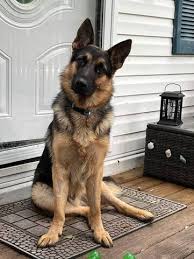
The thick, olive-green military duffel bag was gone, and the concrete driveway was completely empty. He dragged his heavy, ninety-pound body to the exact spot where his owner’s boots usually sat, completely ignoring his overflowing food bowl. The majestic German Shepherd curled into a tight, defensive ball, fiercely refusing to close his anxious amber eyes.
The Deafening Silence of Absence
For the first three excruciating weeks, the young dog operated on sheer, exhausting physiological hyper-vigilance. He spent every waking hour intensely patrolling the perimeter of the living room, his tall ears rotating frantically at the sound of every passing engine. When the local mail carrier dropped a cardboard package heavily on the porch, Ranger would launch himself at the door, vibrating with desperate, blinding anticipation.
But the heavy, familiar footsteps of Sergeant Miller never followed the sharp knock. The crushing, suffocating weight of the sudden absence began to physically manifest in the dog’s normally athletic, incredibly powerful frame. Ranger’s thick, beautiful black-and-tan coat entirely lost its brilliant shine, shedding in massive, stress-induced clumps onto the living room rug.
He was experiencing a profound, devastating state of acute canine separation distress. Unlike a family pet who simply misses their owner during a standard eight-hour workday, Ranger was grappling with the absolute vanishing of his primary bonded handler. Dogs do not possess the cognitive capacity to understand overseas military deployments, tour extensions, or the abstract concept of a calendar year.
To a highly intelligent, fiercely loyal working breed, the sudden disappearance of his alpha felt like a permanent, terrifying abandonment. He began aggressively hunger-striking, turning his nose away from the premium meat he used to eagerly devour in seconds. The soldier’s desperate wife had to painstakingly hand-feed the depressed dog tiny pieces of boiled chicken just to keep his crashing weight safely stabilized.
The Physical Toll of Waiting
As the military deployment dragged painfully from weeks into agonizing, endless months, Ranger’s frantic pacing slowly morphed into deep, lethargic depression. He completely stopped bringing his favorite, heavily chewed tennis ball to the back patio door for his daily game of fetch. The once-vibrant, highly energetic German Shepherd now spent fourteen hours a day lying completely flat on the floor.
His chosen bed was no longer the expensive orthopedic mattress in the corner; it was the Sergeant’s unwashed, faded camouflage t-shirt. He was obsessively resource-guarding the last remaining olfactory footprint of his missing best friend. If the laundry machine even threatened to wash away that deeply familiar scent of gunpowder and cheap military soap, Ranger would growl a low, sorrowful warning.
His entire biological rhythm was brutally disrupted, rapidly leading to severe sleep disturbances and relentless late-night pacing. In the absolute dead of the winter night, the soldier’s wife would often find the massive dog sitting perfectly upright in the pitch-black hallway. He would stare blankly at the brass front door handle, letting out a continuous series of low, rhythmic, heartbreaking whimpers. He was a dog entirely suspended in time, unable to move forward, helplessly anchored to a ghost.
Snoutbit Tip: Understanding Ambiguous Loss in Canines
What is Ambiguous Loss? When a deeply bonded human suddenly disappears without a trace due to a military deployment, sudden divorce, or death, dogs experience a traumatic psychological state clinically known as ambiguous loss. Because they cannot rationally process the “why” or “when” of the sudden absence, their central nervous system remains trapped in a perpetual, exhausting state of high alert.
How It Manifests in the Home: A dog suffering from this profound, unresolved grief will often exhibit severe clinical depression, entirely losing interest in high-value treats and their absolute favorite toys. They frequently develop destructive obsessive-compulsive behaviors, such as aggressively licking their own paws raw or heavily pacing the exact same path across the living room floor until their pads bleed.
The Rehabilitation Approach: Never wash the missing owner’s worn clothing or blankets, as retaining that highly familiar scent provides critical chemical comfort to a grieving, panicking canine brain. Maintain an incredibly strict, unwavering daily routine for feeding times and neighborhood walks. This intense routine provides the heavily stressed, grieving dog with a desperate, much-needed sense of environmental predictability when their entire world feels chaotic.
The Unscheduled Arrival
Nine excruciating months after that heavy oak door first clicked shut, a dusty silver pickup truck quietly pulled onto the quiet suburban street. It was three weeks earlier than the official deployment return date, a completely unannounced, highly guarded family secret. Inside the cab, Sergeant Miller gripped the steering wheel so incredibly tightly his knuckles turned stark white under his faded uniform sleeves.
Inside the house, Ranger was lying completely motionless on the living room rug, his eyes heavily half-closed in a dull, apathetic haze. But as the truck’s engine was cut precisely two driveways down, the dog’s tall ears suddenly twitched with violent precision. A deeply familiar, highly specific low-frequency rumble had just vibrated through the hardwood floorboards.
Ranger’s heavy head snapped up with such violent force that his metal collar loudly jingled in the dead-quiet room. He didn’t just casually walk to the front window; he scrambled frantically, his sharp claws completely failing to find traction on the slick floor. He violently slammed his heavy front paws against the glass, his dark eyes widening to an almost impossible, terrified size.
The Sound of Footsteps
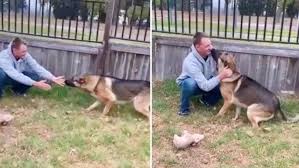
When the tall man in the heavily creased camouflage uniform finally stepped out from behind the truck bed, the dog completely lost his mind. Ranger let out a sound that wasn’t a standard bark, a howl, or a whine—it was a visceral, deafening scream of pure, unadulterated canine emotion. He began violently spinning in tight, frantic circles, his heavy tail crashing dangerously against the living room drywall.
The front door hadn’t even fully opened before the ninety-pound German Shepherd squeezed his massive, trembling body through the narrow wooden gap. He launched himself directly off the front porch, completely clearing the concrete steps in one terrifying, magnificent leap. He hit the exhausted soldier’s chest with the undeniable force of a freight train, sending both of them crashing heavily backward onto the front lawn.
The tough, battle-hardened combat veteran instantly buried his face deep into the dog’s thick, shedding neck, openly sobbing into the coarse fur. Ranger aggressively licked the salty tears streaming down the soldier’s weathered face, letting out a continuous, breathless string of sharp, high-pitched cries. The agonizing, nine-month wait had instantly evaporated into the damp grass, violently replaced by an overwhelming flood of pure, explosive joy.
The Invisible Armor Falls Away
For the next forty-eight hours, Ranger absolutely refused to let the soldier out of his direct line of sight for even a single, fleeting second. If Sergeant Miller walked into the kitchen for a simple glass of water, the massive dog was practically glued to his left combat boot. The heavy, invisible armor of exhausting hyper-vigilance that Ranger had worn for 270 days completely shattered and fell away.
The dull, incredibly lifeless look in the German Shepherd’s amber eyes was permanently replaced by a bright, intensely focused spark of pure life. He finally ate a massive, overflowing bowl of premium kibble, inhaling the food so fast he actually had to stop to catch his breath. That night, instead of frantically pacing the dark hallway, he collapsed heavily across the soldier’s feet, falling into the first deep, restorative sleep he had experienced in months.
This incredibly raw, tear-jerking reunion is a profound, living testament to the sheer depth and unwavering loyalty of the canine heart. They do not judge our sudden absences, and they absolutely do not hold petty grudges for the long, agonizing days spent waiting in the silence. They simply hold their breath until we finally return, ready to instantly offer us a love that is absolutely, fiercely unconditional.
FAQ: Supporting Dogs Through Deployments and Absences
Do dogs actually remember their owners after a year-long military deployment? Yes, absolutely. A dog’s long-term memory is incredibly heavily tied to their powerful olfactory system. Even if an owner’s physical appearance or voice changes slightly over a grueling year-long absence, their unique, foundational scent remains permanently hardwired into the dog’s brain. The moment they catch that specific scent profile, the deep emotional bond is instantly, powerfully reactivated.
How can I effectively prepare my highly attached dog for an upcoming long-term absence? You must proactively begin changing the household routine several weeks before the actual departure date. Slowly decrease the amount of intense, direct physical affection you provide, and actively encourage the dog to bond heavily with the caregiver who will be staying behind. Leave multiple pieces of unwashed, heavily worn clothing sealed in large plastic bags, so the caregiver can periodically release your fresh scent into the home over the passing months.
Why is my dog acting aggressively or standoffish now that my spouse has finally returned? This is an incredibly common, often heartbreaking phenomenon known as canine emotional detachment. The dog had to fundamentally restructure their entire survival routine and pack hierarchy to cope with the profound loss of the deployed spouse. When that person suddenly returns, it heavily disrupts the dog’s newly established sense of safety, requiring immense patience, zero forced physical contact, and time to slowly rebuild the shattered trust.
Disclaimer: The content on Snoutbit.com is for informational and educational purposes only and is not intended to replace professional veterinary advice, diagnosis, or treatment. Always consult with your veterinarian before making significant changes to your dog’s diet, exercise routine, or health regimen.