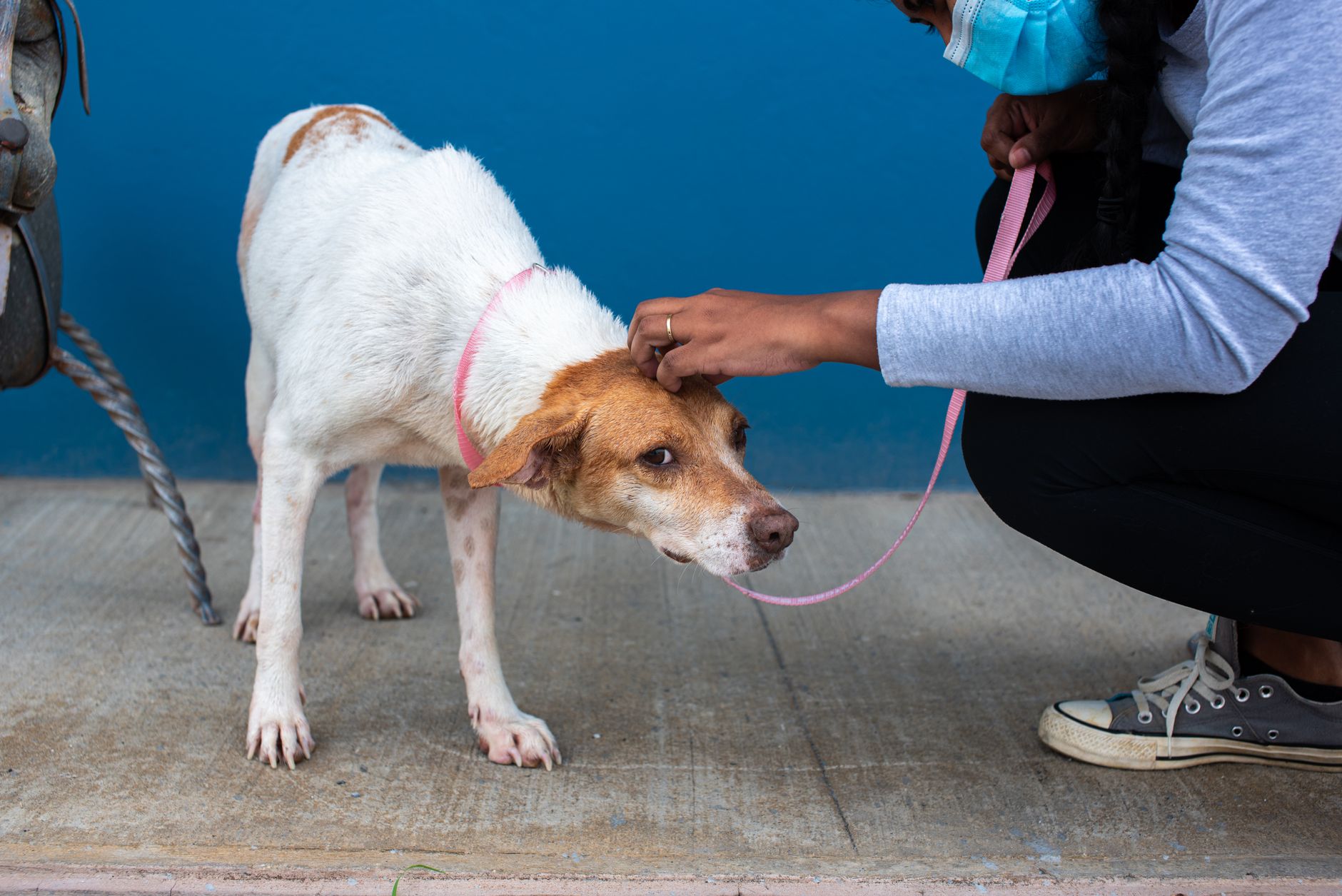
Fearful Rescue Dog Learns to Walk on Leash: Baxter's 1-Year Journey
Introduction
When Baxter was adopted from a Dallas shelter, his new family had no idea what lay ahead. His history was unknown, but his behavior suggested a hoarding situation or another environment of prolonged stress. According to iHeartDogs, Baxter would panic and sometimes bite when someone tried to place a collar, leash, or harness around him. Simple outdoor trips became a daily struggle, especially since his family lived in a condo without a private backyard—every potty break and walk required a leash. Desperate, they turned to trainer Justin, who had 10 years of experience and would later call Baxter his toughest case in that time. What followed was a journey of patience, trust, and unwavering commitment—a story that offers hope to any dog owner facing similar behavioral challenges.
Baxter's Background and Fear of Leashes
Baxter's story begins in a Dallas shelter, where he was adopted by a family eager to give him a loving home. According to iHeartDogs, his history was not completely known, but his behavior suggested he may have come from a hoarding situation or another environment with prolonged stress. This lack of background information is common with rescue dogs, and it often leaves owners piecing together clues from their dog's reactions to everyday situations.
For Baxter, the most telling clue was his extreme fear of restraint. iHeartDogs reports that he would panic and sometimes bite when someone tried to place a collar, leash, or harness around him. This wasn't simple stubbornness or a lack of training—it was a deep, visceral fear that made even basic care dangerous for both Baxter and his family.
The family's living situation compounded the problem. They lived in a condo without a private backyard, requiring leash use for outdoor trips. Every potty break, every walk, every trip outside meant confronting Baxter's greatest fear. There was no way to avoid it, no backyard where he could relieve himself safely without a leash. The daily necessity of leash use turned what should be routine into a source of constant stress for everyone involved.
Early attempts to address the issue were unsuccessful. According to iHeartDogs, attempts with treats and muzzles did not solve Baxter's fear. Treats, which work for many dogs, couldn't override the panic. Muzzles, while a safety tool, didn't address the underlying emotional response. The family was stuck in a cycle: they needed to leash Baxter to take him outside, but leashing him triggered panic and biting. It was clear they needed professional help.
The Trainer's Approach: Trust Over Correction
Enter Justin, a trainer with 10 years of experience. According to iHeartDogs, Justin considered Baxter his toughest case in that time. That's a significant statement from someone who had likely seen hundreds of dogs with a wide range of behavioral issues. But Baxter's case was different—his fear was so profound that traditional training methods weren't enough.
Justin understood that correction-based training would only make things worse. When a dog is acting out of genuine fear, punishing the behavior can deepen the fear and erode trust. Instead, Justin chose a different path: he focused on building trust.
According to iHeartDogs, Justin brought Baxter into his own home for more than a month to build trust. This was a significant commitment. It meant integrating Baxter into his daily life, not just working with him during training sessions. By removing the pressure of the family's condo and the daily leash struggle, Justin created a space where Baxter could begin to feel safe.
This approach is rooted in the understanding that fear-based behaviors require a foundation of security before any training can succeed. Baxter needed to learn that humans could be trusted, that hands reaching toward him weren't a threat, and that the world could be predictable and safe. Only after that foundation was laid could they begin to address the specific fear of leashes and harnesses.
Justin's willingness to take Baxter into his home also speaks to his dedication. This wasn't a case where a trainer shows up for an hour a week and offers advice. This was immersive, round-the-clock work. It required patience, consistency, and a deep understanding of canine behavior. And according to iHeartDogs, it was just the beginning of a much longer journey.
The Family's Sacrifices and Environmental Changes
While Justin worked with Baxter, the family made a significant change of their own. According to iHeartDogs, they moved to a house with a private backyard to reduce Baxter's stress. This was a major life decision, and it highlights how seriously they took Baxter's well-being.
The move addressed one of the core triggers in Baxter's daily life. In the condo, every outdoor trip required a leash, which meant every potty break was a potential panic episode. A private backyard eliminated that immediate pressure. Baxter could go outside without the dreaded leash, giving him a chance to relax and do his business without the fear that had come to define his outdoor experiences.
This change also gave the family more flexibility. They no longer had to force leash use multiple times a day just to meet Baxter's basic needs. They could work on leash training at a pace that suited Baxter, without the urgency of a dog who has no other way to go outside. The backyard became a safe space, a place where Baxter could learn that the outdoors wasn't inherently frightening.
It's worth noting that this kind of environmental change isn't possible for every family. Many dog owners live in apartments or condos without private outdoor space, and they face similar challenges without the option to move. But Baxter's story shows that when a change is possible, it can make a meaningful difference. Reducing stress in one area of a dog's life can free up mental and emotional resources for tackling other challenges.
The family's willingness to move for Baxter's sake also demonstrates their commitment. They didn't give up on him when things got hard. They didn't rehome him or return him to the shelter. Instead, they adjusted their lives to give him a better chance. That kind of dedication is often the difference between success and failure with a fearful dog.
The Slow Road to Progress
With Justin's trust-building work and the family's new home environment, Baxter had the pieces in place for progress. But progress didn't come quickly. According to iHeartDogs, nearly a year of patient work, trust building, and consistency followed.
A year is a long time. For many dog owners, a year of daily struggles can feel overwhelming. It's easy to lose hope when weeks pass without visible improvement. But Baxter's story is a reminder that real, lasting change often takes time—especially when the root cause is deep-seated fear rather than simple disobedience.
During that year, the work was likely repetitive and unglamorous. It meant celebrating tiny victories: a calm moment when the leash was brought out, a step closer to accepting the harness, a walk that ended without panic. It meant setbacks, too—days when Baxter regressed, when fear won out over progress. But through it all, the family and Justin kept showing up.
Consistency was key. Fearful dogs need predictability. They need to know that the same calm, patient approach will be used every time. They need to learn that their reactions won't be met with anger or frustration. This kind of consistency is exhausting for humans, but it's essential for the dog.
Trust building was also central. Every positive interaction, every gentle handling, every moment of patience chipped away at Baxter's fear. He was learning, slowly, that the people in his life were safe. That the things he feared—collars, leashes, harnesses—weren't weapons. That the world could be a place of comfort rather than threat.
According to iHeartDogs, this nearly year-long process was what finally led to change. There were no shortcuts, no magic fixes. Just steady, patient work.
Baxter's Breakthrough: Walking on a Leash
The breakthrough, when it came, was simple but profound. According to iHeartDogs, Baxter eventually learned to wear a leash and go for a walk without overwhelming fear. For most dog owners, a leashed walk is an ordinary part of daily life. For Baxter and his family, it was a triumph.
This milestone represented everything they had worked for. It meant Baxter could safely leave the house. It meant the family could take him on adventures, explore the neighborhood, and enjoy the companionship that walks provide. It meant the fear that had once controlled so much of Baxter's life no longer had the final say.
The journey to that point was long—nearly a year of dedicated effort after Justin's month-long trust-building stay. It required a trainer who saw beyond the behavior to the frightened dog underneath. It required a family willing to change their living situation to reduce stress. It required patience, consistency, and an unwavering belief that Baxter was worth the effort.
Baxter's story is a powerful reminder that behavioral challenges in dogs are rarely about dominance or stubbornness. They're often about fear, and fear doesn't respond to force. It responds to safety, trust, and time. Trainer Justin's assessment that Baxter was his toughest case in 10 years underscores just how severe the fear was. But the outcome—a dog who can now walk on a leash without overwhelming fear—shows that even the toughest cases can be resolved with the right approach.
For dog owners facing similar struggles, Baxter's story offers hope. It won't be easy. It won't be fast. But with patience, professional help when needed, and a willingness to adapt, even the most fearful dogs can learn to trust and thrive.
What You Can Do If Your Dog Fears the Leash
If your dog panics at the sight of a leash or harness, you're not alone. Here are steps that align with the trust-based approach used for Baxter:
- Rule out pain first. A veterinarian check can identify underlying medical issues that make restraint painful.
- Go at your dog's pace. Desensitization means introducing the leash in tiny steps—first just showing it, then touching it to your dog's side, then clipping it on for a second. Never force it.
- Pair with high-value treats. Use something your dog loves (like chicken or cheese) only when the leash appears. This creates a positive association.
- Choose the right gear. A well-fitted, comfortable harness can reduce stress. Avoid tight or restrictive equipment. See 5 Mistakes You're Making with Your Dog's Harness and Don't Buy a Dog Harness Until You Read This for guidance.
- Build trust daily. Spend time just sitting near your dog, offering gentle pets if they're comfortable. Trust is the foundation.
- Consider professional help. A force-free trainer or veterinary behaviorist can create a customized plan.
For dogs with co-occurring anxiety, like separation anxiety, additional support may be needed. See Separation Anxiety: How to leave an anxious dog home alone and My rescue dog has separation anxiety what can I do?.
Enrichment also plays a role in reducing overall stress. Dog Enrichment Strategies: The Science-Backed Hacks to Exhaust a Hyperactive Dog Fast offers ideas that can help a fearful dog feel more confident.
Understanding Fear-Based Behaviors
Fear-based behaviors can look like aggression, stubbornness, or defiance, but they stem from a dog feeling unsafe. Common signs include:
- Trembling or shaking (see Why Do Dogs Shake? The Hidden Dangers Behind Canine Trembling)
- Freezing or refusing to move
- Growling, snapping, or biting when approached with a trigger
- Avoiding eye contact or staring intensely (see Why Does My Dog Stare At Me? The Hidden Meanings)
Recognizing these signs allows you to respond with empathy rather than punishment. For dogs scared of strangers, socialization must be done carefully. Why Is My Shiba Inu So Scared Of Strangers? The Critical Socialization Fix provides a detailed framework that applies to many breeds.
Training Principles That Work for Fearful Dogs
- Positive reinforcement only. Reward calm behavior. Never punish fear.
- Baby steps. Break every goal into tiny, achievable steps.
- Consistency. Everyone in the household should use the same calm approach.
- Patience. Progress may be slow, but it's worth it.
- Safety first. If biting is a risk, use a muzzle temporarily while working on desensitization, but pair it with treats so it doesn't become another fear trigger.
These principles apply to many behavioral issues, from jumping to leash pulling. For jumping, see How To Stop A Dog From Jumping On People: The Secret "Four On The Floor" Protocol. For pulling, see Dog Harness For Pulling Dogs? The Harness Solution.
Frequently Asked Questions
How long does it take to leash-train a fearful dog? It varies. Baxter took nearly a year. Some dogs progress faster; others need more time. Consistency matters more than speed.
Should I use a muzzle? A muzzle can be a temporary safety tool, but it doesn't address the fear. It must be introduced positively to avoid adding stress.
Can I train a fearful dog without a professional? Yes, but a force-free trainer or behaviorist can provide a tailored plan and support. If biting is a risk, professional help is strongly recommended.
What if I can't move to a house with a backyard? You can still make progress. Use indoor potty solutions temporarily, or find a quiet, low-traffic area for gradual leash work. Reduce stress in other areas of your dog's life.
Is it ever too late to help a fearful dog? No. Baxter was considered a severe case, yet he learned to walk on a leash. With patience and the right approach, improvement is possible.
Conclusion
Baxter's journey from a panicked, biting dog to one who can enjoy a leashed walk is a testament to what trust, patience, and commitment can achieve. His family's willingness to change their living situation and trainer Justin's dedication made all the difference. If you're facing similar challenges, remember: fear doesn't respond to force. It responds to safety, consistency, and time. With the right support, even the toughest cases can find their way.
Source: iHeartDogs