Feeling a dog’s intense, unblinking eyes burning into the back of a human head is an unnerving daily reality for pet owners. Misinterpreting this silent, heavy gaze causes massive anxiety, leading handlers to falsely assume the dog is plotting an attack or acting out of spite. The ultimate solution requires scientifically analyzing the dog’s surrounding body language to instantly decode their hidden request.
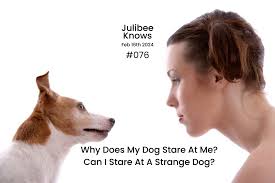
Dogs stare at humans to actively trigger the release of bonding hormones, demand immediate access to resources, or gather critical behavioral clues during confusing situations. The most crucial takeaway is that a soft, relaxed gaze releases oxytocin, perfectly mirroring the deep biological connection between a human mother and an infant. However, a rigid, frozen stare accompanied by tightly pinned ears is a glowing red flag for severe resource guarding that demands immediate spatial respect.
Canine Eye Contact: Overview Mind Map
- Core Biological Function: Non-verbal communication, environmental assessment, and deep chemical bonding.
- The “Good” Stare: Soft, almond-shaped eyes paired with a relaxed, slightly open mouth and a gently sweeping tail.
- The “Bad” Stare: “Whale eye” (showing the whites), hard pupil fixation, rigid facial muscles, and a closed, tense jaw.
- Primary Motivators: Biological needs (potty), anticipation of a routine (walks), or severe cognitive decline in seniors.
The Biological Love Loop
The most heartwarming reason a dog stares endlessly into a human’s eyes is entirely rooted in powerful neurochemistry. When a dog and a human share a soft, prolonged gaze, both brains experience a massive surge of oxytocin. This powerful chemical, often called the “love hormone,” biologically cements the emotional bond and heavily reduces systemic stress for both species.
Unlike their wild wolf ancestors who view direct eye contact as a highly aggressive threat, domestic canines evolved to weaponize the gaze for pure affection. Thousands of years of selective breeding physically altered canine facial muscles, giving them the unique ability to raise their inner eyebrows. This specific evolutionary trait creates the famously manipulative “puppy dog eyes” designed perfectly to hack the human nurturing instinct.
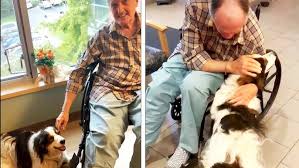
🚨 Vet Fact: A scientific study revealed that dogs who stare at their owners the longest produce a one-hundred-and-thirty percent spike in human oxytocin levels. This massive hormonal surge is the exact biological reason therapy dogs are so incredibly effective at actively lowering clinical blood pressure in hospital patients.
Information Gathering And Handler Focus
Dogs are master observers of human behavior, spending their entire waking lives meticulously studying human micro-expressions and daily routines. When a dog stares blankly during a chaotic household event, they are actively seeking critical environmental direction. The canine brain is desperately trying to calculate if the loud noise outside requires a defensive bark or if the human handler considers it entirely safe.
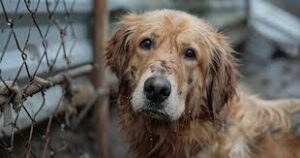
Consider a highly traumatized stray dog recently pulled directly from a crowded municipal pound. For the first few weeks in a new home, the rescue dog will frequently sit in the corner and stare intensely at every single human movement. This hyper-vigilance is not affection; it is a desperate survival mechanism to learn the unpredictable patterns of a completely alien environment.
Advanced Insight 1: The Pre-Bite “Hard Stare”
Generic pet blogs completely fail to differentiate between a loving gaze and a highly dangerous, defensive optical fixation. A “hard stare” occurs when a dog completely freezes their entire body, closes their mouth tightly, and locks their pupils directly onto a target. This rigid, unblinking focus is a massive, highly critical warning sign that the dog is incredibly uncomfortable and actively preparing to bite.
This terrifying stare frequently happens when a dog is aggressively resource-guarding a high-value item, like a stolen shoe or a fresh marrow bone. If an owner misinterprets this frozen stare as a cute game and reaches for the object, the dog will strike with devastating speed. The absolute only safe response to a hard stare is to immediately stop moving forward, avert human eye contact, and slowly back away.
🐾 Snoutbit Pro-Tip: Never initiate a staring contest with an unfamiliar dog or a deeply fearful rescue animal. Staring directly into the eyes of an anxious canine is biologically interpreted as a massive, deeply terrifying physical challenge that easily triggers a defensive attack.
The Jedi Mind Trick Of Demand Staring
Highly intelligent dogs quickly learn that continuous, unbroken eye contact is the absolute most effective way to manipulate human behavior. If a dog sits perfectly still in the kitchen and drills holes into the back of the owner’s head, they are executing a classic demand stare. This behavior is entirely man-made, accidentally reinforced the very first time an owner tossed a piece of chicken to break the awkward silence.
The canine brain brilliantly calculates that silent, heavy pressure eventually forces the uncomfortable human to hand over a reward. To completely break this infuriating habit, the owner must practice absolute, iron-clad consistency and totally ignore the demanding eyes. The exact moment the dog finally gives up and looks away, the owner can rapidly reward the quiet disengagement.
Take the reality of an adolescent Kelpie mix that became entirely obsessed with a newly installed, custom staggered kitchen island. The dog would sit for hours staring intensely at the asymmetrical cabinet edges, silently demanding the owner to drop a hidden tennis ball from the counter. By completely ignoring the intense stare and only rewarding the dog for settling on a designated mat, the obsessive staring behavior vanished.
Advanced Insight 2: The Multi-Dog Resource Stare
In multi-dog households, staring is frequently utilized as an incredibly subtle, completely silent weapon for controlling highly valuable resources. One dog will casually lay across the room and lock a hard, unblinking stare directly onto another dog actively chewing a bone. The staring dog is using sheer, intense psychological pressure to bully the other canine into entirely abandoning the highly prized item.
This silent intimidation frequently escalates into massive, violent household fights if the human handler fails to recognize the hidden tension. The dog being stared at will eventually hit their emotional threshold, resulting in an explosive, terrifying scuffle over the bone. Elite handlers constantly monitor these silent visual threats, immediately redirecting the staring dog to prevent the resource-guarding explosion.
🚨 Vet Fact: Aging dogs frequently suffer from profound vision loss due to progressive retinal atrophy or thick nuclear sclerosis in the lens. A senior dog staring blankly at a wall might simply be struggling to physically see their environment, creating massive confusion and deep internal anxiety.
The Vulnerability Of The Potty Stare
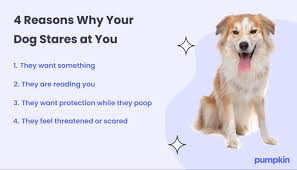
One of the most frequently Googled canine behaviors is why a dog locks eyes with their owner while actively defecating in the yard. This incredibly awkward behavior has absolutely nothing to do with shame or embarrassment. In the wild, the physical act of eliminating leaves a canine completely vulnerable to a sudden, highly lethal predator attack.
When a domestic dog stares at their handler while going potty, they are explicitly utilizing the human as an early warning security system. The dog is placing complete, unconditional trust in the owner to scan the surrounding environment for incoming physical threats. Breaking eye contact or walking away during this highly vulnerable moment completely shatters the dog’s confidence and often causes them to abruptly stop the bathroom process.
Advanced Insight 3: Sundowner Syndrome And The Blank Gaze
If a previously healthy, highly engaged senior dog suddenly begins staring blankly into dark corners or at the living room ceiling, it demands immediate veterinary attention. This specific, hollow gaze is a massive, glowing red flag for Canine Cognitive Dysfunction (CCD), essentially canine Alzheimer’s disease. As the physical brain rapidly degrades, the dog experiences severe spatial confusion and literally gets completely “lost” inside their own home.
This heartbreaking condition frequently triggers a blank, thousand-yard stare accompanied by endless pacing and nighttime vocalization. The senior dog is not staring at ghosts; they are entirely trapped in a terrifying state of deep neurological confusion. Securing an accurate medical diagnosis allows for the immediate introduction of brain-supporting MCT oils and targeted anxiety medications to dramatically improve their overall quality of life.
Reading The Accompanying Micro-Expressions
Decoding a dog’s stare completely relies on auditing the rest of the canine body. A stare accompanied by a loosely wagging, helicopter-like tail and “soft” almond-shaped eyes is a pure request for interactive play. If the dog executes a quick “play bow” while holding eye contact, they are enthusiastically inviting the handler to instantly initiate a game of chase.
Conversely, a dog staring with the whites of their eyes vividly exposed is displaying a terrifying warning known as “whale eye.” This specific optical expansion is a physical indicator of extreme, unmanageable fear or intense resource guarding. When whale eye is present, the staring dog is begging for immediate spatial relief before they are violently forced to escalate to a bite.
🐾 Snoutbit Pro-Tip: To safely break a hard, uncomfortable stare without triggering a fight, execute a wide, exaggerated human yawn and immediately look down at the floor. In canine body language, a fake yawn is a highly recognizable “calming signal” that explicitly communicates completely peaceful intentions.
What To Do Next
- Execute a Body Language Audit: The very next time the dog initiates a prolonged stare, completely ignore the eyes and meticulously analyze the position of their ears and tail. Identifying whether the body is loose and wiggly (affection) or completely rigid and frozen (tension) dictates exactly how to safely respond to the gaze.
- Stop Rewarding the Demand Stare: If the dog sits directly in front of the television and stares relentlessly to demand a piece of dinner, turn completely away. Do not offer a single piece of kibble, a toy, or even eye contact until the dog actively chooses to walk away and lie down quietly.
Disclaimer: The content on Snoutbit.com is for informational and educational purposes only and is not intended to replace professional veterinary advice, diagnosis, or treatment. Always consult with your veterinarian before making significant changes to your dog’s diet, exercise routine, or health regimen.