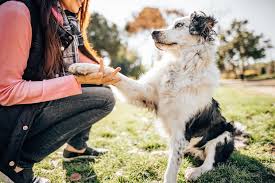
Every dog owner has experienced that sudden, heavy weight on their arm or leg. A dog stares up with soulful eyes, extends a single limb, and firmly plants a paw directly on a person. It seems like a simple gesture, yet it often happens at the most inconvenient times, leaving humans wondering if they are being manipulated or genuinely loved.
Ignoring this silent request can lead to increased canine frustration, while misinterpreting it as a demand for food can accidentally reinforce a persistent begging habit. The solution lies in decoding the specific “dialect” of the paw touch to strengthen the relationship and satisfy the dog’s true intent. By learning to read the nuance of this physical signal, pet parents can provide the exact support or resource their dog is actually requesting.
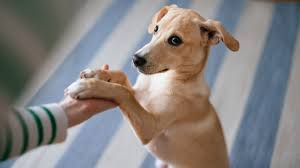
The primary reason a dog puts their paw on a person is to initiate communication and social bonding. This behavior is a direct extension of ancestral nuzzling habits designed to seek attention, claim resources, or offer comfort. The touch physically bridges the gap between species, allowing the dog to tap into the human’s nervous system.
By placing a paw on a handler, the dog is effectively saying “pay attention to me,” “I need help,” or “we are a pack.” Simultaneously, this act releases bonding hormones in both the human and canine brains. This creates a chemical feedback loop that reinforces the trust and safety of the domestic relationship.
Advanced Insight 1: The “Social Tagging” Theory
Canine paws are more than just shock absorbers; they are sophisticated scent-distribution tools. Dogs possess specialized sebaceous and sweat glands located between their paw pads that secrete a unique chemical signature. When a dog firmly places a paw on a person, they are often performing a “social tag,” depositing their individual scent onto the human.
This reinforces the “ownership” and pack status of the handler, creating a scent-based safety zone that only the dog can fully perceive. This behavior is particularly prevalent in homes with multiple pets, where a dog may feel the need to “re-mark” their favorite human. It serves as a silent, olfactory boundary that reassures the dog of their secure place within the family hierarchy.
Advanced Insight 2: The Oxytocin Feedback Loop
Physical contact between dogs and humans is not just emotional; it is intensely chemical. Scientific studies have confirmed that prolonged touch, such as a dog resting a paw on a human’s knee, causes a spike in oxytocin levels for both participants. This is often called “the love hormone” and is the same chemical responsible for the bond between a mother and an infant.
The paw touch is a deliberate act to maintain this chemical high, serving as a biological “recharge” for the dog’s emotional well-being. When a dog feels a dip in their sense of security, they seek this physical tether to stabilize their mood. For the human, this touch lowers cortisol (the stress hormone) and blood pressure, making the “pawing” habit a mutually beneficial health intervention.
🐾 Snoutbit Pro-Tip: Observe the dog’s paw position. A “hooking” motion where the dog pulls a hand toward them is an active demand for physical affection or grooming. A static, heavy press is more likely a sign of grounding or seeking security during a stressful environmental event.
Decoding the Context: Affection vs. Demand
Not all paw touches are created equal, and context is the key to accurate translation. A dog that paws while a handler is eating is clearly making a resource demand. Conversely, a dog that places a paw on a person while they are sitting quietly on the sofa is likely offering or seeking pure affection.
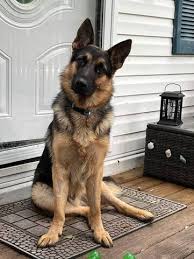
Behaviorists have observed that high-drive breeds, such as German Shepherds or Malinois, often use their paws as a “work-shift” indicator. For these dogs, the paw can be a clear, unambiguous command that the “workday” has ended and the “play hour” has officially begun. If the human is looking at a phone or a computer, the paw serves as a physical “interrupt” signal to break the human’s digital focus.
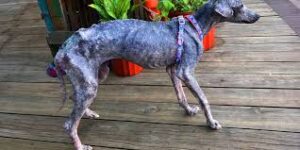
Azia, a retired racing Greyhound, would place a delicate, trembling paw on her owner’s chest whenever a thunderstorm approached. She wasn’t asking for treats; she was looking for a “physical anchor” to ground her through the terrifying acoustic vibrations. The touch allowed her to feel her owner’s calm heartbeat, which served as a more effective sedative than any medicinal intervention.
🚨 Vet Fact: If a dog is constantly pawing at a human while also licking their own paws, it may indicate a hidden medical issue. Canine paw pads are highly sensitive, and this dual-behavior often points to localized pain, environmental allergies, or a fungal infection that requires a physical examination.
Advanced Insight 3: Pawing as Displacement Behavior
In the world of pet behavior, “displacement behaviors” are normal actions performed out of context when a dog is feeling internal conflict or anxiety. If a dog is unsure about a situation—such as a new person entering the home or a loud appliance running—they may put a paw on their handler to seek reassurance. This is a “self-soothing” mechanism.
It provides the dog with a physical sensory input that helps them regulate their rising stress levels. It is much like a human might fidget with a ring or tap their foot during a difficult meeting. By making physical contact with a “safe” person, the dog uses the handler’s calm energy to “bleed off” their own nervous tension.
When Pawing Becomes a Problem
Humans accidentally train dogs to paw more than any other gesture. Because the action is often viewed as “cute,” owners immediately reward it with eye contact, verbal praise, or a scratch behind the ears. The dog quickly learns that pawing is a “high-ROI” (Return on Investment) behavior.
If a dog is pawing too much, it is likely because they have been consistently “paid” for it in the past. To reduce the frequency, handlers must wait for the dog to offer a “four on the floor” stance before providing any social or food-based rewards. Consistency is vital; if one family member rewards the pawing while another ignores it, the dog will only become more persistent.
🐾 Snoutbit Pro-Tip: If a dog puts their paw on you while you are petting them, it is often a request for you to continue. However, if they put their paw on you and then immediately look away or yawn, they are likely feeling overstimulated and are politely asking for the physical interaction to stop.
Medical Red Flags to Watch For
A sudden increase in pawing can sometimes signal localized pain or discomfort in the limb itself. If the dog is pawing with a specific leg that they previously favored, or if they flinch when the limb is touched, a veterinary consult is necessary. Paws can harbor hidden splinters, cracked nails, or even bee stings between the toes.
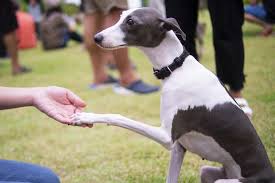
A dog using a paw to touch a human might be trying to “bring the injury” to the handler’s attention. They are seeking physical relief for a problem they cannot fix themselves. Always check the paw pads and the spaces between the toes for redness, swelling, or heat if the pawing behavior starts abruptly.
What To Do Next
- Perform a “Context Check” Today: The next time the dog puts a paw on you, stop what you are doing and look at their overall body language. If their ears are back and they are yawning, they need comfort; if their tail is up and they are staring at the cupboard, they are making a resource demand.
- Audit the Reward System: If the pawing has become an annoying habit, commit to ignoring the gesture for 48 hours. Only provide attention or treats when the dog is sitting calmly with all four paws on the ground to reset their communication expectations.
Disclaimer: The content on Snoutbit.com is for informational and educational purposes only and is not intended to replace professional veterinary advice, diagnosis, or treatment. Always consult with your veterinarian before making significant changes to your dog’s diet, exercise routine, or health regimen.