You dread locking your front door for an eight-hour shift, knowing a tiny, destructive puppy is left completely unsupervised.
To successfully learn how to set up an indoor puppy playpen while at work, you must connect a heavy-duty wire pen directly to their open crate, lay down a waterproof floor mat, establish a dedicated potty zone opposite their bed, and provide safe, interactive puzzle toys. If you just leave them loose in the kitchen, you will inevitably come home to chewed baseboards and massive potty accidents. Leaving a young puppy locked inside a small crate for a full workday is cruel and physically impossible for their tiny bladders to handle. You need a dedicated, foolproof confinement strategy.
We are going to build a completely safe, anxiety-free puppy zone that protects your living room and keeps your dog biologically fulfilled.
The Perfect Playpen Blueprint Mind Map
- The Anchor: A heavy-duty, chew-proof wire exercise pen securely anchored to an open wire crate.
- The Foundation: A specialized waterproof vinyl floor mat to completely protect your carpets and hardwoods.
- The Bathroom Zone: A highly distinct, separate corner featuring a grass patch or locking pee pad tray.
- The Enrichment Hub: Durable Kongs, safe chew toys, and a snuggly, anxiety-reducing heartbeat toy.
The Core Problem: Why Crates Fail for Full Workdays
Most owners make the terrible mistake of crating an eight-week-old puppy from 8:00 AM to 5:00 PM. A puppy can only hold their bladder for one hour per month of age, plus one. That means a two-month-old puppy must physically relieve themselves every three hours.
Forcing them to soil their sleeping area permanently destroys their natural den instinct. It ruins weeks of intensive potty training and leaves them sitting in their own urine all day long. They will cry, panic, and develop severe separation anxiety before you even pull out of the driveway.
A playpen bridges the massive gap between a restrictive crate and dangerous free-roaming. It gives them the physical space to play, stretch, and safely eliminate far away from their clean bedding.
Selecting the Right Confinement Hardware
Do not buy flimsy plastic playpens or lightweight fabric enclosures. A bored, growing puppy will quickly figure out how to push a lightweight plastic pen completely across your kitchen floor. They will easily chew straight through nylon mesh walls within an hour.
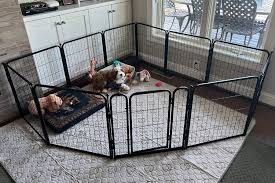
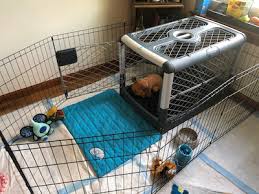
You must purchase a heavy-duty metal exercise pen that stands at least 30 to 36 inches tall. Connect the two open ends of the metal pen directly to the front of their wire crate using secure carabiner clips. This brilliant setup uses the crate entirely as the secure bedroom and the attached pen as their safe, designated living room.
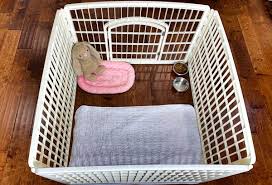
[Image: A clean, well-lit living room corner showing a tall metal exercise pen securely attached to an open wire crate, resting on a heavy waterproof floor mat.]
Step-by-Step: Assembling the Ultimate Safe Zone
Building the pen requires strategic zoning and careful planning. Dogs naturally want to keep their sleeping, eating, and bathroom areas completely separate from one another.
If you mix these zones together, your puppy will become deeply confused about where they are actually supposed to potty. A poorly designed pen creates a highly stressed animal.
Here is exactly how to divide the playpen architecture for maximum success.
Step 1: The Waterproof Flooring Foundation
Puppies will inevitably have accidents, and they will purposefully spill their water bowls out of pure boredom. Never set up a playpen directly on your expensive hardwood floors or living room carpets.
Purchase a large, specialized PVC whelping mat or a heavy-duty piece of vinyl flooring from a local hardware store. The floor mat must extend at least six inches past the outer edges of the wire pen. This crucial overhang prevents a determined puppy from pulling your carpet through the metal bars and chewing it to shreds.
Step 2: Designing the Bathroom Sector
Since you are at work, the puppy must have a legal, approved place to relieve themselves. Place this designated potty zone at the absolute furthest point away from their open crate door.
Avoid standard fabric pee pads, as bored puppies love to rip them up and swallow the dangerous absorbent cotton. Instead, use a specialized indoor grass patch or a plastic pee pad holder equipped with a locking grate.
This specific equipment keeps their paws perfectly dry and prevents deadly intestinal blockages from ingested paper.
Preventing Canine Boredom and Separation Anxiety
An empty playpen is essentially a doggy prison cell. If you do not provide intense mental enrichment, your puppy will spend the entire workday barking, whining, and trying to escape.
You cannot just toss a standard tennis ball inside and leave for eight hours. You need specialized, highly durable tools that passively drain their energy while you are completely unreachable.
Providing proper canine development tools stops the destruction before it even starts.
Mandatory Interactive Enrichment Tools
Safe chewing is a biological necessity for teething puppies. It actively soothes their sore gums and naturally lowers their heart rate and cortisol levels.
- Stuffed Kongs: Fill two heavy-duty rubber Kongs with wet puppy food and freeze them solid overnight. This forces the puppy to work for their calories and provides hours of soothing licking.
- Snuffle Mats: Hide a portion of their dry kibble deep inside a heavy fabric snuffle mat. Using their nose to hunt for breakfast burns massive amounts of mental energy before they take a morning nap.
- Heartbeat Toys: Place a plush toy featuring a simulated, ticking heartbeat inside their crate. This perfectly mimics the feeling of sleeping next to their littermates, instantly reducing acute separation anxiety.
[Image: A close-up of a frozen, food-stuffed rubber Kong toy and a fabric snuffle mat placed securely inside a puppy’s enrichment area.]
The Dangerous Items to Ban From the Pen
Your primary goal is absolute safety while you are sitting in your office. You must brutally audit every single item that goes inside this confinement zone.
Never leave your puppy alone with rawhide chews, soft plush toys with plastic squeakers, or braided rope toys.These fragile items are easily destroyed, and swallowing the loose pieces guarantees an emergency bowel obstruction surgery. Stick entirely to solid, durable rubber toys that absolutely cannot be torn into pieces.
The Morning Routine: Setting Them Up for Success
The physical setup of the pen is only half the battle. How you manage the puppy’s energy right before you leave for work heavily dictates their behavior for the rest of the day.
If you roll out of bed, quickly toss them in the pen, and immediately leave, they will scream in frustration. You must aggressively deplete their physical and mental energy tanks before you lock the door.
A tired puppy is a quiet, exceptionally well-behaved puppy.
The 45-Minute Energy Drain
Wake up exactly 45 minutes earlier than your normal weekday routine. Take the puppy outside for an intensive, highly focused potty and play session in the yard.
Engage them in short bursts of basic obedience training, like practicing sit, down, and touch. Five minutes of intense mental focus exhausts a young canine brain much faster than thirty minutes of mindless running. Once they are physically tired and mentally satisfied, they will naturally want to retreat to their pen to sleep.
The Silent Departure Protocol
When it is finally time to leave for the office, your actual departure must be incredibly boring. Do not drop to your knees, hug the puppy, and use a high-pitched, emotional voice to say a dramatic goodbye.
Making a massive production out of leaving instantly spikes their anxiety and signals that your absence is a terrifying event.
Quietly drop a frozen Kong into their pen, completely ignore them, and walk out the front door without looking back.
Transitioning Out of the Playpen Phase
The playpen is an incredible management tool, but it is not a permanent, lifelong fixture for your living room. The ultimate go`al is to safely transition your dog into a trustworthy, free-roaming adult companion.
This transition heavily depends on their exact age, their individual maturity level, and their specific breed genetics. You cannot rush this process without risking massive setbacks in their training.
Reading the Maturity Milestones
You can slowly start dismantling the playpen setup around eight to ten months of age, depending entirely on their potty training success. If they have gone a full month without a single accident on their indoor grass patch, their bladder control is finally maturing.
Begin by leaving them alone in a slightly larger, puppy-proofed room, like a kitchen blocked off by heavy baby gates, for short trips to the grocery store.
If they handle the increased freedom without destroying your cabinets or having accidents, they are fully ready to graduate out of the pen.
Disclaimer: The content on Snoutbit.com is for informational and educational purposes only and does not constitute professional veterinary medical advice. Always consult with a licensed veterinarian before altering your pet’s diet, starting a new training regimen, or addressing behavioral or health concerns.