
Walking a seventy-pound dog should be a bonding experience, but for many, it is a stressful tug-of-war that leaves shoulders aching and nerves frayed. The allure of a retractable leash is tempting: it promises the dog more freedom to sniff while the owner stays stationary. However, this perceived convenience often hides a terrifying reality of snapped cords, friction burns, and dogs bolting into traffic before a thumb can even find the brake button.
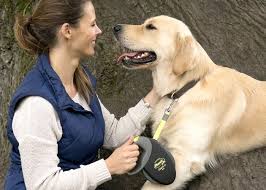
The definitive solution for large dog owners is a hard “No” on retractable leashes for daily walks and high-traffic environments. The biggest takeaway is that retractable leashes reward constant tension, which actively trains a large dog to pull harder against the collar. For powerful breeds, the only safe and effective choice is a standard six-foot fixed leash, which ensures the handler maintains physical leverage and prevents the catastrophic mechanical failures common in retractable plastic housings.
The Retractable Leash Risk Profile: Overview Mind Map
- Mechanical Failure: Internal spring breakage or cord snapping under the sudden “shock load” of a large dog.
- Handler Injuries: Severe finger amputations, deep friction burns, and facial trauma from snapped hardware rebounding.
- Behavioral Degradation: Reinforcement of “leash tension,” loss of emergency recall, and increased leash reactivity.
- Hardware Limitations: Thin nylon cords are easily chewed through or severed by sharp environmental edges.
The Physics of Failure: Why Large Dogs Are Different
A large dog doesn’t just pull with their body weight; they pull with the force of acceleration. When a fifty-pound dog hits the end of a sixteen-foot retractable lead at a full sprint, the “shock load” on the internal plastic locking mechanism is immense. Most retractable leashes are held together by small plastic gears and a single coiled spring that were never designed to withstand the raw kinetic energy of a powerful breed.
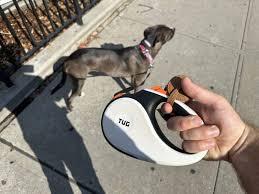
When these internal parts shatter, the handler is left holding a useless plastic handle while the dog is now completely off-leash in a potentially dangerous environment. Even worse, the clattering plastic handle often “chases” the dog as they run, causing a panicked animal to bolt even further away from the terrifying noise. This cycle of mechanical failure is a primary reason why many professional trainers and veterinarians ban these leashes from their facilities.
🚨 Vet Fact: Retractable leashes are a leading cause of severe “mechanical” injuries in clinics. From degloving injuries (where the skin is stripped from a human finger) to deep lacerations on a dog’s legs caused by the thin cord wrapping around them, the medical risks often outweigh any perceived convenience.
Advanced Insight 1: The “Constant Tension” Behavioral Trap
Generic pet articles rarely discuss the “Oppositional Reflex.” This is a biological instinct in dogs that causes them to pull back against any pressure they feel. Because a retractable leash always maintains a slight, constant tension to keep the cord taut, it accidentally triggers this reflex every second of the walk.
This means the dog is being subconsciously “trained” that pulling is the only way to move forward. Over time, this destroys any hope of a loose-leash walk, as the dog learns that a tight leash is the normal state of being. Transitioning back to a standard leash often becomes a months-long behavioral battle because the retractable lead has hardwired the dog to lean into the collar.
Consider the case of a vibrant Bernese Mountain Dog in Colorado that spent three years on a retractable lead. The owners couldn’t understand why the dog’s pulling was getting progressively worse, even with a front-clip harness. Once a behaviorist switched them to a fixed biothane lead, it was revealed the dog was simply “following the tension” of the retractable spring. Without that constant pull, the dog finally learned to check in with the handler and walk on a slack line.
Advanced Insight 2: The “Emergency Brake” Failure
In a high-stakes emergency—like a stray dog charging or a car swerving near the curb—every millisecond counts. With a standard leash, the handler has a direct, physical connection to the dog and can immediately shorten the lead by “laddering” their hands. With a retractable leash, the handler is entirely dependent on a thumb-operated brake.
If the brake slips, or if the dog is already fifteen feet away, the handler has zero leverage to pull a large dog back. Attempting to grab the thin, moving cord with a bare hand during a lunge is a guaranteed way to suffer a deep, bone-deep friction burn or a severed tendon. The distance provided by the retractable lead actually removes the handler’s ability to protect the dog in a crisis.
🐾 Snoutbit Pro-Tip: If you must use a long-lead for specialized decompression walks in open fields, choose a 15-to-30-foot “long line” made of biothane or heavy cotton web. Unlike retractable cords, these lines can be safely stepped on or grabbed with two hands to stop a large dog, providing the freedom of a retractable leash with none of the mechanical or safety risks.
Advanced Insight 3: The Threat of “Snap-Back” Facial Trauma
Elite SEO guides often overlook the “rebound effect.” When a retractable leash snaps—either the cord itself or the metal clip at the dog’s collar—the internal spring immediately recoils. Because the cord is under high tension, the metal clip can fly back toward the handler’s face at speeds exceeding 60 miles per hour.
This has resulted in countless cases of broken teeth, eye injuries, and permanent facial scarring. For a large dog, the tension required to keep the lead taut is higher, making the snap-back force significantly more dangerous. Fixed leashes have no internal spring mechanism, meaning if a hardware failure occurs, there is zero risk of a high-speed projectile injury to the human.
Take the anecdotal reality of a handler walking a large American Bulldog mix in an urban park. The dog lunged at a squirrel, and the metal D-ring on the collar actually snapped under the pressure. The retractable lead recoiled instantly, sending the heavy metal bolt-snap directly into the handler’s sunglasses, shattering them. Had they not been wearing eye protection, the “convenience” of that leash could have resulted in permanent vision loss.
Localization and Environmental Context
In the United States, most municipal leash laws require a “fixed lead of six feet or less” in public parks and city sidewalks. Using a retractable leash in these areas is often a technical violation of the law because the dog can be fifteen to twenty feet away from the handler. If an incident occurs while the dog is at the end of a retractable lead, the owner is often held 100% liable for “failing to maintain control” of the animal.

Furthermore, large dogs in high-traffic US cities face a barrage of triggers—bicycles, skateboards, and delivery trucks. The long radius of a retractable leash makes it impossible to prevent a large dog from suddenly darting into the path of a cyclist or a pedestrian. Keeping a powerful dog on a short, fixed lead is not just about safety; it is about being a responsible neighbor in a shared public space.
🚨 Vet Fact: Large dogs are more prone to “tracheal collapse” or cervical spine injuries if they hit the end of a retractable leash at high speed. The sudden “jerk” when the cord runs out of length or the brake is engaged can cause significant trauma to the soft tissues of the neck.
The Better Alternative: Tools for Powerful Breeds
For owners who want to give their large dogs a “sniffari” or more freedom without the risks of a retractable lead, there are far superior tools available. Investing in high-quality gear ensures that the walk remains safe for both the dog and the community.
- Fixed Biothane Leashes: Waterproof, stink-proof, and incredibly strong, these offer the best grip and durability for large dogs.
- Dual-Handle “Traffic” Leashes: These have a standard six-foot length but include a second handle near the collar for immediate control in crowded areas.
- Front-Clip Harnesses: When used with a fixed leash, these provide mechanical leverage to redirect a large dog’s chest, making it easier to manage a puller without using pain.
What To Do Next
- Conduct a Hardware Stress Test: Inspect your current leash clip for any signs of rust, hair-line cracks, or a weak spring. If you are currently using a retractable leash for a dog over 40 pounds, replace it today with a six-foot heavy-duty nylon or biothane fixed lead to instantly regain control and safety.
- Practice the “Laddering” Technique: Take your dog into a low-distraction area with a fixed leash and practice shortening the lead by reaching forward with your “off-hand” and pulling the leash into a loop. Mastering this manual shortening technique ensures you can safely bring your large dog to your side in an emergency without relying on a plastic brake.
Disclaimer: The content on Snoutbit.com is for informational and educational purposes only and is not intended to replace professional veterinary advice, diagnosis, or treatment. Always consult with your veterinarian before making significant changes to your dog’s diet, exercise routine, or health regimen.