Watching a once-brilliant, highly energetic senior dog suddenly stare blankly at the hinge side of a door is utterly heartbreaking. The agonizing confusion rapidly multiplies when a perfectly house-trained companion begins having daily accidents on the expensive living room rug. Families frequently dismiss these terrifying behavioral shifts as simple, unavoidable side effects of a dog getting old, completely failing to seek targeted medical intervention.
This passive assumption is a massive tactical error that leaves a highly vulnerable, aging canine struggling through silent, terrifying cognitive decline. The definitive solution requires shifting perspective from passive observation to aggressive, highly clinical biological monitoring. By learning to identify the highly specific, microscopic neurological failures happening inside the dog’s brain, owners can instantly deploy advanced management strategies to protect the animal.
CCD Recognition: Overview Mind Map
- The DISHA Acronym: The gold-standard veterinary checklist used to definitively map out canine neurodegeneration.
- Spatial Memory Failure: Why older dogs become physically trapped behind couches or trapped in open corners.
- Acoustic Sundowning: The terrifying nighttime anxiety triggered by changing ambient frequencies and massive shadow distortion.
- The Hyper-Attachment Paradox: How a failing memory forces a dog to use their human as a desperate physical anchor.
🚨 Vet Fact: Canine Cognitive Dysfunction physically alters the canine brain by depleting massive amounts of dopamine while simultaneously building toxic protein deposits called beta-amyloid plaques. These heavy plaques forcefully suffocate healthy neurons, completely destroying the dog’s ability to efficiently process spatial awareness and working memory.
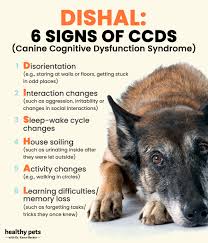
Decoding The DISHA Acronym
Veterinary neurologists strictly rely on a highly specific diagnostic tool known universally as the DISHA acronym to evaluate senior canines. This behavioral checklist allows pet parents to systematically audit their dog’s daily routine for massive cognitive red flags.
- (D) Disorientation: The dog wanders aimlessly across the backyard, entirely forgetting exactly where the patio door is located.
- (I) Interaction Changes: A highly affectionate dog suddenly becomes irritable, withdraws from physical touch, or fails to enthusiastically greet family members.
- (S) Sleep-Wake Cycle Alterations: The dog sleeps heavily throughout the entire afternoon but aggressively paces the floorboards all night.
- (H) House Soiling: Completely forgetting decades of strict bathroom training and eliminating indoors without signaling to go outside.
- (A) Activity Level Changes: A massive drop in purposeful exploration, frequently replaced by highly repetitive, completely aimless pacing.
Evaluating a senior dog against this highly clinical rubric entirely removes the dangerous emotional guesswork. If a dog actively checks multiple boxes on this specific list, a comprehensive veterinary neurological exam is absolutely mandatory.
Advanced Insight 1: The Spatial “Reverse Gear” Failure
Generic pet blogs constantly warn that senior dogs get easily “lost” in their own homes. Elite behaviorists understand the exact biomechanical reality of this disorientation: the brain completely loses the complex proprioceptive ability to execute a reverse gear. When a healthy dog walks directly into a tight corner, their brain instantly calculates the spatial geometry required to simply back out.
A dog suffering from severe CCD completely loses this advanced spatial calculation. The dog physically walks into the corner behind the television stand and becomes entirely, terrifyingly trapped. The animal will stand there for hours, occasionally pressing their forehead heavily into the drywall, completely unable to figure out how to put their body in reverse.
Take the highly concerning case of a thirteen-year-old Golden Retriever named Buster who suddenly began barking aggressively at the kitchen refrigerator. The owners assumed the dog was simply begging for food, but closer observation revealed Buster actually believed the massive stainless steel appliance was a doorway. He was completely trapped in a spatial loop, requiring the owners to physically place their hands on his shoulders and gently guide him backward to break the terrifying trance.
🐾 Snoutbit Pro-Tip: Never attempt to loudly call a senior dog’s name when they are completely physically trapped in a corner or staring at a wall. Their compromised brain cannot successfully process the directional audio, meaning calling them simply increases their severe panic; always physically approach them and gently guide them by the collar.
Advanced Insight 2: The “Sundowning” Acoustic Phenomenon
Nighttime pacing is a classic symptom of cognitive dysfunction, frequently ruining the entire household’s sleep schedule. Most handlers completely fail to realize that this specific evening anxiety, clinically known as “sundowning,” is heavily driven by intense sensory distortion. As the sun sets, the natural lighting inside the house violently shifts, creating massive, highly terrifying shadows that the degenerating canine brain perceives as physical threats.

Simultaneously, the ambient acoustic frequency of the household drops significantly when the family turns off the television and settles into bed. Without standard background noise to actively anchor them, the senior dog begins hearing the terrifying, high-pitched whir of the refrigerator or distant neighborhood traffic. This sudden sensory vacuum heavily triggers massive cortisol spikes, forcing the terrified dog to aggressively pace the floorboards in sheer panic.
Consider the highly intense rehabilitation of a senior terrier mix recently rescued from Wenny’s shelter, who arrived with severe, undiagnosed CCD. Every single night at exactly two in the morning, the terrier would violently dig at the bedroom door, heavily panting and completely inconsolable. The rescue volunteers completely stopped this nighttime panic by deploying a strict circadian lighting protocol and actively running a heavy-duty white noise machine to biologically mask the terrifying ambient frequencies.
Advanced Insight 3: The Hyper-Attachment Paradox
Standard medical literature frequently states that dogs suffering from cognitive decline become highly aloof and entirely withdrawn from their family pack. While social withdrawal is incredibly common, many dogs experience a highly terrifying, completely opposite psychological reaction. Elite behaviorists frequently observe the “Hyper-Attachment Paradox,” where the senior dog suddenly becomes violently attached to one specific human handler.
Because the dog’s internal spatial map and short-term memory are completely failing, the physical environment feels incredibly dangerous and highly unpredictable. To successfully survive this cognitive chaos, the dog chooses a single human to act as a highly secure, biological anchor. The dog will relentlessly follow this specific person from room to room, completely panicking if the human simply steps behind a closed bathroom door.
This severe behavioral shift is not actually separation anxiety; it is pure, unadulterated cognitive terror. The dog physically needs the human entirely within their line of sight to know exactly where they are in the universe. Handlers must aggressively recognize this specific behavior as a severe cry for cognitive help rather than dismissing the dog as simply becoming “clingy” in their old age.
🚨 Vet Fact: Physical pain highly exacerbates all known symptoms of canine cognitive dysfunction. Severe, undiagnosed osteoarthritis frequently causes a senior dog to pace relentlessly at night simply because they physically cannot find a comfortable sleeping position, making heavy pain management absolutely crucial before attempting cognitive behavioral therapy.
Environmental Management Tactics
Successfully managing a dog with severe cognitive decline requires aggressively altering the physical layout of the home. Handlers must create an incredibly safe, highly predictable physical environment to safely prevent the dog from experiencing severe daily panic attacks.
- The Carpet Runway: Place highly textured carpet runners entirely across slippery hardwood floors to physically guide the dog safely toward the water bowl and the back door.
- Corner Blocking: Aggressively utilize baby gates or large, heavy potted plants to physically block off tight corners and narrow hallways where the dog frequently becomes trapped.
- Circadian Lighting: Leave soft, highly predictable nightlights plugged in perfectly along the baseboards to completely eliminate terrifying shadows during evening hours.
- Routine Rigidity: Feed meals, execute bathroom breaks, and initiate bedtime at the exact same minute every single day to provide a massive, comforting biological rhythm.
This heavy environmental engineering completely removes the massive cognitive burden from the dog’s failing brain. By making the environment completely safe and entirely physically predictable, the dog can finally relax and successfully age with absolute dignity.
The Biological Nutrition Shift
Behavioral modifications completely fail if the failing canine brain lacks the proper, highly specialized nutritional fuel. Senior brains heavily require massive amounts of targeted antioxidants to successfully combat the highly destructive oxidative stress actively destroying their healthy neurons. Handlers must aggressively evaluate exactly what goes into the dog’s daily food bowl.
Veterinary neurologists frequently recommend entirely transitioning the dog to a highly specific, prescription-grade neurological diet. These advanced formulas are heavily packed with massive amounts of medium-chain triglycerides (MCTs), which provide an incredibly efficient, alternative energy source for the failing brain. Adding massive amounts of Omega-3 fatty acids heavily reduces dangerous neuro-inflammation, naturally slowing the aggressive spread of the toxic amyloid plaques.
🐾 Snoutbit Pro-Tip: Never completely rearrange the living room furniture or purchase a brand-new, massive area rug if a dog is actively suffering from CCD. Completely changing the established spatial map of the primary living area easily triggers a massive, highly dangerous regression in their overall cognitive stability.
What To Do Next
- Execute the DISHA Audit: Take a notebook today and rigorously observe the dog for exactly twenty-four hours, actively scoring their behavior against the specific DISHA acronym points listed above. Documenting exactly how often they pace, stare at walls, or experience bathroom accidents provides highly critical, concrete data for the upcoming clinical veterinary assessment.
- Deploy the Environmental Blockade: Walk entirely through the house right now and identify every single tight corner, open space behind a couch, or narrow hallway dead-end. Instantly block these highly dangerous spatial traps with decorative pillows, heavy storage bins, or baby gates to completely prevent the dog from walking into a highly terrifying “reverse gear” failure zone tonight.
Disclaimer: The content on Snoutbit.com is for informational and educational purposes only and is not intended to replace professional veterinary advice, diagnosis, or treatment. Always consult with your veterinarian before making significant changes to your dog’s diet, exercise routine, or health regimen.