
The high-pitched, relentless shriek of a new puppy at 2:00 AM is enough to drive even the most patient pet parent to the edge of sanity. You are sleep-deprived, the neighbors are likely losing their patience, and you feel a crushing sense of guilt for “locking up” your new best friend. This cycle of exhaustion and frustration often leads owners to accidentally reinforce the very behavior they are trying to stop, creating a long-term pattern of crate anxiety.

The definitive solution is the “Positive Den” protocol, which transforms the crate from a terrifying prison into a secure, biological safe haven. The most critical takeaway is that puppies are biologically hardwired to fear isolation, as being alone in the wild often equals death. Stopping the whining requires a systematic desensitization process that proves to the puppy that being in the crate is both safe and incredibly rewarding.
The Crate Success Mind Map
- Biological Needs: Ensuring the puppy is physically tired, has an empty bladder, and feels “den-like” security.
- Positive Association: Using high-value food rewards and scent-based comfort to lower cortisol levels.
- The “Silent Response” Rule: Ignoring demand whining while learning to differentiate it from “emergency” potty whines.
- Interval Training: Gradually increasing “door-closed” time from five seconds to five hours over several weeks.
The Biology of the Whine: Survival Instinct vs. Behavior
Canine ancestors survived by staying close to the pack; a puppy left alone would naturally vocalize to be “rescued” by its mother. When a new puppy enters a modern home, they are suddenly separated from their littermates for the first time in their lives. This triggers “isolation distress,” a high-stress state where the puppy truly believes they are in danger.
Understanding this biological reality is essential for maintaining empathy during the training process. The goal is not to “break” the puppy’s spirit, but to reassure their nervous system that the crate is the safest place in the house. By treating the crate as a sanctuary, handlers can switch off the puppy’s panic response before it escalates into full-blown separation anxiety.
🐾 Snoutbit Pro-Tip: Never use the crate as a form of punishment or “time-out” for bad behavior. If the puppy associates the crate with their owner’s anger or social rejection, the whining will escalate into a frantic “prison break” mentality that is nearly impossible to reverse.
Advanced Insight 1: The Scent-Exchange Protocol
Most generic advice suggests putting a “heartbeat sheep” or a warm towel in the crate to soothe a whining puppy. While these tools can help, they lack the specific chemical triggers that a puppy needs to feel socially secure. Canines process the world primarily through their olfactory system, making scent the most powerful tool for behavioral modification.
Elite trainers utilize the “Scent-Exchange Protocol” by placing a t-shirt recently worn by the owner directly into the crate. The fabric should be “dirty,” meaning it carries the owner’s specific pheromones and body scent. This provides the puppy with a “virtual presence” of their pack leader, which physically lowers their heart rate and reduces the biological urge to vocalize for help.
The Inverted Training Pyramid: Start with the Door Open
A massive mistake new owners make is only putting the puppy in the crate when it is time for bed or when they are leaving the house. This teaches the puppy that the crate door closing is a reliable predictor of social isolation. To stop the whining, the puppy must spend significant “non-isolated” time in the crate while the family is still in the room.
- Step 1: Toss high-value treats into the crate throughout the day with the door permanently propped open.
- Step 2: Feed every single meal inside the crate, allowing the puppy to walk in and out freely.
- Step 3: Once the puppy is happy eating inside, close the door for thirty seconds, then open it before they have a chance to whine.
- Step 4: Gradually increase the duration of the “door-closed” time while the puppy is occupied with a long-lasting chew or a frozen puzzle toy.
🚨 Vet Fact: Puppies have limited bladder control; a general rule is that they can only hold their bladder for one hour for every month of age plus one. If a three-month-old puppy whines after four hours in the crate, they are likely experiencing physical discomfort rather than behavioral distress.
Advanced Insight 2: The “Doorbell” Desensitization Hack
Puppies often start whining the moment they hear the metal latch of the crate door move. They have become hyper-sensitized to the “click” of the door, associating it with either an exciting exit or a terrifying entrance. This creates a state of “anticipatory arousal” that fuels the whining.
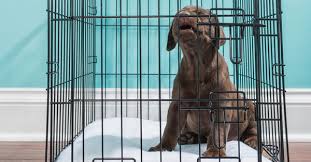
To break this association, handlers should walk over to the crate and touch the latch dozens of times a day without opening the door. Eventually, the puppy will stop reacting to the sound because it no longer predicts a change in their social status. This “de-valuing” of the crate hardware is a critical step in creating a calm, quiet environment.
Nighttime Survival: Differentiating the “Needs” from the “Wants”
The hardest part of crate training is surviving the first three nights. Handlers must be able to distinguish between a “demand whine” (I want to come out and play) and a “biological whine” (I need to go potty). Demand whining is usually loud, insistent, and may involve “scuffing” at the crate door.
A biological whine is often more frantic or may follow a period of restless circling within the crate. If a puppy has been quiet for several hours and suddenly starts vocalizing, they likely need a bathroom break. To prevent reinforcing the noise, the “potty trip” must be strictly business.
- Keep the lights low and do not speak to the puppy.
- Carry them directly to the designated potty spot.
- The moment they finish, put them directly back into the crate without any play or “good boy” snuggles.
- This proves that whining only results in a boring bathroom break, not a midnight play session.
🐾 Snoutbit Pro-Tip: Place the crate in the bedroom for the first week of training. Being able to hear the owner’s breathing and smell their proximity significantly reduces the puppy’s primitive fear of being “lost” from the pack.
Advanced Insight 3: The “White Noise” and Pheromone Combo
A puppy’s hearing is incredibly acute; every floorboard creak or distant car horn can startle them out of sleep and trigger a new round of whining. Creating an “Acoustic Bubble” around the crate is a highly effective way to maintain a deep sleep state. A high-quality white noise machine or a fan can mask these environmental triggers.
Pairing white noise with synthetic maternal pheromones (DAP – Dog Appeasing Pheromone) creates a powerful sensory “calm zone.” These pheromones mimic the scent produced by a nursing mother dog to soothe her litter. Utilizing a plug-in diffuser near the crate provides a constant, invisible “safety signal” to the puppy’s brain.
Common Pitfalls: The “Cry it Out” Danger
While it is important not to reward demand whining, the “cry it out” method can be dangerous if the puppy is experiencing genuine panic. If a puppy is panting, drooling, or attempting to bite the crate bars, they are in a state of “flooding.” This can lead to long-term crate aversion and generalized anxiety.
If the puppy reaches this level of distress, the training has moved too fast. It is necessary to go back to “Step 1” and focus on building positive associations with an open door. The goal is to always stay below the puppy’s “threshold”—the point where they switch from being slightly annoyed to being genuinely terrified.
🚨 Vet Fact: Intense, prolonged stress in puppies can lead to “cortisol soaking,” which negatively impacts brain development and immune system function. Training sessions should always aim for a calm, relaxed puppy rather than one that has simply “given up” out of exhaustion.
The Role of Physical and Mental Exhaustion
A puppy with a “full battery” will never settle quietly in a crate. Before any planned crate time, the puppy should engage in at least fifteen minutes of age-appropriate physical play and five minutes of mental enrichment. A “tired” brain is far less likely to engage in obsessive whining.

Mental enrichment can include simple “find it” games or basic obedience training. Engaging the puppy’s cognitive functions drains their energy more effectively than physical running alone. Once the puppy has had their “zoomies” and their “brain work,” they will view the crate as a welcome place to rest.
What To Do Next
- Perform a “Scent Audit” Today: Place a worn t-shirt or an unwashed pillowcase inside the puppy’s crate this evening. This immediate sensory intervention can lower the puppy’s baseline stress level by up to 40% before they even enter the crate for the night.
- Schedule the “Crate-Dining” Experience: Commit to feeding every meal inside the crate for the next seven days. By making the crate the “source of all good things,” the puppy will begin to anticipate crate time with excitement rather than dread, effectively silencing the whining at the source.
Disclaimer: The content on Snoutbit.com is for informational and educational purposes only and is not intended to replace professional veterinary advice, diagnosis, or treatment. Always consult with your veterinarian before making significant changes to your dog’s diet, exercise routine, or health regimen.