Spaying or neutering directly eliminates specific hormonally driven behaviors like roaming, indoor urine marking, and mate-seeking frustration. However, surgery is never a magic wand for learned behavioral issues like leash pulling, demand barking, or basic hyperactivity. Altering a dog changes their internal chemical drive, but it leaves all previously established habits completely intact. Expecting a surgical procedure to replace active, consistent training is the single biggest misconception in modern pet parenting.
The Great Chemical Shift: What Actually Happens
To understand behavioral changes, families must first understand what is being removed from the canine body. In males, neutering halts the massive daily production of testosterone. In females, spaying removes the steep, chaotic fluctuations of estrogen and progesterone associated with the heat cycle.

Without these powerful chemicals acting as a constant behavioral engine, a dog’s central nervous system stops prioritizing reproduction. This massive drop in biological urgency allows the dog to finally focus their attention back on their human handlers. They are simply no longer distracted by the overwhelming, invisible scent trails of other intact dogs in the neighborhood.
🚨 Vet Fact: A dog’s olfactory system is thousands of times more sensitive than a human’s. An intact male dog can literally smell a female in heat from up to three miles away, depending on favorable wind conditions.
Advanced Insight: The Six-Week Burn-Off Period
The most crucial, yet rarely discussed, aspect of behavioral alteration is the timeline. Many owners pick their dog up from the veterinary clinic and are shocked to see them still intensely sniffing or marking a week later. The physical reproductive organs are gone, but the residual hormones are absolutely still coursing through the bloodstream.
It takes a minimum of four to six weeks for testosterone and estrogen to fully metabolize and leave the dog’s system. During this burn-off window, hormonally driven behaviors will slowly taper off rather than stopping abruptly overnight. True behavioral baselines cannot be accurately assessed until at least two full months post-surgery.
Behaviors Guaranteed to Shift
When the chemical engine is finally quieted, certain frustrating daily behaviors almost always see a massive reduction. Roaming is the most dangerous hormonally driven instinct, causing otherwise loyal dogs to dig under fences or bolt through front doors. Studies show that neutering reduces roaming behaviors in up to 90% of male dogs, keeping them safely on their own property.
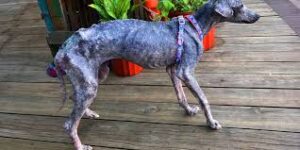
Take Anggu, a high-drive rescue mixed breed who spent his first year constantly escaping the yard to patrol the neighborhood. He was completely unresponsive to recall commands whenever he caught an interesting scent on the breeze. Within two months of his neuter surgery, the frantic fence-pacing stopped entirely, and he finally began engaging with training games in the backyard.
Indoor urine marking is another primary target for surgical intervention.
- Marking vs. Emptying: Marking involves depositing small amounts of urine on vertical surfaces to leave a chemical calling card.
- The Success Rate: Neutering reduces indoor marking by over 80%, provided the habit has not been practiced for years.
- The Female Factor: While less common, intact females will also frequently urine mark when approaching an active heat cycle.
🐾 Snoutbit Pro-Tip: If a male dog has been urine marking indoors for years, the behavior has likely transitioned from a hormonal urge into a deeply ingrained habit. Surgery will significantly lower the drive, but strict management and heavily reinforced potty training will still be required to break the physical habit.
What Surgery Cannot Fix
The veterinary table is not a substitute for a dog training facility. If a dog jumps on guests, aggressively resource guards their food bowl, or destroys the couch out of sheer boredom, surgery will change absolutely nothing. These are learned behaviors, entirely governed by environmental reinforcement and a severe lack of physical or mental enrichment.
Hyperactivity is frequently mistaken for hormonal drive. A young, working-breed dog requires intense daily physical exertion and complicated mental puzzles to feel satisfied. Removing their reproductive organs will not magically transform a high-energy Malinois into a lazy, couch-bound companion.
Aggression is also highly misunderstood in the context of altering. While neutering can reduce intrasexual competition (fighting between two male dogs over territory or mates), it rarely resolves fear-based aggression. A dog that bites because they are terrified of strangers is reacting out of deep insecurity, not an excess of testosterone.
Advanced Insight: The Danger of the Fear Period Clash
Timing the surgery requires careful behavioral consideration, not just physical maturity markers. Dogs go through several critical “fear impact periods” during their adolescent development, where their brains are hyper-sensitive to trauma. If a dog experiences a highly stressful event during one of these windows, the fear can become permanently hardwired into their personality.

Spaying or neutering a dog precisely during an active fear period can be behaviorally disastrous. The stress of the veterinary clinic, the confusion of anesthesia, and the pain of recovery can severely amplify underlying anxiety.
Always observe the dog’s daily demeanor before scheduling the procedure.
- Are they suddenly spooking at familiar objects like trash cans or ceiling fans?
- Are they displaying extreme hesitation around people they normally love?
- If sudden, unexplained fear is present, delay the surgery by a few weeks until their confidence naturally rebounds.
🚨 Vet Fact: The most severe adolescent fear impact period typically occurs anywhere between 6 to 14 months of age. This crucial developmental window often perfectly coincides with the exact time many pet parents choose to schedule an altering surgery.
The Female Rollercoaster: Navigating the Heat Cycle
While male behaviors are often more overtly disruptive year-round, intact females experience intense behavioral swings twice a year. The canine estrus cycle is a messy, complicated biological event that heavily impacts a female dog’s daily mood and trainability. As estrogen spikes, many females become highly irritable, easily distracted, and surprisingly short-tempered with other household pets.
Spaying completely levels out this emotional rollercoaster, providing a stable, predictable temperament 365 days a year. It entirely eliminates the frantic nesting behaviors and the intense anxiety often associated with the breeding instinct.
Consider a Golden Retriever named Bella, who experienced severe behavioral shifts following every single heat cycle. She would develop phantom pregnancies, obsessively hoarding squeaky toys in her crate and aggressively growling at anyone who approached her “puppies.” Once she was spayed, the massive hormonal drops ceased, and her naturally sweet, highly social temperament permanently returned.
Advanced Insight: The Scent Profile Shift
A truly fascinating behavioral consequence of altering is how it completely changes the way other dogs perceive your pet. Intact dogs carry a very heavy, distinct chemical signature that clearly broadcasts their age, sex, and reproductive status to the neighborhood. When a dog is altered, that potent adult scent marker completely vanishes.
To a highly driven intact dog, a neutered male smells confusingly similar to a young, non-threatening puppy. This is exactly why neutered males are sometimes continuously harassed or targeted at dog parks by intact males. The intact dog is deeply confused by the lack of adult scent and reacts with inappropriate, overbearing behaviors.
Understanding this dynamic is crucial for managing social interactions post-surgery.
- Monitor interactions at dog parks very closely, as your altered dog may now be the target of unwarranted mounting.
- Recognize that your dog has not suddenly become weak; they are simply broadcasting a neutral chemical signal.
- Always advocate for your dog’s personal space if another canine is relentlessly invading it due to scent confusion.
🐾 Snoutbit Pro-Tip: Never assume an altered dog is automatically “dog-friendly.” Removing hormones reduces competitive drive, but it does not instantly cure a dog who genuinely dislikes the company of other canines due to poor early socialization.
The Final Behavioral Verdict
Altering a dog is a powerful tool for modifying specific, frustrating instincts. It removes the chaotic noise of reproductive urges, allowing the dog’s true underlying personality to fully emerge. The procedure sets the stage for success, but the owner must actively write the script through daily engagement.

Families who combine the biological reset of a spay or neuter with a structured, positive reinforcement training plan see magnificent results. The surgery lowers the animal’s internal distractions, making them highly receptive to learning new household rules.
What To Do Next
Managing a dog’s behavior around their surgical timeline requires observation and proactive management. Take these two simple steps today to set your dog up for behavioral success:
- Assess the Root Cause: Write down your dog’s top three worst behaviors right now. Honestly evaluate whether these are driven by a desire to escape/mate, or if they are simply a result of boredom and a lack of daily structured training.
- Start a Routine Before Surgery: Do not wait until the dog wakes up from anesthesia to implement household rules. Start enforcing strict boundaries, crate routines, and daily mental enrichment at least three weeks prior to the surgery date.
Disclaimer: The content on Snoutbit.com is for informational and educational purposes only and is not intended to replace professional veterinary advice, diagnosis, or treatment. Always consult with your veterinarian before making significant changes to your dog’s diet, exercise routine, or health regimen.