Key Takeaways
- The Magnified Trauma of Abandonment: Losing a family is devastating, but for a special-needs dog, it induces a profound, paralyzing state of sensory panic.
- The Science of Spatial Mapping: Blind dogs can successfully navigate new environments by creating complex mental maps using olfactory cues and tactile floor markers.
- The Power of Passive Presence: Healing a shut-down, traumatized dog requires sitting in complete silence, allowing them to initiate physical contact entirely on their own terms.
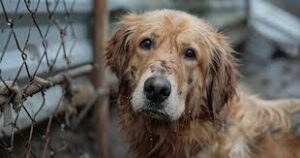
The heavy black trash bag shifted violently against the freezing alleyway dumpster. Inside, a matted, trembling mass of terrier mix fought desperately for a single breath of freezing air. He didn’t know why his world had suddenly gone completely, permanently dark just a few months ago.
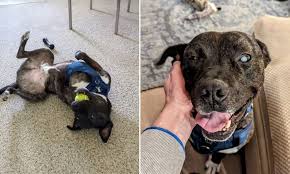
He only knew the sharp sting of the icy pavement and the terrifying, deafening roar of passing city traffic. His milky, unseeing eyes darted wildly beneath heavy, infected lids, searching for a familiar face he would absolutely never see again. The only family he had loved for seven years had driven him to the industrial park, tied the plastic bag, and simply walked away.
The Deafening Chaos of the County Shelter
When animal control officers finally untied the plastic knot, the little dog collapsed completely flat against the freezing concrete. The chaotic, echoing noise of the county shelter was an absolute sensory nightmare for a dog who could not visually process his surroundings. Hundreds of other terrified dogs barked relentlessly, causing him to violently flinch and press his frail body into the deepest corner of his metal run.
Without his eyesight, every single clanging cage door and echoing footstep sounded like an immediate, life-threatening predator. He suffered from a severe behavioral condition known as sensory overload, rapidly leading to a state of profound learned helplessness. He entirely stopped eating the cheap kibble tossed into his bowl, his frail ribs beginning to poke sharply through his filthy, matted coat.
Shelter staff placed a bright yellow “Rescue Only” card on his kennel door, a devastating indicator that he was deemed unadoptable by the general public. Blind dogs require immense environmental management, and civilian adopters are often deeply intimidated by the prospect of immense veterinary bills. As his kennel cough worsened into a wet, rattling wheeze, his name was quietly added to the Friday morning euthanasia list.
Snoutbit Tip: Understanding Sensory Re-Mapping in Blind Dogs
What is Sensory Re-Mapping? When a dog rapidly loses their vision due to conditions like Sudden Acquired Retinal Degeneration Syndrome (SARDS), their brain must entirely reroute spatial awareness. This complex neurological shift forces them to rely heavily on their vibrissae (whiskers) to detect incredibly subtle changes in air currents bouncing off solid furniture.
How it Manifests in Trauma: A newly blind dog that has been dumped in a strange shelter will exhibit severe spatial disorientation and profound neophobia (fear of the unknown). They will often aggressively “alligator roll” on a leash, pancake to the floor, or continuously walk in tight, frantic circles to protect their vulnerable sides.
The Clinical Rehabilitation Strategy: You must never suddenly pick up or grab a blind, traumatized dog, as this instantly triggers a defensive bite reflex. Rehabilitation begins by providing a heavily controlled, incredibly small “safe room” completely devoid of sharp corners or changing layouts. Utilizing distinct essential oils on doorframes allows the dog to confidently build an invisible, olfactory map of their new, safe world.
A Quiet Shadow in the Hallway
Just forty-eight hours before his time officially ran out, the heavy metal doors of the intake ward swung open. Clara, a veteran medical foster specifically trained in hospice and special-needs rescues, walked slowly down the deafening concrete aisle. She wasn’t looking for a playful, bouncy puppy to take to the local dog park for weekend hikes.
She explicitly asked the shelter director for the dog that absolutely nobody else in the building wanted to touch. When she knelt in front of Arthur’s kennel, she didn’t enthusiastically stick her fingers through the chain-link fence or use a high-pitched, loud voice. She simply sat cross-legged on the damp floor, remaining completely silent, allowing her unique scent to slowly drift through the metal bars.
Arthur’s ragged, matted ears twitched nervously as he picked up the faint, comforting smell of lavender laundry detergent and dog treats. He took one agonizingly slow, trembling step forward, his milky eyes staring blankly at the wall just slightly to Clara’s left. He let out a low, shuddering sigh, his wet nose twitching frantically as he tried to decipher if this new human was finally safe.
The Slow Journey to the Light
The car ride to Clara’s suburban home was terrifying for Arthur, but the moment his paws touched her plush living room rug, a tiny shift occurred. Clara had painstakingly prepared her home for a blind arrival, laying down highly textured runner rugs to create safe, tactile pathways through the house. She had dabbed a tiny drop of vanilla extract on the edge of the couch and peppermint oil near his water bowl.
For the first three weeks, Arthur absolutely refused to leave the small, padded perimeter of his open transport crate. Clara practiced extreme, silent patience, sleeping on a mattress on the living room floor just a few feet away so he wouldn’t feel abandoned in the dark. She gently announced her presence with two soft clicks of her tongue before ever approaching to place a warm bowl of shredded chicken near his paws.
Slowly, the irresistible, savory aroma of the warm food began to overpower his deep-rooted, paralyzing fear of the unknown environment. He started taking hesitant, wobbly steps onto the textured rugs, mapping out the dimensions of the living room using his nose and his whiskers. Every single time his paw found the edge of the safe carpet, his frantic breathing would immediately, visibly slow down.
The Golden Spark Finally Ignites
The ultimate turning point happened quietly on a rainy Tuesday morning while Clara was drinking her coffee on the floor. Arthur was carefully navigating his scent-marked pathway toward the kitchen when Clara softly clicked her tongue twice. Instead of freezing in sheer panic or retreating to his crate, the little terrier physically turned his body toward the gentle sound.
He took three clumsy, confident steps directly toward Clara, gently resting his scarred, scruffy chin squarely onto her knee. Clara slowly reached out, letting him sniff the back of her hand before gently stroking the soft fur behind his ears. For the very first time in months, Arthur’s scruffy, matted tail gave a tiny, hesitant, rhythmic wag against the carpet.
He didn’t need a functioning set of eyes to see the profound, unconditional love radiating from the woman sitting on the floor. His shattered spirit, completely broken by the horrific cruelty of the alleyway, was finally beginning to securely knit itself back together. He had successfully mapped out the physical dimensions of the house, but more importantly, he had mapped out the exact location of a safe, permanent heart.
A World Made Entirely of Love
Today, Arthur navigates Clara’s sprawling home with the confident, breathless speed of a dog with perfect 20/20 vision. He wears a specialized, lightweight “halo” harness that gently bumps into walls before his nose does, allowing him to confidently explore the fenced-in backyard. He absolutely loves sunbathing on the warm patio stones, his blind eyes closed peacefully as he listens to the distant neighborhood birds.
He sleeps every single night buried incredibly deep under Clara’s down comforter, his head resting heavily on her chest. The terrifying, deafening roar of the city dumpsters has been completely replaced by the comforting, predictable hum of a suburban kitchen. He no longer cowers when a door shuts; he eagerly trots toward the sound, expecting a warm greeting and a high-value treat.
Arthur’s breathtaking physical and emotional transformation is a powerful, living testament to the sheer resilience of special-needs rescues. They are absolutely never a lost cause, and their capacity to forgive the darkest depths of human cruelty is truly awe-inspiring. He was thrown away like worthless garbage because he lost his sight, but he ultimately proved that true, unconditional love is completely blind.
FAQ: Adopting and Caring for a Blind Dog
How do you safely train a blind dog to navigate a new home? The most effective method is utilizing “scent mapping” and “tactile mapping” to create invisible boundaries. Place highly textured rugs in safe walking paths, and use a distinct essential oil (like vanilla) solely on dangerous obstacles like doorframes or stairs. Never suddenly rearrange your living room furniture, as this entirely destroys the mental map the dog has painstakingly built in their memory.
Do blind dogs suffer from higher baseline anxiety than sighted dogs? Initially, yes. Dogs that lose their vision suddenly often experience a massive spike in baseline cortisol due to intense spatial confusion and vulnerability. However, once a strict, iron-clad daily routine is established and their environment remains completely predictable, their anxiety drops dramatically. Blind dogs can live incredibly relaxed, deeply joyful lives once they feel geographically secure.
What are the earliest clinical signs a dog is going blind? Pet parents often notice behavioral shifts long before they see physical changes in the eye itself. Early signs include sudden hesitation to use the stairs, excessive clumsiness in low-light conditions (like dusk), or sudden, unprovoked aggression when touched from behind. If your dog begins constantly sniffing the ground to navigate familiar spaces, immediately schedule a comprehensive exam with a veterinary ophthalmologist.
Disclaimer: The content on Snoutbit.com is for informational and educational purposes only and is not intended to replace professional veterinary advice, diagnosis, or treatment. Always consult with your veterinarian before making significant changes to your dog’s diet, exercise routine, or health regimen.