Key Takeaways
- The Hidden Toll: The psychological damage sustained by military working dogs is often identical to human combat trauma.
- Signs of C-PTSD: Hyper-vigilance, destructive pacing, and severe sleep startle reflexes are classic symptoms of untreated canine trauma.
- The Power of Routine: Decompressing a traumatized working breed requires extreme predictability, not just physical affection.
- Mutual Healing: Veteran-canine adoptions offer a unique, deeply intuitive path to recovery for both the handler and the dog.
The Fourth of July fireworks sounded exactly like incoming mortar fire. Blackjack, a seventy-pound Belgian Malinois, wedged his massive frame desperately behind the cold porcelain of the bathroom toilet bowl. His dark muzzle was completely covered in thick, white, frothy saliva.
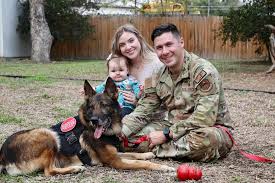
He violently tore at the wooden doorframe, his broken, bleeding claws leaving dark smears on the white paint. The deafening pops outside triggered a catastrophic neurological flashback, transporting him instantly back to the explosive-laden roads of Afghanistan. He wasn’t acting out or being stubborn.
This was a highly decorated Military Working Dog experiencing a massive, full-body panic attack. He had saved countless human lives overseas, sniffing out danger in the most hostile environments on earth. But right now, trembling violently in a dark suburban bathroom, he was utterly convinced he wasn’t going to survive the night.
A Soldier Trapped in Silence
Blackjack’s military service record was completely flawless, boasting three grueling combat deployments and dozens of successfully detected IEDs. Unfortunately, the sheer efficiency of the military machinery rarely accounts for the silent, invisible wounds that follow a canine soldier home. When he was honorably discharged at eight years old, his brilliant mind was completely shattered.
He exhibited severe, exhausting hyper-vigilance, constantly scanning the quiet living room for unseen sniper fire. If a delivery driver dropped a heavy cardboard package on the front porch, Blackjack would pancake flat to the floor, panting heavily. The rhythmic, harmless clicking of a ceiling fan kept him awake for days, his amber eyes wide and terrified.
His first adoptive family, a well-meaning but inexperienced civilian couple, returned him to the rescue within two agonizing weeks. They were simply unequipped to handle his intense, frantic pacing and his severe, dangerous sleep startle reflex. Whenever they tried to gently pet his head while he dozed on the rug, he would wake up aggressively snapping at the empty air.
The Invisible Scars of Combat
Every time the heavy metal latch of a shelter kennel door clanged shut, Blackjack flinched violently. The county rescue environment was an absolute sensory nightmare, perfectly mirroring the chaotic, terrifying noise of a forward operating base. He began to aggressively chew his own tail, a heartbreaking physical manifestation of profound, untreated anxiety.
The dedicated rescue staff watched helplessly as the majestic, highly trained Malinois rapidly deteriorated into a trembling, hollow shell. He refused his daily meals, staring blankly at the concrete wall instead of the stainless steel food bowl. His powerful, athletic muscles began to rapidly waste away from sheer psychological exhaustion and clinical starvation.
He was a true American hero, slowly dying from a broken, terrified mind right on US soil. The rescue organization knew they had to find a unicorn adopter immediately, or Blackjack simply wouldn’t survive another month. He didn’t just need a quiet house in the country; he desperately needed someone who fluently spoke the ugly language of trauma.
Snoutbit Tip: Understanding Canine PTSD (C-PTSD)
What is Canine PTSD? Just like human soldiers, dogs subjected to severe, prolonged, or repeated trauma can develop Canine Post-Traumatic Stress Disorder. Their central nervous system becomes permanently stuck in a biological “fight or flight” loop. They physically lose the ability to down-regulate their adrenaline.
How It Manifests in the Home: A dog suffering from C-PTSD will display extreme trigger-stacking. Common visual signs include violently shaking during loud noises, severe sleep disturbances, and unprovoked fear aggression toward strangers. They may also obsessively lick their paws or flank until the skin is completely raw and infected.
The Rehabilitation Approach: Never use harsh physical corrections with a traumatized working dog; it will instantly shatter any remaining trust. They require heavy environmental management, deep pressure therapy, and sometimes prescription anti-anxiety medications to lower their baseline cortisol levels. Absolute routine and unwavering predictability are the only ways to slowly rebuild their shattered confidence.
Two Broken Souls Collide
Mark, a retired Marine who served in the very same dusty valleys as Blackjack, saw the dog’s desperate profile online. Mark’s own home was heavily soundproofed, his windows completely covered in thick blackout curtains to keep his own night terrors at bay. When he walked into the noisy rescue facility, he didn’t offer the dog a high-pitched, excited greeting.
He simply sat down cross-legged on the cold concrete floor, entirely ignoring the frantic, pacing Malinois. He kept his breathing incredibly slow and rhythmic, radiating a calm, deeply grounded energy that required absolutely nothing from the dog. For forty-five minutes, the only sound was the dog’s heavy panting and the low hum of the shelter air conditioner.
Slowly, the exhaustion overpowered the dog’s blinding panic. Blackjack stopped pacing, took two hesitant, trembling steps toward the veteran, and heavily rested his massive chin directly on Mark’s combat boot. Mark didn’t reach out to pet him; he just let out a long, ragged sigh, instantly recognizing a fellow brother in arms.
The Grueling Road to Decompression
The first few months in Mark’s home were far from a magical, cinematic fairytale. The profound trauma ran deep into Blackjack’s bones, and unlearning years of intense combat readiness was a painstakingly slow process. Whenever a harsh summer thunderstorm rolled in, Mark would immediately find his heavy dog wedged under the bed, uncontrollably shaking.

Instead of dragging the terrified animal out by his collar, Mark would quietly slide under the heavy wooden bedframe right next to him. He utilized deep pressure therapy, firmly wrapping his strong arm around the dog’s chest to physically ground his racing heartbeat. In the absolute darkest, most terrifying moments of the night, they were actively keeping each other tethered to reality.
They quickly established a rigid, unbreakable daily routine, which is biologically crucial for resetting a traumatized nervous system. Meals, walks, and short obedience sessions happened at the exact same minute every single day. This extreme, unwavering predictability finally allowed Blackjack’s exhausted brain to stop constantly predicting the next fatal explosion.
Learning How to Be a Normal Dog
The true turning point happened quietly on a crisp autumn morning, completely devoid of any grand fanfare or celebration. Mark casually tossed a tennis ball across the fenced backyard, a simple game that Blackjack had previously ignored out of sheer hyper-vigilance. This time, the muscular Malinois didn’t freeze and scan the tree line for hidden threats.
He bounded eagerly after the bright green sphere, his powerful legs digging deep into the dirt, his tail wagging furiously. He brought it right back to Mark, dropping it with a wet thud and letting out a sharp, joyous bark. For the very first time in his entire eight-year life, Blackjack was simply playing like a normal dog.
That single, frantic tail wag was the culmination of hundreds of hours of silent patience, mutual respect, and profound empathy. The dull, dead look in the dog’s amber eyes was finally replaced by a bright, curious spark. The heavy, invisible armor he had worn since his puppyhood was finally starting to crack and fall away.
A Well-Deserved Peace
Fast forward two years, and the physical and emotional transformation in the retired military dog is absolutely breathtaking. Blackjack no longer obsessively patrols the living room windows at three in the morning. He spends his long afternoons deeply asleep on a premium orthopedic bed, his belly completely exposed to the ceiling in total trust.
When the neighborhood fireworks inevitably start up during the summer holidays, he doesn’t destroy the bathroom doorframe anymore. He simply moves quietly to the couch, pressing his heavy body tightly against Mark’s side. The booming noises still scare him, but he finally knows with absolute certainty that he isn’t fighting the war alone.
Together, the retired Marine and the decorated K9 navigated the darkest, most terrifying shadows of their respective pasts. They completely saved each other from the silent, suffocating aftermath of combat that so many veterans face. Blackjack finally found the one beautiful thing he fought so hard to protect overseas: a safe, quiet place to call home.
FAQ: Supporting Traumatized Working Dogs
Can an average family safely adopt a retired military working dog? While it is possible, it is exceptionally difficult and requires a massive lifestyle adjustment. Retired working dogs, especially those with combat experience, are not typical pets and often cannot live safely with small children or other animals. They require highly experienced handlers who understand the intense drive, bite inhibition, and severe trauma associated with military service.
How long does it take for a dog with C-PTSD to fully recover? There is no absolute cure for severe trauma, and the timeline for decompression is incredibly long. It takes an average of six to twelve months for a traumatized dog to simply realize they are in a safe environment. Recovery is a lifelong journey of careful management, avoiding specific triggers, and continuously reinforcing positive, calm behaviors.
What should I do if my dog suffers from severe sleep startle reflex? Never wake a sleeping dog by touching them, especially if they have a history of trauma or abuse. The sleep startle reflex is an involuntary, neurological response where the dog bites before they are fully conscious. If you must wake them, stand several feet away and call their name softly, or gently toss a high-value treat near their nose to wake them with a positive scent.
Disclaimer: The content on Snoutbit.com is for informational and educational purposes only and is not intended to replace professional veterinary advice, diagnosis, or treatment. Always consult with your veterinarian before making significant changes to your dog’s diet, exercise routine, or health regimen.