Key Takeaways
- The Ultimate Sacrifice: Working dogs do not understand the concept of gunfire; they operate purely on an unbreakable bond and a desperate desire to protect their handler.
- Physiological Miracles: A dog’s ability to survive extreme trauma relies heavily on immediate, aggressive veterinary intervention and emergency blood transfusions.
- The Psychological Toll: Just like human officers, K9s can experience severe hyper-arousal and PTSD-like symptoms following a violent, life-threatening encounter.
The copper scent of fresh blood completely overpowered the damp alleyway air. His handler’s desperate, shaking hands pressed down violently against the dark fur, but the crimson pool just kept spreading across the cracked asphalt. Arko’s breathing was horribly shallow, a wet, rattling gasp that shattered the sudden, eerie silence of the night.
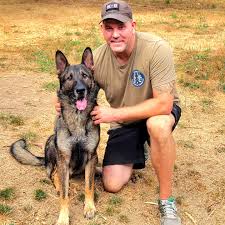
His amber eyes, normally burning with intense, laser-like focus, were terrifyingly vacant and rolling backward. He let out a low, shuddering whine, his tail giving one pathetic, barely-there thump against his handler’s blood-soaked knee. The once-unstoppable Belgian Malinois was rapidly fading, slipping away right in the arms of the man he had just saved.
The Frantic Race Against Time
The police cruiser’s sirens screamed through the silent city streets, a deafening wail that mirrored the officer’s internal, suffocating panic. In the back seat, Arko lay completely motionless on a hastily folded tactical jacket. His gums were turning a terrifying, translucent shade of white.
This was a classic, severe presentation of acute hypovolemic shock. The canine body was aggressively pulling oxygenated blood away from his extremities to desperately protect his failing major organs. Every massive jolt of the speeding car elicited a weak, agonizing groan from the back seat.
The handler drove with one hand on the steering wheel, reaching backward with the other to keep rigid pressure on the gaping chest wound. He kept whispering Arko’s name, his voice cracking violently with unshed tears. If the dog closed his eyes, the officer feared they would never, ever open again.
The Cold Reality of the ER
Harsh fluorescent lights blinded them as they violently pushed through the sliding glass doors of the 24-hour veterinary emergency center. A team of scrub-clad technicians instantly swarmed the bleeding, limp Malinois. They didn’t speak in full sentences; they communicated in sharp, rapid medical codes that sounded like a terrifying foreign language.
They slid Arko’s heavy body onto a cold, stainless steel gurney, rushing him backward through a set of heavy wooden doors. The officer was left standing completely alone in the sterile lobby, his uniform heavily stained with his best friend’s blood. He collapsed into a cheap plastic waiting room chair and buried his face in his trembling hands.
The phantom weight of his loyal partner’s heavy leather leash still felt incredibly heavy in his empty palm. He stared blankly at the floor tiles, painfully replaying the terrifying muzzle flash over and over in his mind. Arko hadn’t hesitated for a single fraction of a second before leaping directly into the line of fire.
Snoutbit Tip: Understanding “Drive Override” in Working Dogs
What is Drive Override? In high-drive working breeds like the Belgian Malinois or German Shepherd, the genetic instinct to work and protect is incredibly overpowering. When an adrenaline dump occurs during a high-stress event, a biological phenomenon called “drive override” completely masks the dog’s perception of physical pain.
How It Manifests in Trauma: A severely injured police K9 will often continue to fight, run, or attempt to bite a suspect even with broken limbs or gunshot wounds. Their brain is so flooded with cortisol and adrenaline that the pain signals simply do not reach their conscious awareness until the threat is entirely neutralized.
The Danger of the Drop: Once the adrenaline finally metabolizes and leaves the bloodstream, the dog’s body crashes incredibly hard. This sudden physiological drop is often when the animal slips rapidly into severe shock, making immediate veterinary trauma care the only factor between life and death.
The Agony of the Unknown
The agonizing wait stretched from frantic minutes into excruciating hours. The veterinary surgical team was fighting a desperate battle inside the dog’s shattered chest cavity. The bullet had missed Arko’s heart by mere millimeters, but the sheer kinetic impact had severely bruised his lungs and shattered a rib.
The massive internal bleeding required immediate, life-saving canine blood transfusions just to stabilize his crashing vitals. Back in the waiting room, fellow officers silently filled the lobby to support the devastated handler. No one dared to speak; the thick, suffocating tension in the room was entirely unbearable.
Every single time the surgical double doors swung open, the handler’s heart violently pounded against his bruised ribs. He braced himself for the pitying look of a veterinarian coming to deliver the absolute worst news imaginable. He mentally prepared to say a permanent, devastating goodbye to the partner who trusted him implicitly.
A Fragile Spark of Life
Just as dawn began to break outside the clinic windows, the lead surgeon finally walked into the quiet lobby. She looked completely exhausted, her surgical cap askew, but she offered a tight, incredibly fragile smile. Arko had miraculously survived the grueling surgery, but the crucial next 48 hours would dictate if he would truly live.
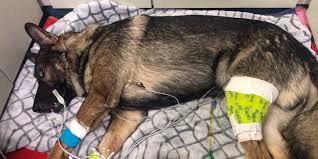
The handler was led into a dim, quiet intensive care recovery room. Arko was laying on a thick heating pad, surrounded by a terrifying maze of intravenous tubes and heavily beeping monitors. His powerful chest was tightly wrapped in thick, white compression bandages.
When the officer gently knelt beside the metal cage and softly whispered his name, something magical happened. Despite the heavy pain medication, Arko’s heavily sedated eyes fluttered slightly open. He couldn’t lift his heavy head, but his rough, dry tongue weakly reached out to lick the salty tears rolling down his handler’s cheek.
The Long, Painful Road Back
Surviving the initial physical trauma was only the very first, terrifying step in a grueling marathon of rehabilitation. Arko’s athletic, muscular body had been severely compromised, and the painful recovery required massive amounts of patience. For the first two weeks, he could not even stand up to drink water without agonizing, full-body tremors.
The handler moved a sleeping bag onto his living room floor, refusing to leave the injured dog’s side for even a minute. He hand-fed Arko tiny, soft bites of boiled chicken, coaxing him to eat when the heavy pain medications destroyed his appetite. The once fierce, independent K9 was now completely, heartbreakingly vulnerable.
Physical therapy became their new, daily battlefield. They spent hours in specialized canine water treadmills, fighting to rebuild the severe muscle atrophy in his hind legs. Arko would frequently whine in sheer frustration, his sharp mind desperately wanting to run while his broken body refused to cooperate.
Healing the Invisible Scars
The physical wounds slowly knitted back together, but the psychological trauma lingered much longer. Arko developed intense, severe hyper-vigilance, constantly scanning the quiet living room for unseen, phantom threats. If a car backfired three streets away, the dog would instantly launch himself off his orthopedic bed, furiously barking while limping heavily.
His handler recognized the heartbreaking signs of canine PTSD and immediately adjusted their daily routine to create absolute, predictable safety. He used deep, soothing pressure therapy, wrapping his arms tightly around Arko’s chest whenever the dog began to violently shake. He spoke in low, rhythmic tones, gently rewiring the dog’s terrified nervous system.
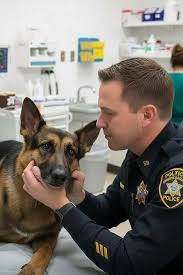
It took nearly eight months for the deep, panicked tension to fully leave Arko’s body. He slowly realized that he didn’t need to be actively on guard twenty-four hours a day anymore. He was finally allowed to put down his invisible armor and simply be a dog.
The Final Shift and a New Beginning
Due to the permanent, limiting nature of his severe chest injuries, K9 Arko was officially, honorably medically retired from the police force. The department held a massive, tear-jerking ceremony to honor the dog who had fearlessly taken a bullet for his partner. Dozens of officers stood at strict, silent attention as Arko slowly limped down the center aisle.
He proudly wore a brand-new leather collar adorned with a shiny, heavy medal of valor. When the police dispatcher gave his final, emotional sign-off over the radio, there wasn’t a single dry eye in the entire precinct. Arko simply leaned his heavy weight against his handler’s leg, letting out a soft, contented sigh.
Today, the hero dog spends his quiet mornings aggressively chasing tennis balls in a secure, sunny backyard. He sleeps right at the foot of his handler’s bed, officially off-duty but forever bonded by the blood they shared. He may walk with a permanent, noticeable limp, but his giant, courageous heart remains entirely unbroken.
FAQ: Supporting Dogs Through Severe Trauma
How do dogs mentally process severe, life-threatening trauma? Dogs do not process trauma with complex, human-like narratives or stories. Instead, their nervous system firmly associates specific sights, sounds, or smells with extreme fear and pain. This is why a dog might violently panic at the smell of a specific chemical or the sudden sound of a loud pop long after their physical wounds have healed.
Can a dog ever fully recover from canine PTSD? While you cannot erase their terrifying memories, you can actively help a traumatized dog build new, deeply positive associations. Consistent routines, incredibly patient counter-conditioning, and removing them from highly chaotic environments are crucial. With time and a handler’s quiet dedication, the intense panic responses will slowly diminish in frequency and severity.
What should I do if my pet experiences sudden, severe shock? If your dog suffers a massive trauma and exhibits pale white gums, rapid shallow breathing, or extreme lethargy, you have only minutes to act. Do not offer food or water, keep them as warm as possible with heavy blankets, and transport them to an emergency vet immediately. Severe hypovolemic shock is entirely fatal without rapid, professional intravenous fluid intervention.
Disclaimer: The content on Snoutbit.com is for informational and educational purposes only and is not intended to replace professional veterinary advice, diagnosis, or treatment. Always consult with your veterinarian before making significant changes to your dog’s diet, exercise routine, or health regimen.