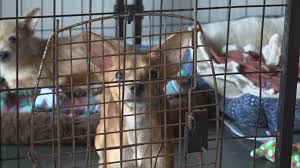
He did not flinch when the metal cage door abruptly swung open. The little hound simply pressed his emaciated body harder against the rusted back panel of his enclosure. His overgrown nails clicked frantically on the suspended wire flooring as he desperately tried to disappear into the shadows.

He had never seen direct sunlight, never touched a soft blade of grass, and never felt a gentle hand. The only sounds he knew were the deafening, frantic echoes of four thousand other dogs crying out in the dark. When the rescue worker finally reached in, he squeezed his eyes shut and surrendered his trembling body to the terrifying unknown.
A Life Defined by Wire and Cold Metal
The Ridglan Farms facility was a place where canine nightmares were mass-produced on an industrial scale. For decades, thousands of sweet-tempered beagles were bred and housed in massive, windowless sheds designed solely for maximum efficiency. The air inside these sprawling compounds was thick with the sharp, burning scent of ammonia and deep, systemic neglect.
These dogs were destined for laboratories, viewed purely as medical inventory rather than living, breathing companions. They never received a gentle scratch behind the ears, a warm bed, or a name of their own. Human contact meant one of two things: sterile feeding time, or a painful procedure was about to happen.
When animal welfare organizations finally secured the release of several groups of these dogs, the reality of their trauma became devastatingly clear. They were physically removed from the nightmare facility, but their psychological scars ran incredibly deep. Their bodies were free, but their minds were still trapped behind cold steel bars.
The Silent Suffering of Stereotypy
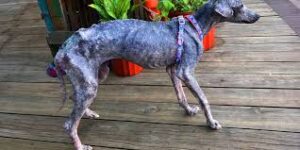
The physical condition of the rescued beagles told a horrifying story of systemic, long-term confinement. Many suffered from severe dental disease, their fragile teeth rotting from desperately chewing on the metal bars of their enclosures. Their delicate paws were splayed, swollen, and permanently deformed from years of balancing on cruel wire floors.
Muscle atrophy was incredibly common, as the dogs had never been allowed to run or stretch their legs. They completely lacked the basic physical coordination that a normal puppy develops in its first few weeks of exploring a yard.
More heartbreaking than their physical ailments was their profound, eerie silence. Many of the older breeding dogs had their vocal cords surgically severed to keep the massive, crowded sheds quiet. When they tried to bark in fear or excitement, only a raspy, heartbreaking wheeze escaped their throats.
The Day the Transport Vans Arrived
The logistics of moving highly traumatized dogs across the country required military-level precision and endless compassion. Volunteers lined the transport vans with thick, soft blankets, hoping to provide a simple comfort these animals had never known. As the travel crates were loaded, the silence of the dogs was deeply unsettling.
They didn’t bark, whine, or scratch frantically at the doors like normal dogs would. They simply curled into tight, shaking balls and stared blankly at the walls of their crates. They had learned long ago that fighting or crying out would never change their situation.
During the long, exhausting drives to foster homes and rescue centers, volunteers sat quietly in the back of the vans. They spoke in low, soothing whispers, offering high-value treats that were routinely ignored by the terrified passengers. The dogs were completely paralyzed by the noise of the engine and the terrifying, unfamiliar motion of the vehicle.
Snoutbit Tip: Understanding Learned Helplessness in Mill Dogs
What is Learned Helplessness? Learned helplessness is a profound psychological condition where an animal endures repeated painful or stressful stimuli that it cannot escape. Eventually, the dog completely stops trying to avoid the negative situation and simply gives up. Even when an opportunity to escape or play is finally presented, the dog will remain entirely passive and shut down.
How it Manifests: A dog experiencing this will often “pancake” flat to the floor, refuse to make eye contact, and display a completely stiff, rigid posture. They will not explore new toys, sniff new environments, or seek out human affection.
The Rehabilitation Approach: You can never force a shut-down dog to suddenly be brave. Foster families must create a highly predictable, incredibly quiet daily routine that demands absolutely nothing from the dog. Recovery begins by rewarding the smallest independent choices, like a dog deciding to take a single step toward a food bowl on their own.
First Steps on Solid Ground
The real, grueling work began the moment these beagles were carried across the threshold of their temporary foster homes. For dogs like our little survivor, a typical living room was an absolute minefield of terrifying, overwhelming sensory input. The hum of a kitchen refrigerator sounded like a monster, and the smooth hardwood floors felt like dangerous ice.

Foster families had to completely restructure their daily lives to accommodate the extreme, complex trauma of their new houseguests. They laid out endless paths of yoga mats and soft area rugs so the dogs could navigate the house without slipping in panic. They learned to walk incredibly softly, avoiding sudden movements that would send the beagles scrambling back into a dark corner.
Trust was not freely given; it had to be meticulously earned, millimeter by millimeter, over agonizingly long months. It started with a dog finally accepting a tiny piece of chicken tossed gently across the room. It slowly progressed to a dog remaining in the same room while a human watched television, rather than fleeing under the nearest bed.
The Long Road of Decompression
The turning point for many of these dogs happened quietly, when no one was actively watching. A foster mom might be sitting completely still on the floor, reading a book and deliberately ignoring the terrified beagle. This lack of direct social pressure is crucial for mill survivors, as direct eye contact is almost always perceived as a terrifying threat.
Slowly, the dog would creep out from his safe space inside an open wire crate. He would take one hesitant step, then another, his nose twitching frantically as he investigated the scent of a human shoe. When the human softly turned a page, he might flinch, but he wouldn’t run away.
These tiny, almost invisible moments were monumental victories for dogs who had never made a choice in their lives. The day a rescued beagle finally rests its chin on a human knee is a day that brings entire foster families to tears. It is the exact moment the heavy walls of trauma finally begin to crack.
2026 Update: From Number to Name
Fast forward to 2026, and the breathtaking transformation of the Ridglan Beagles is nothing short of a modern miracle. The dedicated network of rescues across the US, with supporters cheering them on all the way from Australia, achieved the impossible. These once-broken dogs are now living the vibrant, joyful, and spoiled lives they were always meant to experience.
The physical scars have largely faded, replaced by remarkably shiny coats and strong, capable muscles. They have finally learned how to run freely in grassy yards, how to playfully destroy a stuffed toy, and how to comfortably steal the best spot on the sofa. The raspy, silent barks have been replaced by the classic, joyous beagle baying whenever the postman arrives.
Social media groups dedicated to the survivors are continuously flooded with tear-jerking, triumphant daily updates. Proud owners share videos of their beagles successfully hiking in national parks and demanding vigorous belly rubs.
A Future Written in Paw Prints
The little hound who once pancaked in terror at the sight of a lawn is now named Barnaby. He was permanently adopted by his incredibly patient foster family and now confidently shares his home with a goofy Labrador who taught him how to be a real dog. He no longer trembles at the sound of a closing door; instead, he confidently patrols his backyard, tracking neighborhood squirrels.
His deep fears are mostly a ghost of the past, though he still occasionally side-eyes the vacuum cleaner with intense suspicion. He sleeps right in the middle of his parents’ bed, burying himself deeply under the softest blankets every single night. He knows exactly where his next meal comes from, and he knows he will never be cold or lonely again.

The incredible legacy of the Ridglan Beagles is a profound, living testament to the sheer power of human compassion. They survived the absolute worst of humanity, only to forgive us and show us the very best of what it means to love. These resilient dogs have firmly stamped their paw prints all over the hearts of their new families, proving that healing is always possible.
FAQ: Supporting Traumatized Rescue Dogs
How long does it take for a laboratory rescue dog to fully decompress? The standard “3-3-3 rule” (3 days, 3 weeks, 3 months) rarely applies to extreme trauma survivors from commercial facilities. For laboratory or puppy mill dogs, true decompression and the shedding of severe fear behaviors can easily take anywhere from six months to over a year. Absolute patience, a strict daily routine, and a very low-stress environment are strictly required for long-term success.
Should I force my traumatized rescue dog to socialize with new people? Absolutely not. Forcing unwanted interactions, a harmful technique known as “flooding,” will only deepen the dog’s trauma and destroy any fragile trust you have built. Always allow the dog to safely observe new people from a distance, and let them initiate contact only when they feel completely secure.
How do I safely help a dog who is absolutely terrified of walking on a leash? Many facility survivors have never worn a collar and will immediately panic or completely freeze if a heavy leash is attached. Start by simply leaving a lightweight, comfortable harness near their food bowl to slowly build a positive association. Once they are entirely comfortable wearing it indoors, let a very light leash drag behind them in a secure, fenced yard before ever attempting a formal neighborhood walk.
Key Takeaways
- The Power of Time: Rehabilitation for commercial breeding survivors takes months of painstaking, silent patience.
- Behavioral Milestones: Tiny actions, like sniffing a toy or stepping onto a rug, represent massive psychological victories.
- The 2026 Reality: Years after the heartbreaking rescues, these incredibly resilient beagles are finally thriving in permanent, loving homes across the country.