You see a loose dog trotting down the side of a busy road, and your immediate instinct is to pull over and help. But as you step out of your car, a sudden wave of hesitation hits you.
The absolute clearest signs a stray dog is friendly and approachable include a loose, wiggly body posture, a slightly open mouth with a relaxed tongue, soft blinking eyes, and a slow, sweeping tail wag held at mid-height. If you misread their body language, you risk triggering a severe, defensive bite.

You want to save them from oncoming traffic, but an injured or terrified dog views you as a massive, towering predator. You cannot just blindly reach out to pet a strange animal. Let’s decode their silent language so you can execute a safe, successful rescue without ending up in the emergency room.
The Stray Rescue Mind Map
- The Approach: Never walk straight toward a dog; use a wide, curved path to show you are not a physical threat.
- The Green Lights: Look for the “C-curve” body wiggle, soft eyes, and playful, bouncy movements.
- The Red Flags: A stiff, frozen body, a tightly closed mouth, and hard staring mean you must back away immediately.
- The Golden Rule: Let the dog close the final three feet of distance entirely on their own terms.
The Canine Communication Crisis
Most dog bites happen because humans completely fail to understand basic canine body language. We assume a wagging tail always equals a happy dog. This is a highly dangerous myth that gets well-meaning rescuers bitten every single day.
Using the Problem, Agitate, Solution (PAS) framework, let’s examine why your approach matters. The dog is already in a state of high stress, lost in an unfamiliar environment.
The Fear-Biting Reality
A stray dog is rarely aggressive out of pure malice. They are operating entirely on a biological fight-or-flight survival mechanism. When a massive human marches directly toward them, their nervous system perceives an active predator attack.
If they feel cornered against a fence or a parked car, their flight option is removed. The only biological choice they have left is to fight, resulting in a lightning-fast fear bite. You must constantly offer them a clear, unobstructed escape route to keep their anxiety manageable.
Anthropomorphism is Dangerous
Humans show love by making direct eye contact, walking straight up to a friend, and giving them a tight hug. In the canine world, every single one of those actions is a highly aggressive challenge.
You must completely stop treating a terrified stray like a human child. You have to speak their language by turning your body sideways, avoiding direct eye contact, and making yourself physically smaller. This drastically lowers your threat level and encourages the dog to investigate you safely.
5 Undeniable Signs a Stray Dog is Friendly and Approachable
Before you ever open your car door, you must perform a rapid visual assessment of the animal. You are looking for a combination of relaxed signals, not just one isolated movement.
If you are wondering about the exact signs a stray dog is friendly and approachable, watch for these five critical physiological indicators.
1. The “Spaghetti” Body Posture
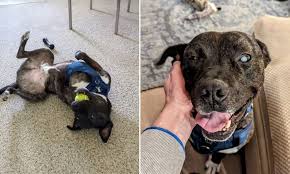
A relaxed, friendly dog moves like a wet noodle. Their spine is highly flexible, and their movements are loose and bouncy. When they look at you, their body should actively bend into a soft “C” shape.
If the dog is wiggling their entire back half along with their tail, this is a massive green light. A stiff, rigid spine is a terrifying warning sign of impending aggression. You want to see the dog physically melting into their environment, not bracing for impact.
2. Soft, Blinking Eyes (Whale Eye Warning)
The eyes give away a dog’s true emotional state before any other body part. A friendly dog will have soft, almond-shaped eyes with relaxed brows. They will look at you, blink frequently, and frequently look away to sniff the ground.
Conversely, a terrified dog will display “whale eye.” This is when a dog turns their head slightly away but completely fixes their gaze on you, showing the stark white corners of their eyes. Whale eye is an immediate precursor to a severe bite.
3. The Mid-Level, Sweeping Tail Wag
Forget everything you know about tail wagging. A high, stiff, rapidly vibrating tail means the dog is highly overstimulated and ready to attack. A tail tucked tightly against the stomach means they are completely paralyzed by fear.
The perfect friendly wag is held exactly at spine level. It sweeps broadly and rhythmically from side to side, often moving like a slow windshield wiper. If the wag involves the entire base of the tail and the hips, the dog is highly receptive to your help.
4. The Relaxed, Open Mouth (The Canine Smile)
When a dog is comfortable, their facial muscles completely relax. Their mouth will be slightly open, and their tongue may loll softly out to one side. This relaxed panting is often referred to as the “canine smile.”
If a dog suddenly snaps their mouth tightly shut, you must freeze. A suddenly closed mouth indicates the dog has stopped processing information and is preparing to react. Heavy drooling and lip licking are also massive indicators of acute canine stress.
5. Approaching in an Arc (The Polite Greeting)
How the dog moves toward you is just as important as how they look. A friendly, socially balanced dog will never walk straight at you. They will naturally approach in a wide, sweeping arc.
This curving path is the ultimate canine polite greeting. It signals that they are curious but absolutely do not want a physical conflict. If they stop to casually sniff a bush or the grass while approaching, they are actively trying to show you they are entirely harmless.
Red Flags: When to Back Away Immediately
Not every loose dog can be safely rescued by an untrained civilian. Some animals are simply too traumatized, feral, or protective to handle without specialized animal control equipment.
You must recognize the absolute dealbreakers. If you see these specific signs, you must retreat to your vehicle and call local animal services immediately.
The “Statue” Freeze
If a dog is walking and suddenly freezes completely solid like a statue when they notice you, they are locked into target acquisition. Their muscles are entirely tensed, and they are deciding whether to flee or charge.
Never step toward a frozen dog. Slowly back away without turning your back, keeping your hands completely neutral at your sides.
High, Stiff Tail and Piloerection (Raised Hackles)
Look at the strip of hair running directly down the center of the dog’s spine. If that hair is standing straight up, it is a biological response known as piloerection.
Combined with a stiff, vertical tail and forward-pointing ears, this dog is highly agitated. They are actively trying to make themselves look larger and more intimidating. This is an offensive posture, and you are currently their primary target.
How to Safely Approach a Loose Dog
Once you have positively identified the signs a stray dog is friendly and approachable, you must execute the approach flawlessly. One sudden movement can instantly reset their fear levels back to absolute panic.
Patience is your ultimate rescue tool. You are operating entirely on the dog’s timeline, not your own.
The “Tree” Method
The safest way to approach is to let the dog do all the actual approaching. Walk to a safe distance, stop completely, and turn your body entirely sideways. Look at the ground near their paws, completely avoiding all direct eye contact.
Become as boring and non-threatening as a tree. Let the dog use their nose to investigate you. If they cautiously approach and sniff your shoes, do not immediately reach down to pet their head.
Using High-Value Lures Safely
A starving stray is highly motivated by the smell of high-value food. Always keep highly fragrant treats in your car, such as freeze-dried liver or small pieces of hot dogs.
Toss the treats in a wide circle around the dog, slowly throwing them closer to your feet. Never hand-feed a terrified stray, as they can easily accidentally bite your fingers in their desperate panic. Let them eat the food directly off the ground while you casually slip a slip-lead over their neck.
Essential Rescue Equipment for Your Car
You cannot save a dog if you do not have the right tools. A standard flat collar and a clip leash are entirely useless when dealing with a panicked stray.
Build a dedicated, heavy-duty rescue kit and keep it permanently in your car’s trunk. When the moment arrives, you will be fully prepared to act like a professional.
Your Mandatory Vehicle Rescue Kit:
- A Heavy-Duty Slip Lead: This leash functions as both a collar and a leash in one seamless piece, easily slipping over a dog’s head without fumbling with metal clips.
- High-Value Smelly Treats: Vacuum-sealed hot dogs or pungent salmon treats work best to cut through outdoor distractions.
- A Thick Moving Blanket: Crucial for safely wrapping up an injured dog or protecting your car seats from mud and blood.
- A Pop-Up Silicone Bowl and Bottled Water: Dehydration makes dogs highly erratic; offering fresh water is a brilliant way to quickly build trust.
By mastering these visual cues and controlling your own body language, you can become an incredibly effective first responder for lost pets. Always prioritize your personal safety, use extreme patience, and let the dog tell you exactly how they feel.
Disclaimer: The content on Snoutbit.com is for informational and educational purposes only and does not constitute professional veterinary medical advice. Always consult with a licensed veterinarian before altering your pet’s diet, starting a new training regimen, or addressing behavioral or health concerns