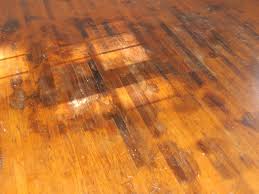
Discovering a massive puddle of dog urine slowly soaking into expensive, custom hardwood floors instantly triggers a massive wave of household panic. The highly acidic liquid rapidly eats through the protective polyurethane finish, causing the expensive wood planks to permanently warp, buckle, and turn a terrifying, rotting black color.
The definitive solution is aggressively avoiding steam mops and standard surface cleaners, which only push the urine much deeper into the porous grain. Saving the floor requires applying a cold-water enzymatic cleaner specifically formulated to destroy uric acid crystals. This must be paired with a specialized baking soda and peroxide poultice to literally pull old, dried stains directly out of the compromised wood.
Canine Urine on Hardwood: Overview Mind Map
- The Immediate Threat: Uric acid rapidly degrading the protective floor seal and aggressively penetrating the bare wood underneath.
- The Chemical Reaction: Ammonia in the urine reacting with the natural tannins in the wood, causing a permanent black discoloration.
- The Wrong Tools: Steam mops (bakes the smell in permanently) and white vinegar (completely fails to break down sticky uric acid crystals).
- The Right Arsenal: 365nm UV blacklights, live-enzyme pet cleaners, and medical-grade hydrogen peroxide poultices.
🚨 Vet Fact: Canine urine is highly concentrated with nitrogen and heavy metabolic waste products, making it significantly more acidic than human urine. This extremely high acidity is the exact reason it causes massive “lawn burn” on grass and rapidly strips the chemical finish off of expensive interior flooring.
Advanced Insight 1: The Enzyme Temperature Trap
Millions of pet owners purchase highly expensive enzymatic cleaners, spray the floor, and furiously scrub the boards with hot water. They are completely unaware that this massive temperature spike is actively destroying the product. Enzymatic cleaners contain living, biological bacteria designed specifically to consume incredibly stubborn canine uric acid crystals.
Exposing these incredibly fragile, living enzymes to high-heat tap water or a blazing hot steam mop instantly kills the helpful bacteria on contact. When the enzymes die, the expensive cleaner becomes nothing more than scented water that completely fails to neutralize the underlying odor. To actually clean dog urine from hardwood floors, handlers must strictly utilize lukewarm or cold water during the entire biological extraction process.
The floor must remain slightly damp with the enzyme solution for at least fifteen minutes. This crucial waiting period allows the live bacteria enough runway to physically eat and digest the biological waste. Rushing the process guarantees the odor will absolutely return the exact second the humidity in the room rises.
The “Towel Compression” Extraction Method
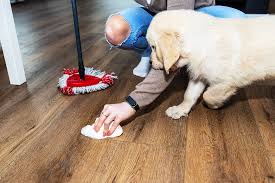
When an unexpected accident happens, frantically wiping the puddle with a paper towel aggressively forces the liquid outward into the tight cracks between the wooden floorboards. The correct protocol requires dropping a thick, highly absorbent microfiber towel directly over the puddle without rubbing or scrubbing. Step firmly onto the towel with a heavy shoe, utilizing full body weight to compress the fibers and pull the liquid straight up.
Keep applying heavy, downward physical pressure for a full sixty seconds to extract the maximum volume of liquid. Once the floor feels entirely dry to the human touch, generously saturate the exact area with the cold-water enzymatic cleaner. Allow this specialized chemical formula to sit entirely undisturbed to effectively neutralize the microscopic odor markers.
🐾 Snoutbit Pro-Tip: Never utilize bleach or ammonia-based floor cleaners when dealing with canine urine accidents. Urine naturally contains incredibly high levels of ammonia; using a similar-smelling chemical actually acts as a massive biological neon sign, actively encouraging the dog to pee in that exact same spot tomorrow.
Advanced Insight 2: The “Hydrogen Peroxide Poultice” For Black Stains
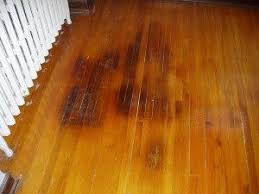
Often, an owner discovers an old, completely dried urine stain perfectly hidden underneath a living room rug or behind a heavy sofa. Hardwood floors exposed to long-term urine saturation undergo a severe chemical reaction, turning the wood a distinct, rotting black color. Generic pet blogs frequently tell owners the floor is entirely ruined, but advanced woodworkers utilize a specialized chemical “poultice” to forcefully pull the stain out.
Creating a powerful wood poultice requires soaking a clean white cloth or a thick paper towel in standard three-percent hydrogen peroxide. Lay the heavily soaked cloth directly over the black stain, cover it completely with plastic wrap, and securely tape the edges down to create a sealed humidity dome. Leave this airtight chemical patch entirely undisturbed for exactly twenty-four hours to slowly draw the dark discoloration directly out of the wood grain.
After strictly removing the plastic wrap, gently wipe the floor and allow it to air dry for another full day. This incredibly advanced, deep-extraction method frequently saves owners thousands of dollars in professional floorboard replacement costs. It physically reverses the dark tannin reaction, heavily restoring the wood to a lighter, highly manageable shade before finally re-sealing the floor.
Advanced Insight 3: The 365nm Blacklight Halo Effect
A massive, highly common mistake handlers make is only cleaning the visible puddle, entirely missing the microscopic urine splatter that sprays in a massive radius. When a large dog urinates on a hard surface, tiny droplets violently ricochet outward, heavily coating baseboards, nearby furniture legs, and adjacent floorboards. If this completely invisible splatter is not completely neutralized, the dog will relentlessly continue marking the area due to the lingering olfactory trigger.
Elite behaviorists completely eliminate this hidden risk by utilizing a high-powered 365nm ultraviolet (UV) flashlight. Standard cheap blacklights operate at 395nm, which completely fails to adequately illuminate dried biological proteins against dark hardwood floors. A 365nm wavelength light used in a pitch-black room instantly forces invisible uric acid crystals to glow a bright, highly recognizable neon yellow.
Armed with this highly specialized lighting tool, handlers can easily identify the exact “splatter halo” extending far past the original puddle location. Spraying the enzymatic cleaner across this entire illuminated radius guarantees absolutely zero microscopic scent markers remain behind. This meticulous, military-grade detection protocol completely breaks the frustrating canine behavioral cycle of repeated indoor marking.
🚨 Vet Fact: If a fully house-trained adult dog suddenly begins leaving small, frequent urine puddles on the hardwood floors, it is rarely a behavioral regression. This highly concerning symptom heavily points toward an aggressive urinary tract infection, painful bladder crystals, or age-related canine incontinence requiring immediate medical diagnostics.
Environmental Management and Realities
Consider the reality of a newly adopted Great Dane puppy that unexpectedly unleashed a massive puddle directly onto reclaimed oak flooring in a busy Seattle home. The frantic owner immediately grabbed a high-powered steam mop to completely sanitize the mess, accidentally driving the vaporized uric acid deep into the floor joists. The entire hallway permanently smelled like a kennel until professional flooring contractors were forced to completely replace the warped, deeply contaminated oak planks.
Successfully managing canine accidents absolutely requires identifying the exact behavioral trigger driving the indoor urination. If a dog only urinates on the floor when the owner leaves for work, the core issue is severe separation anxiety, entirely unrelated to poor bladder control. The dog is experiencing a massive panic attack and involuntarily losing bladder control due to violently skyrocketing cortisol levels.
Take the completely different reality of an elderly Dachshund living in a massive, multi-level suburban house. The senior dog quietly developed a sneaky habit of urinating behind a heavy dining room hutch because navigating the steep stairs to the backyard had become incredibly painful. Once the owners built a gentle outdoor ramp and placed a highly absorbent pee pad near the back door, the indoor hardwood accidents completely stopped.
The Professional Refinishing Reality
If a dog repeatedly utilizes the exact same spot on a hardwood floor over several months, the highly acidic urine will eventually eat completely through the polyurethane. Once the uric acid physically penetrates the bare, unprotected wood fibers, basic surface cleaning becomes entirely impossible. The damaged wood acts exactly like a biological sponge, deeply soaking up the foul odor and trapping it permanently inside the physical structure of the house.
In these severe, worst-case scenarios, the affected floorboards must be professionally sanded completely down to the raw timber. The stripped floor is then heavily treated with an industrial-grade odor-blocking primer to trap the remaining smell before being completely refinished. Handlers must strictly prevent repeated accidents through heavy environmental management to successfully avoid this massive, highly expensive home renovation.
🐾 Snoutbit Pro-Tip: Do not rely on highly scented candles or heavy chemical air fresheners to mask the smell of massive canine urine accidents. The dog’s olfactory system is thousands of times more powerful than a human’s; they will easily smell the lingering uric acid underneath the artificial pine scent and confidently continue utilizing the spot as an indoor toilet.
What To Do Next
- Execute The Blacklight Audit: Wait until the house is completely dark tonight and systematically sweep the entire hardwood floor using a high-powered 365nm UV flashlight. Mark any hidden, glowing yellow spots with a small piece of painter’s tape to precisely identify exactly where the enzymatic deep-cleaning needs to occur tomorrow morning.
- Deploy The Poultice Protocol: If you discover a dark, deeply set black stain on an older floorboard, immediately build a hydrogen peroxide and plastic wrap poultice. Covering the stain with this specialized chemical trap for exactly twenty-four hours will aggressively pull the baked-in discoloration directly out of the compromised wood grain.
Disclaimer: The content on Snoutbit.com is for informational and educational purposes only and is not intended to replace professional veterinary advice, diagnosis, or treatment. Always consult with your veterinarian before making significant changes to your dog’s diet, exercise routine, or health regimen.