Watching a dog cock their head to the side when asked about a “walk” or a “treat” is arguably the most endearing behavior in the canine world. Most owners view it as a simple sign of confusion or a deliberate attempt to look cute for a piece of cheese. However, this charming quirk hides a complex biological process designed to maximize both auditory precision and visual clarity.
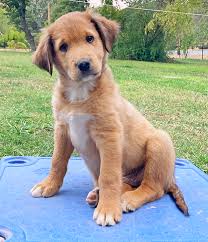
The definitive reason behind the head tilt is a combination of sound triangulation and visual optimization. The biggest takeaway is that dogs are actively “tuning” their ears to pinpoint the exact frequency and direction of a human voice while simultaneously moving their snout to get a better view of human mouth movements. This behavior is a massive indicator of a dog’s deep emotional investment in understanding their human handler’s intent.
The Canine Head Tilt: Overview Mind Map
- Acoustic Triangulation: Adjusting the outer ear (pinna) to better capture and locate the source of high-frequency sounds.
- Visual Clarity: Shifting the long muzzle to remove visual obstructions and better see human facial expressions.
- Social Intelligence: Filtering for “trigger words” (walk, park, dinner) that predict a positive outcome.
- Medical Red Flags: Involuntary tilting, circling, or flickering eyes that signal an underlying health crisis.
Triangulating the Sound: Why Ears Matter
Dogs possess an incredible range of hearing, capable of detecting frequencies far beyond the limit of the human ear. However, because their ears are often located on the top or sides of their heads, they occasionally struggle to pinpoint the exact vertical origin of a sound. By tilting the head, a dog physically changes the angle at which sound waves enter each ear canal.
This slight shift allows the canine brain to calculate the microscopic difference in the time it takes for a sound to reach each ear. It is a highly sophisticated biological “radar” sweep. The dog is essentially adjusting their internal antenna to ensure they don’t miss a single syllable of a potentially exciting announcement.
🚨 Vet Fact: Dogs have over eighteen individual muscles in their ears, allowing them to tilt, rotate, and flatten their pinnae independently. This extreme mobility is what enables them to lock onto a sound with nearly 100% accuracy, even in a noisy environment.
Advanced Insight 1: The Muzzle Obstruction Theory
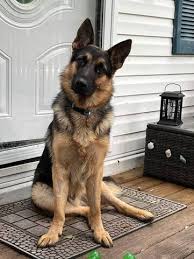
While most people focus on hearing, a fascinating study published in Psychology Today suggests the head tilt is also a visual necessity. For dogs with prominent snouts—like German Shepherds, Labs, or Greyhounds—the muzzle acts like a constant visual barrier directly in front of their lower face. If a human is speaking, the dog’s own nose may partially block their view of the human’s mouth and lower facial muscles.
Because dogs rely heavily on reading human micro-expressions to gauge emotion, they tilt their heads to “look around” their own noses. This allows them to see the entire human face clearly, helping them differentiate between a happy “Good boy!” and a stern correction. Interestingly, research shows that flat-faced breeds (brachycephalic) like Pugs or Boston Terriers tilt their heads significantly less often, likely because they have no muzzle obstructing their view.
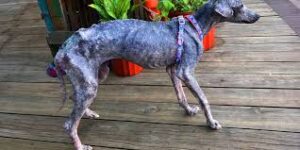
Take the anecdotal reality of a rescued Greyhound in Virginia that would only tilt its head when the owner whispered. The dog’s long, narrow snout required a significant shift in perspective to clearly see the owner’s lips moving in the dim light of the living room. Once the dog could see the facial cues, they would immediately respond with a joyful tail wag, proving the tilt was a visual search for information.
Advanced Insight 2: High Social Intelligence and “Gifted” Dogs
Not every dog tilts their head, and recent studies suggest those that do might be at the head of the class. Researchers at Eötvös Loránd University in Hungary found a direct correlation between head tilting and “gifted” word learners—dogs who can learn the names of hundreds of individual toys.
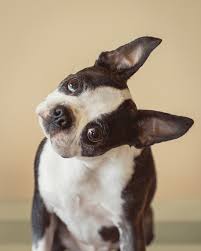
The study observed that these highly intelligent dogs tilted their heads significantly more often when their owners requested a specific toy. The tilt appears to be a physical manifestation of “concentration” or “mental processing.” It suggests the dog is actively cross-referencing the spoken word against their internal database of known objects and rewards.
🐾 Snoutbit Pro-Tip: To test a dog’s social intelligence, use a neutral tone of voice to say a gibberish word, then say a high-value reward word like “Cookie.” If the dog only tilts their head at the reward word, they aren’t just reacting to the sound of a voice; they are actively performing complex linguistic processing.
Advanced Insight 3: Detecting Inner Ear Pressure
While the head tilt is usually a sign of engagement, it can occasionally serve as a subtle “self-adjustment” for internal ear pressure. Just as humans “pop” their ears during a flight, dogs may tilt their heads to shift fluid or equalize pressure in the middle ear. This is particularly common in breeds with heavy, floppy ears like Basset Hounds or Cocker Spaniels, where moisture and debris can easily become trapped.
If the tilt is accompanied by frequent head shaking or scratching at the ears, it has transitioned from a behavioral quirk to a physical symptom. Chronic inflammation or yeast overgrowth deep in the ear canal can make the dog feel as though they are under water. Tilting provides a temporary, fleeting sense of relief from the localized pressure and itching.
Consider the case of a Golden Retriever in Seattle that suddenly started tilting its head during every walk. The owner initially thought it was cute curiosity, but realized the dog only tilted toward the right side. A veterinary exam revealed a tiny grass seed (foxtail) lodged deep against the eardrum; the “tilt” was the dog’s desperate attempt to shake the foreign object loose.
🚨 Vet Fact: Chronic, untreated ear infections can eventually rupture the eardrum, leading to permanent hearing loss or the spread of infection into the skull. If the inside of the ear appears red, swollen, or produces a dark, “coffee-ground” discharge, the head tilt is a medical emergency.
The Social Reinforcement Loop
Humans are biologically hardwired to find the head tilt irresistible. When a dog tilts their head, humans almost always respond with high-pitched praise, laughter, or a piece of food. This creates a powerful “positive reinforcement loop.”
The dog quickly learns that this specific physical movement is a “human magnet” that triggers immediate affection and attention. Even if the dog isn’t actually confused or trying to hear better, they may offer a head tilt simply because they know it is the fastest way to get a belly rub. It is a brilliant example of canines training their humans to provide rewards on cue.
When the Tilt Becomes a Warning: Vestibular Disease
There is a critical distinction between a “social tilt” and a “vestibular tilt.” A social tilt is fleeting, intentional, and usually happens when the dog is engaged with a person. A vestibular tilt is constant, involuntary, and often makes the dog look as though they are “drunk” or losing their balance.

Old Dog Vestibular Disease (often called “SDRS”) affects the balance center in the inner ear. It can cause a sudden, severe head tilt that stays locked in place, along with rapid, flickering eye movements (nystagmus) and an inability to stand up. While it looks terrifying—often resembling a stroke—many dogs recover fully with supportive care and time.
🐾 Snoutbit Pro-Tip: If a dog’s head tilt remains fixed even when they are sleeping or eating, or if they appear to be “walking in circles,” do not wait. This is a clear indicator of a neurological or inner ear crisis that requires professional diagnostic imaging to identify the source of the vertigo.
Environmental Triggers: High-Pitch Curiosity
Dogs are particularly prone to tilting their heads when they hear “novel” sounds—noises they haven’t quite categorized yet. A squeaky toy, a bird chirping on television, or a human mimicking a howling wolf are all prime triggers. The dog is trying to determine if the sound represents a threat, a prey animal, or a new game.
If the sound is high-pitched, the dog’s interest is peaked even further. High-frequency noises mimic the distress calls of small prey, triggering an ancient, predatory curiosity. The head tilt allows them to “fine-tune” their focus on these microscopic sounds, ensuring they are ready to react the moment the “prey” moves.
What To Do Next
- Perform an “Ear Audit” Today: Gently lift the dog’s ear flaps and look for any signs of redness, heavy wax, or a foul, yeasty odor. If the ears are perfectly clean and the head tilt only happens during conversation, it is a healthy sign of social engagement and high intelligence.
- Test the “Visual Obstruction” Theory: If the dog has a long muzzle, try holding a treat at their eye level, then move it slightly to the side. If they tilt their head to follow the treat, they are likely just moving their snout out of the way to maintain a clear line of sight on the prize.
Disclaimer: The content on Snoutbit.com is for informational and educational purposes only and is not intended to replace professional veterinary advice, diagnosis, or treatment. Always consult with your veterinarian before making significant changes to your dog’s diet, exercise routine, or health regimen.