The front door clicks shut, and the agonizing mystery immediately begins. Wondering if a dog is peacefully sleeping on the couch or frantically pacing the living room creates immense daily anxiety for dedicated pet parents. A stationary living room camera leaves massive visual blind spots, completely missing the dog’s actual perspective and the tiny, subtle details triggering their daily panic.
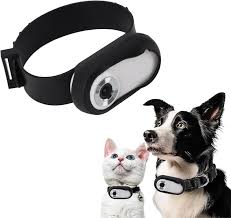
The biggest takeaway is that a dog collar camera is not just a toy for funny social media clips; it is the ultimate behavioral diagnostic tool. For minimal cost, a flush-mounted, lightweight collar camera captures the exact audio and visual triggers causing separation anxiety, destructive chewing, or fence reactivity. Ditch the heavy, bulky action cameras and strictly choose a low-profile model that records the dog’s unfiltered world without ever disrupting their natural spinal alignment or gait.
To instantly visualize exactly how this wearable technology changes canine behavioral modification, here is a quick overview mind map.
🧠 Overview Mind Map: The POV Diagnostic Matrix
- The Core Function: Records the dog’s exact visual and auditory point of view when humans are absent.
- The Behavioral Tool: Diagnoses the root cause of mysterious indoor destruction and severe separation anxiety.
- The Mounting Rule: The camera must sit entirely flush against the collar to prevent dangerous swinging.
- The Hardware Secret: Audio quality is actually significantly more important than 4K video resolution for diagnosing canine stress.
The Problem with Stationary Pet Cameras
Traditional, pan-and-tilt pet cameras sitting on a living room bookshelf are fundamentally flawed for serious behavioral work. They only capture a wide, static angle of a single room, completely failing to follow the dog as they roam the house. If the dog leaves the living room to destroy a rug in the hallway, the stationary camera captures absolutely nothing of value.
Stationary cameras also fail to capture exactly what the dog is focusing on during a reactive episode. When a dog runs to the window and barks aggressively, the bookshelf camera only shows the back of the dog’s head. A collar camera shows exactly what is happening outside that specific window at that exact millisecond.
🚨 Vet Fact: Attaching a heavy, traditional action camera to a small breed dog’s collar causes severe biomechanical disruption. The heavy, swinging pendulum effect forces the dog to constantly alter their natural gait, leading directly to chronic neck strain and severe spinal misalignment over time.
Advanced Insight #1: The Ultrasonic Audio Matrix
Generic pet tech guides focus entirely on high-definition video resolution while completely ignoring the microphone. In behavioral science, the microphone is an absolute diagnostic goldmine. Dogs possess an incredible auditory range, hearing high-frequency sounds entirely imperceptible to human ears.
A dog might suddenly start pacing and panting in an empty house for seemingly zero reason on the video feed. However, the collar camera’s microphone often picks up the exact trigger causing the panic. This could be the high-pitched whine of a failing refrigerator compressor, a distant siren, or a neighbor’s ultrasonic pest repeller plugging into a shared wall.
Discovering these hidden audio triggers is completely impossible with the naked human ear. Once the high-frequency trigger is identified on the recording, owners can easily utilize a white noise machine to block the sound and instantly cure the dog’s anxiety.
The Chicago Terrier Anxiety Breakthrough
Consider a highly anxious Yorkshire Terrier living in a bustling Chicago apartment building. Every Tuesday afternoon, the dog completely destroyed the front door weatherstripping, leaving the owners absolutely baffled. A stationary camera simply showed the dog attacking the door, offering no insight into the actual catalyst.
The owners strapped a lightweight collar camera to the Terrier before leaving for work. The footage revealed an incredible, hidden trigger occurring right in the hallway. Every Tuesday, the building’s maintenance crew used a specific, highly squeaky rolling cart to collect the trash directly outside the apartment door.
The high-pitched squeal of the cart wheels sent the Terrier’s prey drive and territorial anxiety into absolute overdrive. The owners simply asked the maintenance crew to oil the cart wheels, and the destructive door-chewing stopped completely the very next week.
Advanced Insight #2: Eliminating the Observer Effect
A massive hurdle in professional dog training is a phenomenon known as the “Observer Effect.” Dogs are incredibly intelligent and highly sensitive to human eye contact, body language, and breathing patterns. They behave entirely differently when they know an owner is actively watching them in the backyard.
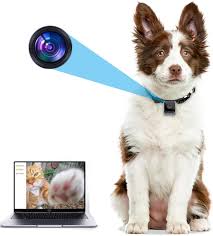
A dog might never dig a hole while a human is standing on the patio holding a cup of coffee. The exact second the human steps inside, the dog begins frantically excavating the flower bed. A collar camera completely removes human interference from the behavioral equation.
It captures authentic, uninhibited canine behavior in a completely natural state. This raw, unfiltered data allows behaviorists to see exactly what holds the dog’s attention, how they interact with the environment, and what specifically triggers their unwanted habits when left entirely alone.
🐾 Snoutbit Pro-Tip: Never use a collar camera that requires a monthly cloud subscription to view the footage. Purchase a model that utilizes a physical MicroSD card, allowing for instant, free playback on a laptop the exact second the dog returns from a walk or yard session.
The Chest Mount vs. The Back Mount
Mounting positioning dictates exactly what type of behavioral data is captured. Most owners instinctively mount the camera directly on top of the dog’s neck, pointing forward over the ears. While this provides a fun, sweeping view of the landscape, it is terrible for diagnosing specific ground-level behaviors.
Mounting the camera securely under the chin, resting flat against the dog’s chest, is the ultimate behavioral setup. This low-angle perspective shows exactly what the dog is sniffing, picking up, or chewing on the ground. It provides a crystal-clear view of their front paws, making it incredibly easy to diagnose exactly how they are destroying household objects.
For dogs that constantly scavenge for dangerous trash on neighborhood walks, the chest mount is an absolute lifesaver. Handlers can review the footage to see exactly which specific bushes or sidewalk cracks the dog targets, allowing for proactive, hyper-vigilant leash management the next day.
Advanced Insight #3: The Fence-Fighting Diagnostic
Suburban dogs frequently engage in a highly dangerous, intensely stressful behavior known as fence fighting. Two dogs sharing a wooden privacy fence will run back and forth, aggressively snarling and snapping at the wooden planks. Owners rarely see what starts these fights because the dogs immediately stop when a human enters the yard to intervene.
Equipping the instigator with a collar camera immediately solves the mystery. The footage reveals exactly which dog initiates the charge and precisely which section of the fence is the primary battleground. Often, the camera reveals a tiny, unseen knothole or a gap under the wood where the dogs can make direct eye contact.
Once the specific visual trigger point is identified on the camera footage, the solution is incredibly easy. Owners can simply nail a solid piece of plywood over that exact gap, instantly breaking the visual lock and completely neutralizing the violent fence-fighting behavior.
The Texas Husky Escape Artist
A deeply intelligent Siberian Husky living in suburban Texas became a notorious, highly frustrating neighborhood escape artist. The backyard was surrounded by a pristine, six-foot wooden privacy fence with absolutely zero visible holes or weak spots. The owners spent thousands of dollars reinforcing the gates, but the Husky kept vanishing into the neighborhood.
Desperate for answers, they equipped the dog with a rugged, low-profile collar camera and left for the grocery store. The resulting footage was a masterpiece of canine engineering. The camera showed the Husky casually walking over to the central air conditioning unit, using it as a springboard, and effortlessly scaling the six-foot fence like a parkour athlete.
Without the raw point-of-view footage, the owners would never have guessed the air conditioning unit was the launching pad. They simply installed a specialized, slanted barrier directly above the AC unit, permanently retiring the Husky’s escape routines.
🚨 Vet Fact: Never leave a heavy or bulky camera attached to a dog’s collar if they are going to be playing vigorously with other dogs at a park. The plastic camera housing presents a massive impact hazard, easily capable of fracturing another dog’s teeth during intense, open-mouth wrestling sessions.
Desensitizing the Dog to the Camera
Strapping a strange, plastic box to a dog’s neck requires a brief period of careful desensitization. If the camera is simply snapped on right before leaving the house, the dog will spend the entire afternoon frantically trying to scratch it off. The camera itself becomes a massive source of stress, completely ruining the diagnostic footage.
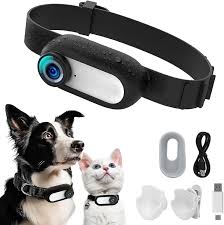
Start by letting the dog sniff the powered-off camera while offering high-value treats. Next, attach the camera to the collar for exactly two minutes while feeding the dog their daily dinner. The dog’s brain quickly associates the weight of the camera with the ultimate reward of a full food bowl.
Gradually increase the wear time over several days while the dog is engaged in highly rewarding activities, like playing fetch or chewing a high-value bone. Within a week, the dog will completely ignore the device, ensuring the recorded footage captures authentic, relaxed behavior rather than a frantic attempt to remove the hardware.
What To Do Next
- Select a Flush-Mount Camera: Audit the available online options today and strictly purchase a collar camera that sits flush against the dog’s neck. Completely avoid any camera that hangs down on a D-ring or swings wildly like a pendulum to protect the dog’s cervical spine.
- Conduct a Baseline Test: Do not wait for a behavioral crisis to strike. Charge the camera, secure it to the chest position, and leave the house for exactly thirty minutes to capture a healthy, baseline recording of the dog’s natural resting state when home alone.
Disclaimer: The content on Snoutbit.com is for informational and educational purposes only and is not intended to replace professional veterinary advice, diagnosis, or treatment. Always consult with your veterinarian before making significant changes to your dog’s diet, exercise routine, or health regimen.