Bringing home an incredibly cute puppy quickly turns into a daily nightmare when those needle-sharp teeth start tearing into hands, ankles, and clothing. Those relentless bites actually hurt, frequently drawing blood and reducing excited, loving families to tears of pure frustration. It feels incredibly defeating when standard internet advice like shouting “no” or tapping their tiny nose only makes the puppy bite harder and act more aggressive.

The absolute fastest way to stop a puppy from biting is utilizing the “Reverse Time-Out” method combined with a strict schedule of enforced crate naps. When razor-sharp teeth touch human skin, all engaging play must instantly stop, and the human must immediately leave the room for exactly ten seconds. This process teaches the brilliant canine brain that biting makes their favorite playmate disappear entirely, extinguishing the behavior infinitely faster than any verbal scolding.
Why Do Puppies Bite So Much?
Puppies do not possess hands to interact with the surrounding world, so they rely entirely on their mouths to explore, play, and communicate. From the moment they are born, mouthing their littermates is a completely natural, biologically ingrained developmental phase. When they leave their canine family and enter a human household, they naturally attempt to play with their new human family using those exact same physical methods.
Furthermore, teething causes immense, localized physical discomfort inside the puppy’s mouth. Just like human infants, puppies seek out different physical textures to chew on to safely relieve the intense pressure building in their inflamed gums. Human fingers, toes, and soft clothing provide an incredibly satisfying texture for a teething puppy desperately seeking relief.
🚨 Vet Fact: A puppy will completely lose all twenty-eight of their razor-sharp deciduous “milk teeth” between the ages of four and six months. Once the adult teeth fully emerge and set into the jawbone, the biological urge to indiscriminately gnaw on household items drastically reduces.
Is It Aggression Or Just Puppy Play Biting?
Exhausted families frequently panic, assuming their sweet eight-week-old Golden Retriever is showing early signs of dangerous, vicious aggression. True canine aggression in young puppies is exceptionally rare and usually stems from severe neurological issues or profound, early-life trauma. The frantic, growling bites directed at human ankles are almost always purely play-driven arousal, not malicious intent.
When a puppy drops into a “play bow,” wags their tail rapidly, and lunges for a pant leg, they are simply initiating a high-energy game of tug. They completely lack bite inhibition, meaning they have no idea how fragile, hairless human skin truly is. Teaching bite inhibition is the ultimate goal, safely demonstrating that human skin requires a uniquely soft touch compared to wrestling with another dog.
How Do Enforced Naps Stop Puppy Biting?
This is a highly advanced behavioral secret that instantly cures the dreaded evening “witching hour” biting frenzies. Puppies require an astonishing eighteen to twenty hours of deep, uninterrupted sleep every single day to support rapid brain and bone development. However, young dogs suffer from massive FOMO (Fear Of Missing Out) and will aggressively fight sleep to stay involved in household activities.
An overtired puppy acts exactly like a cranky, sleep-deprived human toddler throwing a massive tantrum in a grocery store. Their nervous system becomes entirely overloaded, resulting in frantic zooming, inability to focus, and relentless, painful biting. Enforcing a mandatory two-hour crate nap after every single hour of awake time forces the nervous system to physically reset.
Take the case of a frustrated family dealing with a vibrant Staffy puppy that turned into an absolute terror every night at seven o’clock. Standard toys and treats failed to distract the puppy from launching at the children’s faces. By implementing a strict, enforced nap in a darkened, quiet room at six o’clock, the evening biting frenzies completely vanished within three days.
🐾 Snoutbit Pro-Tip: Never use the crate as a punishment directly after a biting incident, as this creates a highly negative emotional association. Wait until the puppy has calmed down for two minutes before placing them inside for their scheduled, restorative nap.
How Does The Reverse Time-Out Work?
Traditional time-outs involve physically grabbing a highly aroused, biting puppy and wrestling them into a bathroom or crate. This physical handling often hyper-arouses the puppy further, turning the punishment into an exciting wrestling match. The “Reverse Time-Out” completely removes the human from the equation, instantly stripping away all attention and physical contact.
The exact millisecond teeth touch skin, the handler must immediately say “Oops” in a neutral tone, stand up, and swiftly step over a baby gate. The handler must turn their back and completely ignore the puppy for exactly ten to fifteen seconds. When the handler returns, play resumes normally until the teeth touch skin again, repeating the precise withdrawal process.
Why Should Humans Avoid Pulling Away Quickly?
When a puppy latches onto a hand, the immediate human instinct is to yank the hand backward quickly while shrieking. This rapid, jerky movement flawlessly mimics the exact behavior of dying prey fleeing through the brush. It actively triggers the puppy’s deep biological prey drive, encouraging them to lunge forward and bite down significantly harder.

Instead, the bitten hand must go completely limp and totally lifeless immediately upon contact. A limp, boring hand is completely uninteresting to a predatory brain seeking a thrilling game of tug. Once the puppy releases the pressure due to sheer boredom, the handler can safely execute the reverse time-out sequence.
How To Redirect Herding Breeds From Ankle Biting?
Working breeds present a uniquely difficult challenge when it comes to stopping unwanted mouthing and nipping behaviors. Breeds like Australian Kelpies, Blue Heelers, and Border Collies are genetically hardwired to nip at the heels of moving livestock to control their direction. When running children sprint across the living room, the puppy’s herding instinct instantly takes over, resulting in bruised, bleeding ankles.
A standard chew toy will never successfully satisfy this deep genetic urge to chase and control moving targets. The ultimate behavioral hack is utilizing a “flirt pole”—a sturdy stick with a bungee cord and a soft lure attached to the end. Dragging this lure rapidly across the grass allows the puppy to chase, nip, and fulfill their genetic herding sequence on an appropriate, non-human object.
Consider an energetic Blue Heeler puppy living in coastal Australia that relentlessly terrorized the family by herding guests toward the front door. Yelling completely failed because the dog believed it was successfully performing its biological job. Replacing the human ankles with a fast-moving flirt pole in the backyard provided a safe, exhausting outlet that cured the indoor herding instantly.
🚨 Vet Fact: Ice cubes are dangerously dense and can easily fracture a young puppy’s fragile milk teeth, leading to incredibly painful dental extractions. Always offer frozen washcloths or commercially designed, flexible cooling toys to soothe inflamed gums safely.
Can Summer Heat Make Puppy Biting Worse?
Local climate extremes act as massive, hidden multipliers for cranky canine behavior and decreased frustration tolerance. During the brutal, sweltering heat of an Australian outback summer or a humid US August, puppies simply cannot self-regulate their body temperature effectively. This intense, constant thermal discomfort makes them highly irritable and significantly more prone to aggressive biting outbursts.
Furthermore, severe regional tick seasons frequently trap energetic puppies indoors for safety, limiting their ability to burn off critical physical energy. This pent-up, unspent energy always manifests as destructive indoor behaviors, including chewing baseboards and human hands. Providing temperature-appropriate enrichment, like freezing a durable rubber toy stuffed with mashed sweet potato, offers vital cooling relief and mental exhaustion simultaneously.
Does Yelping Actually Stop Puppy Biting?
For decades, standard obedience advice dictated that humans should let out a high-pitched yelp to mimic the sound of an injured littermate. In theory, this noise is supposed to startle the puppy and signal that they have bitten entirely too hard. In reality, this technique frequently backfires spectacularly, especially with high-drive terrier and herding breeds.
A high-pitched human squeal sounds exactly like a dying rabbit or a highly exciting squeaky toy. Instead of backing away, the puppy becomes incredibly over-aroused, launching back at the face or hands with renewed, frantic vigor. Relying on silent, absolute withdrawal of attention through reverse time-outs is infinitely more effective across all breed types.
Why Is Physical Punishment Dangerous For Biting?
Frustrated owners sometimes resort to deeply outdated, harmful methods like holding the puppy’s muzzle tightly shut or “alpha rolling” them onto their back. These physical corrections are highly dangerous and completely destroy the fragile bond of trust between the dog and the handler. The puppy quickly learns that human hands are unpredictable and painful, creating severe “hand shyness.”
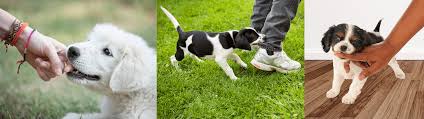
A dog that fears human hands will eventually bite out of pure, defensive terror rather than simple playfulness. This creates an incredibly dangerous adult dog that snaps whenever a stranger reaches out for a simple petting session. Positive reinforcement and environmental management are the only safe, scientifically proven methods for shaping a well-adjusted, gentle companion.
What To Do Next
Surviving the dreaded land shark phase requires immense patience, flawless consistency, and proactive environmental management. Puppies desperately want to interact safely; they simply need clear, unemotional boundaries to learn exactly how fragile human skin truly is.
Here are two simple, immediate steps to take today to stop the bleeding:
- Install The “Time-Out” Gate: Purchase a sturdy baby gate and install it in the doorway of the primary living room right now. This creates a highly effective, instant physical barrier for humans to step over the exact second teeth touch skin during a play session.
- Start The “One-Up, Two-Down” Schedule: Implement a strict daily nap schedule starting tomorrow morning. For every single hour the puppy is awake and actively playing, they must immediately spend two hours resting quietly in a darkened crate or pen.
Disclaimer: The content on Snoutbit.com is for informational and educational purposes only and is not intended to replace professional veterinary advice, diagnosis, or treatment. Always consult with your veterinarian before making significant changes to your dog’s diet, exercise routine, or health regimen.