You are utterly exhausted. You bought a Miniature Dachshund thinking you were getting a low-maintenance, cuddly lap dog, but instead, you have a stubborn, barking, digging machine that absolutely refuses to pee outside in the rain. Let me validate your frustration right now: You are struggling because almost everything pop culture taught you about Miniature Dachshunds is a myth, and treating them like a standard lap dog will result in severe behavioral issues and catastrophic spinal injuries. They are not passive accessories; they are fierce, independent badger hunters with a uniquely fragile genetic structure. I
Myth 1: They Are Naturally Lazy “Lap Dogs”
Look at their tiny legs and long bodies, and it is easy to assume they were bred to sleep on silk pillows. The reality is that the Miniature Dachshund belongs to the hound group. They were genetically engineered in Germany to dive into dark, subterranean burrows, hunt aggressive badgers, and fight independently.
They are working dogs trapped in a miniaturized body. If you leave them in a US apartment for 10 hours a day with zero mental enrichment, they will not sleep; they will systematically destroy your baseboards.
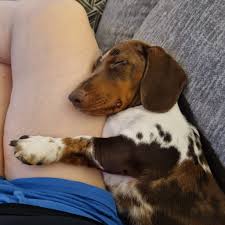
While they cannot go on a five-mile run, they desperately need structured mental exhaustion. If you do not give their brain a job to do, they will invent their own job, which usually involves barking at the window or shredding your sofa cushions.
Pro-Tip: The Sanctioned Dig Box
Do not scold a Dachshund for digging in your US suburban lawn or Australian garden; it is their primary biological imperative. Instead, build a “sanctioned dig box” using a cheap plastic kiddie pool filled with pet-safe sand. Bury high-value smelly treats inside to give their hound brain a legal, exhausting outlet without ruining your landscaping.
Are Miniature Dachshunds Good Apartment Dogs?
Yes, they can thrive in apartments, but only if you actively manage their high prey drive. Because they were bred to hunt, they will chase anything that moves. A simple game of indoor fetch or hiding their kibble in a snuffle mat can satisfy that predatory sequence safely indoors.
Myth 2: “They Can Handle Stairs If They Go Slowly”
This is perhaps the most dangerous medical myth on the internet. Miniature Dachshunds are a chondrodystrophic breed, meaning their dwarfism mutation causes their spinal discs to prematurely calcify and turn brittle.
Owners often think that as long as the dog walks slowly up the stairs, their back is safe. However, the upward climb is not the primary danger. The extreme downward braking force required to descend stairs physically jams their front carpal joints and violently compresses their long spine like an accordion.
Repeated stair use causes micro-tears in those brittle discs, inevitably leading to Intervertebral Disc Disease (IVDD) and sudden hind-leg paralysis.
Myth 3: Barking is Just “Small Dog Syndrome”
If your Miniature Dachshund barks at every falling leaf and delivery driver, you probably assume they are just an anxious, yappy small dog. This is completely false.
Dachshunds were selectively bred to bark loudly underground so their human handlers could track their location from the surface. Their booming bark is a highly specialized tracking tool, not a symptom of small dog insecurity.

When you yell “Quiet!” over their barking, their hound brain assumes you are simply joining their pack and barking right alongside them. You must use psychology, not volume, to bypass their built-in alarm system.
Pro-Tip: Beating “Thermal Belly Shock”
Dachshunds have a two-inch ground clearance, meaning wet grass directly shocks their bare bellies. If you live in a rainy climate like Seattle or experience a damp Melbourne winter, grab a push broom and sweep a 5×5 patch of grass before taking them out. Knocking the heavy dew off the blades instantly reduces morning potty strikes.
Myth 4: “Potty Training Just Takes Time and Puppy Pads”
If we had to create a master list of breeds that are incredibly difficult to housebreak, the Miniature Dachshund would easily claim the top spot. The biggest trap American and Australian apartment dwellers fall into is relying on disposable puppy pads to speed up the process.
Puppy pads are soft, absorbent squares that feel remarkably similar to your bathmats and area rugs. When you teach a Dachshund puppy that it is acceptable to urinate on a soft square of fabric indoors, you create massive “Texture Confusion.”
They lack the cognitive ability to distinguish between the expensive Persian rug you love and the white chemical pad you bought at the pet store. If you must use an indoor system in a high-rise, use real-grass hydroponic patches to build the correct texture association.
Are Miniature Dachshunds Hard to Potty Train?
They have incredibly small bladders and despise inclement weather. You cannot force them out into the cold and expect quick results. You must act as a proactive manager, taking them outside the exact second they finish a nap, a meal, or a vigorous play session.
Myth 5: “Any Harness is Better Than a Collar”
Walking a Dachshund on a standard neck collar is a recipe for a crushed trachea, so owners rightfully switch to a harness. The myth is believing that all harnesses are structurally safe.
You must absolutely avoid popular “no-pull” harnesses with thick, horizontal straps that sit straight across their chest. Because Dachshunds have severely shortened legs, a horizontal strap restricts their shoulder extension.
This forces them into an unnatural, short-striding gait, which sends compensatory muscle spasms radiating up their entire back. You must strictly use a deep “Y-shaped” harness that drops vertically between their front legs, allowing complete and unrestricted shoulder movement.
Myth 6: “A Chunky Dachshund is Cute and Happy”
Social media is flooded with videos of overweight wiener dogs waddling around, and the comments are always filled with people calling them “cute.” In the veterinary and behavioral world, we call this a tragedy.
Obesity is an absolute death sentence for a Dachshund’s spine. Every single extra ounce of fat your dog carries creates a constant, heavy mechanical torque on their fragile intervertebral discs.
Because they are so low to the ground, owners frequently fail to realize their dog is overweight until they are actively struggling to walk. You cannot guess their daily caloric intake using a plastic scoop; you must measure their meals using a digital kitchen scale.
Pro-Tip: The Flat-Spine Lifting Rule
Never pick your Dachshund up by their armpits like a human toddler. This lets their heavy, elongated spine dangle and stretch, causing massive trauma to their discs. Always keep their back perfectly level by placing one hand firmly under their deep chest and using your other hand to securely support their hindquarters.
Myth 7: “They Are Stubborn Because They Aren’t Smart”
In my behavioral practice, clients constantly complain that their Dachshund is ignoring commands because they are simply not a smart breed. This could not be further from the truth.
Dachshunds are fiercely intelligent, but they are independent thinkers. When you tell a Golden Retriever to sit, they do it because they want to please you. When you tell a Dachshund to sit, they evaluate the situation, check what kind of treat you are holding, and calculate if the transaction is worth their effort.
You cannot use dry supermarket kibble to command a hound’s attention outside. You must negotiate with them using top-tier “jackpot” rewards like tiny shreds of boiled chicken, freeze-dried salmon, or dog-safe peanut butter.
What to Do Next to Protect Your Dachshund
You now possess the specialized, breed-specific knowledge required to bypass your hound’s stubbornness and protect their fragile spine. Do not let outdated pop-culture myths dictate how you raise your dog.
Your Actionable Next Steps:
- Conduct a Furniture Audit: Walk through your house right now and block off all steep staircases with baby gates. Order low-incline ramps (under 25 degrees) for your bed and the living room sofa today.
- Audit the Harness: Check your dog’s walking gear. If the front strap goes horizontally straight across their chest, throw it away and order a Y-shaped harness to protect their gait.
- Upgrade Your Treats: Clean out your treat pouch. If you want them to recall outdoors or master potty training in the rain, you must start using high-value, aromatic proteins immediately.
When you stop treating them like a fragile lap dog and start respecting their badger-hunting heritage, your Miniature Dachshund will transform into the most fiercely loyal, entertaining companion you could ever ask for.
Disclaimer: This article is for informational purposes only and does not constitute veterinary medical advice. Always consult with a licensed veterinarian before altering your pet’s diet, starting a new training regimen, or addressing health concerns.