The Indoor Accident Crisis: Why Your Floors Are Ruined
Did you know a standard eight-week-old puppy physically cannot hold their bladder for more than two hours? Yes, the 3 fastest ways to train puppy potting are strict crate training, implementing a high-frequency schedule, and using umbilical cord tethering. If you are exhausted by constant indoor accidents, combining these three proven veterinary strategies will rapidly housebreak your dog.
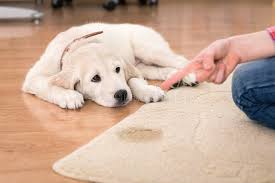
Every new owner dreams of a perfectly housebroken companion, but the reality often involves stepping in cold puddles of urine at 6:00 AM. You might feel like your dog is maliciously destroying your expensive rugs, or that you are completely failing as an owner. The constant smell of ammonia lingering in your living room creates a stressful, unhygienic environment that strains your bond with the animal. If you do not quickly establish absolute boundaries, these isolated accidents will rapidly crystallize into a lifelong behavioral habit that is nearly impossible to break.
The Biology of Canine Bladder Control
You must understand that indoor accidents are a biological limitation, not an act of canine rebellion. A young puppy possesses extremely immature sphincter muscles and virtually zero bladder control. A general veterinary rule is that a puppy can only hold their bladder for one hour per month of age.
This means expecting a three-month-old puppy to survive an eight-hour workday without an accident is physically impossible and deeply unfair. Furthermore, underlying medical issues like a hidden urinary tract infection (UTI) can drastically increase their urgency and frequency. Always secure a baseline veterinary exam to rule out medical incontinence before assuming your puppy is just being stubborn.
Method 1: Strict Crate Training for Natural Instincts
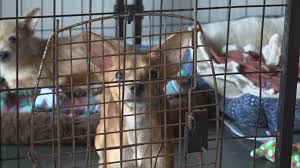
The absolute fastest, most effective tool in your training arsenal is the strategic use of a dog crate. Dogs are naturally den animals and possess a strong, hardwired biological urge to keep their immediate sleeping quarters completely clean. By placing them in a properly sized crate when unsupervised, you actively force them to engage their natural bowel-holding instincts.
You must immediately carry them from the crate directly to their designated outdoor spot the exact second you open the door. Reward heavily with high-value treats like freeze-dried liver the moment they finish eliminating outside. This clear sequence quickly teaches them that holding it indoors leads to massive rewards outdoors.
Sizing the Crate Correctly
The most common mistake owners make is buying a massive crate meant for the dog’s fully grown adult size. If the crate is too large, the puppy will simply urinate in one back corner and comfortably sleep in the opposite dry corner. You must use a crate divider to aggressively restrict the available interior space.
The crate should only be large enough for the puppy to stand up, turn around in a tight circle, and lay back down. As they grow and their internal bladder capacity increases, you can slowly adjust the divider to grant them more square footage.
Method 2: The High-Frequency Schedule Protocol
You cannot wait for your puppy to tell you they need to go outside; you must proactively dictate the schedule. A successful potting routine requires you to take the dog outside every single time they transition between daily activities. Consistency is the absolute backbone of behavioral modification, so you must establish rigid environmental rules.
To guarantee success, strictly mandate bathroom breaks during these critical transition periods:
- Immediately upon waking: Their bladder is completely full after any daytime nap or overnight sleep.
- Post-meal timing: Take them out 10 to 15 minutes after eating meals or drinking large amounts of water.
- Post-play excitement: Vigorous physical activity rapidly stimulates their gastrointestinal tract and bladder.
Recognizing the Pre-Potty Warning Signs
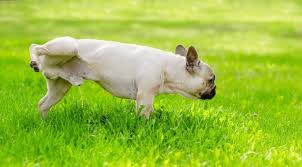
Even on a strict schedule, your puppy will occasionally need an unscheduled emergency bathroom break. You must learn to read their subtle body language to intercept an accident before the squat happens. Common pre-elimination behaviors include sudden frantic sniffing of the floor, abrupt pacing, or suddenly leaving a fun play session to wander into a quiet corner.
If you witness any of these behaviors, immediately interrupt them with a sharp clap and carry them straight outside. Do not punish the warning signs, or your puppy will simply learn to hide behind the sofa where you cannot see them eliminate.
Method 3: Tethering and Umbilical Cord Management
If you are actively home but cannot stare at the puppy with 100% undivided attention, you must use the umbilical cord method. This involves attaching a lightweight, six-foot leash to your puppy’s collar and securing the other end directly to your belt loop. By physically tethering the dog to your body, they literally cannot sneak off into another room to empty their bladder unseen.
This physical restriction forces you to remain hyper-aware of their movements and perfectly positions you to catch those subtle pre-potty warning signs. Total supervision guarantees that every single attempt to urinate happens outside, drastically accelerating the entire housebreaking timeline.
Neutralizing Accidents with Enzymatic Cleaners
Despite your absolute best efforts, a few indoor accidents are completely inevitable during the first few weeks of training. Standard household bleach or ammonia-based cleaners will not permanently remove the uric acid crystals left behind in the carpet fibers. A dog’s incredibly powerful olfactory system will easily detect the remaining scent, biologically signaling them to use that exact spot again.
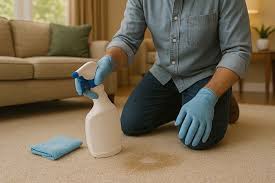
You must thoroughly saturate the soiled area with a high-quality, veterinary-approved enzymatic cleaner. These specific chemical formulas utilize living enzymes to literally digest and permanently destroy the odor-causing bacteria.
To guarantee absolute odor removal, follow these strict application steps:
- Blot aggressively: Use heavy paper towels to absorb as much wet urine as physically possible before applying any chemicals.
- Saturate deeply: Pour the enzymatic cleaner directly onto the stain, ensuring it penetrates deep into the carpet padding below.
- Air dry entirely: Allow the spot to dry completely on its own, as the enzymes require extended time to break down the biological proteins.
Disclaimer: This article is for informational purposes only and does not constitute veterinary medical advice. Always consult with a licensed veterinarian before altering your pet’s diet, starting a new training regimen, or addressing health concerns.