How to Master Leash Training Without Crushing Your Dog's Throat?
The Leash Pulling Epidemic: Are You Harming Your Dog?
Did you know that a violently pulling dog can generate enough force to permanently crush their own windpipe? Yes, you can absolutely master leash training without injuring your dog's neck, throat, or cervical spine. The definitive solution requires immediately abandoning standard flat collars, utilizing a well-fitted front-clip harness, and leveraging high-value behavioral redirection.
You likely brought your puppy home envisioning peaceful, relaxing evening strolls through the neighborhood. Instead, the reality is a daily, exhausting wrestling match where your dog chokes, gags, and gasps for air while dragging you forward. If you ignore this dangerous behavior, you are actively risking catastrophic, irreversible damage to their skeletal and respiratory systems.

Mind Map Overview: Pain-Free Leash Training
- Core Biological Drive: Dogs possess a natural opposition reflex, meaning pulling back forces them to pull harder.
- The Medical Risk: Chronic collar pressure causes severe tracheal collapse, damaged cervical vertebrae, and elevated eye pressure.
- The Proven Fix: Swap neck collars for front-clip harnesses, stop all forward momentum, and heavily reward proximity.
The Medical Reality of Neck Injuries
The Anatomy of the Canine Trachea
Your dog's throat is an incredibly fragile biological structure protected only by flexible, C-shaped rings of cartilage. When you attach a leash directly to a flat neck collar, all of their forward kinetic energy concentrates directly onto this vulnerable windpipe. This intense, localized pressure physically flattens the cartilage rings, restricting vital airflow and causing that terrifying, honking cough you hear during walks.

Understanding Tracheal Collapse
As a veterinarian, the most common traumatic walking injury I treat is severe tracheal collapse caused by chronic leash pulling. Once those fragile cartilage rings are permanently flattened or fractured by a tight collar, they will never naturally regain their rigid circular shape. Protecting their airway is non-negotiable, meaning you must immediately stop relying on their neck to control their total body weight.
Agitating the Walking Nightmare
The Opposition Reflex Explained
You likely assume your dog is pulling ahead to assert dominance, but the truth is entirely rooted in their hardwired biology. Dogs possess an innate biological response called the opposition reflex, which automatically triggers them to lean heavily against physical pressure. When you violently yank back on the leash, their brain literally forces their muscles to push forward even harder, creating an endless cycle of frustration.
The Danger of Retractable Leashes
Retractable leashes are the absolute worst, most dangerous tool ever invented for teaching a dog proper walking manners. These spring-loaded plastic devices maintain constant, low-level tension on the dog's body, explicitly teaching them that pulling actively rewards them with more freedom. Furthermore, the thin cord frequently causes severe friction burns or finger amputations if it rapidly wraps around a human hand during a sudden lunge.
You must completely eliminate these hazardous items from your daily walking routine immediately:
- Standard flat nylon neck collars used for direct leash attachment.
- Metal choke chains and sharp prong collars that rely entirely on pain compliance.
- Long, unmanageable retractable leashes that offer zero physical control in emergencies.

The Pain-Free Training Protocol
Essential Walking Equipment
You cannot permanently fix a behavioral problem using the exact same dangerous tools that originally created it. The ultimate game-changer for heavy pullers is properly fitting them with a heavy-duty, Y-shaped front-clip harness. Unlike standard back-clipping harnesses that activate their sled-pulling instincts, a front-clip design rests directly across their chest and gently redirects their shoulders backward.
The "Be a Tree" Technique
With the correct, safe equipment secured, you must now actively rewire how your dog perceives the leash itself. The exact millisecond the leash goes tight, you must immediately plant your feet, lock your core, and act like a heavily rooted tree. Do not aggressively yank the dog backward; simply refuse to allow any further forward momentum while the tension actively exists.
Forward Progress is the Reward
Your dog must definitively learn that a tight leash completely stops the walk every single time without exception. The moment they realize pulling halts their progress, they will naturally turn back to look at you, causing the leash to go completely slack. The exact second that slack appears, you must instantly resume walking forward, teaching them that a loose leash is the only way to successfully advance.
Advanced Behavioral Redirection
High-Value Reinforcement Zones
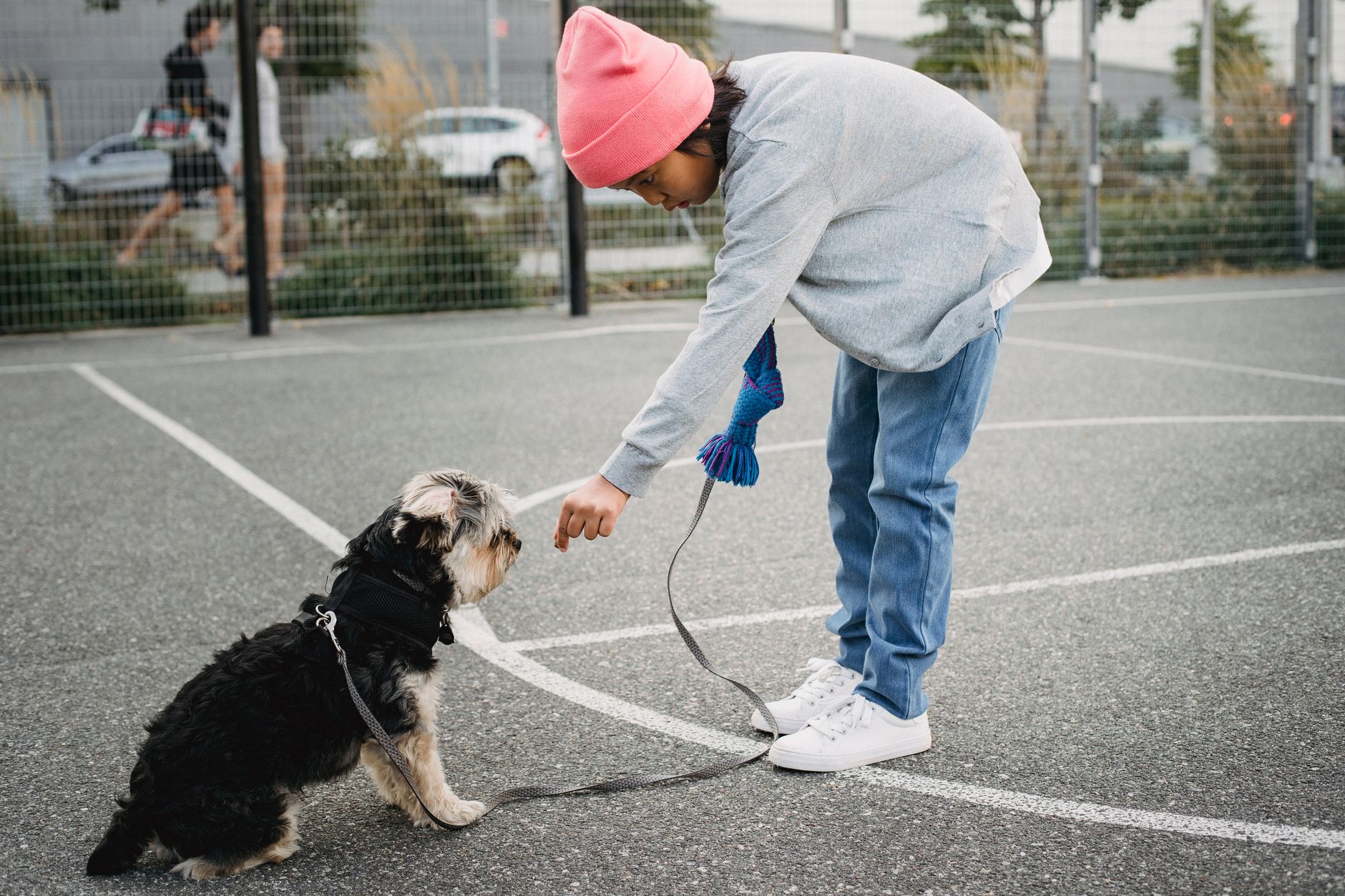
Your dog currently views every squirrel and stray scent in the outside environment as vastly more exciting than walking next to your leg. You must artificially create a highly rewarding "reinforcement zone" sitting exactly parallel to your left or right knee. Every single time your dog naturally falls into this physical position, you must instantly reward them with high-value treats to build the habit.
You must utilize incredibly aromatic, high-value rewards to capture their attention outdoors:
- Small pieces of freeze-dried beef liver or lung.
- Tiny cubes of plain, boiled chicken breast.
- A squeezable tube of veterinary-approved peanut butter for rapid delivery.
The U-Turn Redirection Method
If planting your feet does not stop their frantic lunging, you must immediately employ the U-turn redirection method. The second the leash tightens, briskly pivot 180 degrees and rapidly walk in the exact opposite direction of their intense focus. The moment they turn to catch up to you and the leash finally goes slack, deliver enthusiastic verbal praise and a massive food reward.
Managing Intense Prey Drive
Sporting breeds bred specifically for retrieving possess immense, genetically hardwired prey drives that activate instantly when they spot a moving target. When their brain is flooded with intense adrenaline, they physically cannot hear your verbal commands or care about the dry kibble in your pocket. You must immediately execute your U-turn and briskly walk away to physically break their intense visual fixation on the prey.
Building a Lifelong Walking Bond

Mental Stimulation Over Physical Exhaustion
Owners frequently try to exhaust their hyperactive pullers by walking them much faster, which dangerously builds a highly athletic canine. To truly drain their manic energy, you must allow them ample time to stop, deeply sniff the grass, and properly process their environment. Ten minutes of intensive sniffing burns significantly more mental energy than a mindless two-mile march down the hard pavement.
Consistency Across the Family Unit
Your dog will never learn proper leash manners if one family member strictly enforces the rules while another allows constant pulling. You must hold a family meeting to guarantee every single person handling the leash understands the "be a tree" method and uses the exact same verbal cues. Absolute consistency accelerates the training timeline and prevents your highly intelligent dog from selectively ignoring the weaker handler.
Mastering the daily walk transforms an exhausting, dangerous physical chore into the absolute highlight of your relationship with your dog. It requires unyielding consistency from every single family member, strict adherence to proven veterinary methods, and proper, pain-free equipment. By prioritizing their skeletal safety and heavily rewarding their proximity, you will finally achieve the calm walking companion you always envisioned.
Disclaimer: This article is for informational purposes only and does not constitute veterinary medical advice. Always consult with a licensed veterinarian before altering your pet's diet, starting a new training regimen, or addressing health concerns.