Dog Boredom: 8 Signs Your Dog Is Bored, Not Bad
Does your dog suddenly seem to have a personal vendetta against your couch cushions? Are your socks mysteriously disappearing, or is your backyard starting to resemble an excavation site? Before you assume your dog is acting out or being stubborn, consider a simpler explanation: they might just be bored.
Dogs are naturally wired to sniff, explore, chew, solve problems, chase, and interact with the world around them [1]. When they lack enough opportunities to engage in these natural behaviors, they often invent their own entertainment—and that can include destructive behaviors [2]. Dogs rarely announce they're bored; instead, they take matters into their own paws, often at the expense of your furniture [15].
The good news? Boredom is something you can fix. In this article, we'll walk through eight common signs of boredom, help you tell the difference between boredom and more serious issues, and share practical solutions to keep your dog happily busy.
Your Dog Isn't Being "Bad" — They Might Just Be Bored
When your dog shreds a roll of paper towels or barks at nothing for ten minutes straight, it's easy to label it as bad behavior. But the truth is, dogs don't plot against us. They're simply looking for something to do.
Boredom tends to show up during long stretches of downtime, repetitive routines, or days when the dog has little to do [4]. If your dog's day looks the same every day—same walk, same nap spots, same quiet house—they may start creating their own excitement. And because dogs are naturally wired to sniff, explore, chew, solve problems, chase, and interact with the world around them [1], that self-made fun often takes the form of chewing, digging, barking, or stealing.
It's important to remember that boredom is not the only explanation for unwanted behavior. Anxiety, fear, frustration, medical conditions, and normal puppy development can all look similar [5]. So while boredom is a common culprit, it's worth considering other possibilities, especially if the behavior is sudden or severe.
The key takeaway? Your dog isn't giving you a hard time—they're having a hard time finding something better to do. That shift in perspective matters, because it changes how you respond. Instead of punishment, the answer is enrichment. Instead of frustration, the answer is engagement. Once you understand what your dog is actually seeking—mental stimulation, physical activity, or simply novelty—you can address the root cause rather than just the messy symptom.
8 Things Dogs Do When They're Bored
Recognizing boredom-driven behavior is the first step toward solving it. Here are eight common signs that your dog might be understimulated.
1. Chewing and Shredding Household Items
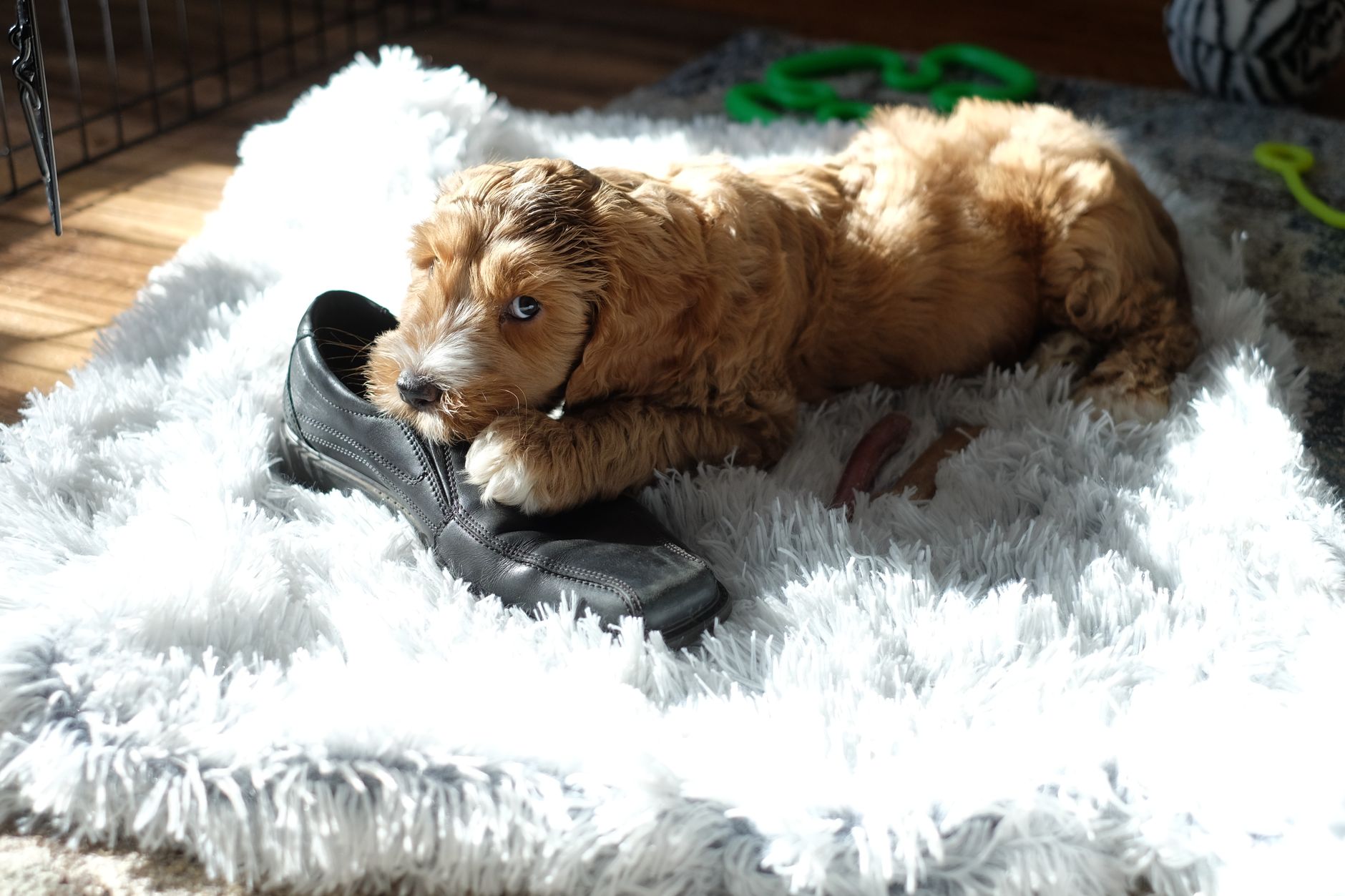
Chewing is mentally engaging, physically satisfying, and completely natural for dogs [16]. Puppies naturally chew while teething, but adult dogs often start remodeling belongings when they don't have better ways to burn off curiosity and energy [6]. If your adult dog suddenly develops a taste for shoes or sofa corners, boredom could be the culprit. For fast fixes, see How To Stop A Dog From Chewing Household Items Fast.
2. Barking More Than Usual
Barking can be entertainment for dogs; it creates noise, movement, and a reaction [17]. If your dog is barking at every leaf that blows by, they might be bored and looking for something—anything—to happen. Learn more about this in Why Do Dogs Bark At Nothing?.
3. Stealing Socks, Towels, and Other Items
For many bored dogs, the prize isn't the stolen item—it's everything that happens after they steal it, such as attention or a chase [7]. Stealing creates excitement: everyone laughs, someone jumps up, and a chase may follow [18]. To your dog, that's a winning game.
4. Asking to Go Outside—Then Wanting Right Back In
A bored dog may scratch or whine at the door to go outside, take a quick lap around the yard, then ask to come back in, repeating the process several times throughout the day [8]. It's like treating the back door like a social media refresh—checking for something new [19]. This behavior often overlaps with scratching; see Why Do Dogs Scratch? for more.
5. Digging in the Yard or Couch
Digging is like a home improvement project no one asked for, but it taps into natural instincts [20]. It gives dogs something to investigate, move, and do; sometimes there's a practical reason like cooling off or burying a toy [9]. If digging under fences is a problem, check out How To Stop A Dog From Digging Under A Fence.
6. Pacing or Acting Unable to Settle
Pacing is common in intelligent working and sporting breeds bred to herd, retrieve, hunt, track, or solve problems [21]. If your dog can't seem to settle, boredom might be the cause. However, persistent pacing deserves extra attention; if it appears suddenly, happens mostly at night, or is accompanied by panting, confusion, or signs of discomfort, it's worth talking with a veterinarian [10].
7. Licking Paws, Floors, or Anything Else
Licking can become a way to pass the time; it's repetitive, soothing, and easy to keep doing when the house is quiet [11]. Licking is repetitive, soothing, and easy to keep doing when nothing much is happening [22].
8. Raiding Trash or Patrolling Counters
A bored dog may go looking for snacks or excitement in the trash or on the kitchen counter. This behavior is often driven by the same need for stimulation that leads to other boredom behaviors.
Boredom, Anxiety, Or A Medical Problem?
Before you assume your dog's behavior is purely boredom, it's important to rule out other causes. Boredom is not the only explanation for unwanted behavior; anxiety, fear, frustration, medical conditions, and normal puppy development can all look similar [5].
For example, a dog with Separation Anxiety might chew destructively when left alone, while a dog with a medical issue might pace or lick excessively. Persistent pacing with panting, confusion, or discomfort warrants a vet visit [24]. If the behavior appears suddenly, happens mostly at night, or is accompanied by signs of discomfort, it's worth talking with a veterinarian [10]. For help with anxiety, see Separation Anxiety.
Puppies also have a valid excuse: they naturally chew while teething [6]. So if you have a young dog, some chewing is expected and temporary.
How can you tell the difference? Look at the context. Boredom behaviors often appear during long stretches of downtime or repetitive routines [23]. If your dog is otherwise healthy, happy, and well-exercised but still acts out during quiet periods, boredom is a strong candidate. If the behavior is new, intense, or accompanied by other symptoms, consult your vet.
How To Keep Your Dog Happily Busy
If boredom is the root of your dog's behavior, the solution is simple: give them more appropriate ways to engage their mind and body. Here are seven strategies recommended by experts.
1. Start With the Right Kind of Exercise
Not all exercise is equal. A walk around the block may not be enough for a high-energy breed. The goal is to provide both physical and mental stimulation. For advanced ideas, see Dog Enrichment Strategies.
2. Add Food-Based Enrichment
Use food puzzles, snuffle mats, or scatter feeding to make mealtime more engaging. This taps into your dog's natural foraging instincts. Learn how in Stop The Destructive Chewing.
3. Give Dogs "Legal" Things To Destroy
Since chewing is natural [16], provide appropriate chew toys or items designed for shredding. This redirects their destructive energy onto acceptable targets. Check out Best Interactive Dog Toys For Boredom.
4. Rotate Toys
Keep a stash of toys and rotate them regularly. Novelty is key—what's old becomes new again when it's been out of sight for a while.
5. Teach Tiny Jobs
Give your dog simple tasks like fetching specific items, closing doors, or putting toys away. This gives them a sense of purpose and mental exercise.
6. Use Training as Mental Exercise
Short training sessions can tire your dog out just as much as physical exercise. Teach new tricks or practice obedience skills. For brain games, see Dog Stimulation.
7. Change the Environment
Rearrange furniture, add a new scent, or take a different route on walks. Small changes can make a big difference in your dog's daily experience.
What Not To Do When Your Dog Is Bored
When addressing boredom behaviors, avoid these three common mistakes.
Don't Accidentally Reward the Chaos
If your dog steals a sock and you chase them, they've just been rewarded with attention and a game [7]. Instead, stay calm and redirect them to an appropriate activity.
Don't Wait Until the Dog Is Already Bored
Prevention is better than cure. Provide enrichment and exercise before your dog starts looking for trouble.
Don't Ignore Sudden Behavior Changes
If your dog's behavior changes suddenly or is accompanied by signs of distress, it could be a medical issue. Persistent pacing with panting, confusion, or discomfort warrants a vet visit [24].
Frequently Asked Questions
Do dogs get bored home alone?
Yes, dogs can get bored when left alone, especially if they have nothing to do. Boredom tends to show up during long stretches of downtime [4].
What dog breeds get bored most easily?
Pacing is common in intelligent working and sporting breeds bred to herd, retrieve, hunt, track, or solve problems [21]. These breeds often need more mental and physical stimulation.
Can dogs sleep too much because they're bored?
While the verified facts don't directly address this, boredom can lead to lethargy or excessive sleeping as a way to pass the time.
Can an older dog get bored?
Yes, older dogs can also experience boredom, especially if their routine is repetitive or they have less activity.
Is it possible to give my dog too much enrichment?
The verified facts don't specify a limit, but balance is key. Too much stimulation without rest can be overwhelming.
How long does it take to reduce boredom behaviors?
The timeline varies depending on the dog and the consistency of enrichment. With regular mental and physical stimulation, many dogs show improvement within days to weeks.
By understanding that your dog's "bad" behavior might just be boredom, you can take proactive steps to provide appropriate outlets. Remember, a tired dog is a happy dog—and a happy dog is less likely to redecorate your living room.
Source: Canine Journal