11 Things Dogs Wish They Could Tell You About Halloween
Halloween transforms our homes and neighborhoods with decorations, costumes, and a steady stream of visitors—but for our dogs, it can feel like a confusing invasion of their safe space. Dogs rely heavily on familiarity to feel secure, and sudden changes like Halloween decorations can cause confusion or stress (iHeartDogs). From the doorbell ringing nonstop to unfamiliar aromas filling the air, the holiday disrupts the predictable routines dogs depend on. While we see festive fun, our dogs may experience a whirlwind of strange sights, sounds, and smells. This guide explores 11 things dogs wish they could tell you about Halloween, offering practical insights to keep your pet safe, calm, and comfortable amid the celebration.
1. "My Nose Is Overwhelmed"
A dog's nose is extraordinarily sensitive, making Halloween an overwhelming buffet of unfamiliar aromas from chocolate, caramel, peanut butter, sugary treats, and scented decorations (iHeartDogs). Beagles, bred for scenting abilities, may find the holiday particularly fascinating and can lead themselves toward dropped candy wrappers (iHeartDogs). Keep candy sealed and wrappers disposed of promptly.
2. "The Doorbell Feels Like an Alarm"
The doorbell can signal an endless parade of potential intruders to dogs, especially those with watchdog tendencies, leading to exhaustion from repeated barking and door openings (iHeartDogs). If your dog struggles with this, learn how to stop dogs from barking instantly and consider a baby gate or a quiet back room during peak hours.
3. "I Need My Routine"
Halloween excitement often disrupts ordinary schedules, including walks, meals, and bedtime, which can be stressful for dogs that benefit from predictable routines (iHeartDogs). Border Collies, known for their energy and responsiveness, may become restless when usual activities disappear; older dogs and puppies can also struggle with schedule changes (iHeartDogs). Try to feed, walk, and tuck them in at the usual times.
4. "Loud Noises Scare Me"
Excited children, squealing visitors, doorbells, fireworks, and spooky sound effects can create a noisy environment that some dogs find distressing (iHeartDogs). Breeds with alert temperaments, including Miniature Schnauzers, may be quick to react to unfamiliar noises, but noise sensitivity varies widely among individual dogs (iHeartDogs). Watch for signs of noise stress: panting when not hot, trembling, pacing, tucked tails, and repeated attempts to hide (iHeartDogs). Trembling can be a red flag—learn more about why do dogs shake.
5. "I Need a Safe Space"
Set up a quiet, safe space away from the front door—perhaps a back room with white noise or soft music—where your dog can retreat. If your dog is crate-trained, a covered crate can offer security. Keep decorations that move or make noise away from your dog's resting areas, and introduce any new items gradually. For dogs who enjoy a project, a food-stuffed toy or puzzle feeders can redirect attention during peak trick-or-treat hours.
6. "Costumes Can Be Uncomfortable"
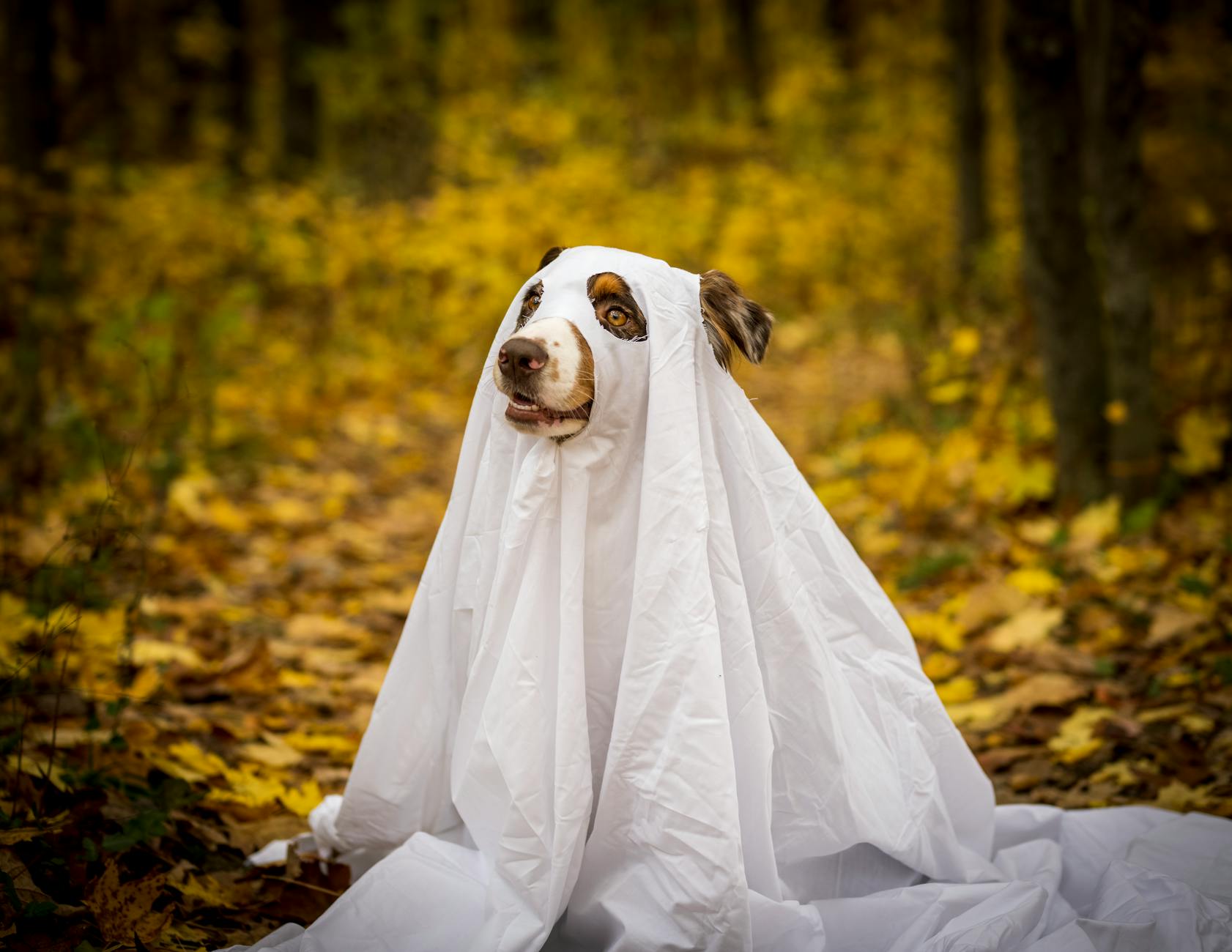
Some dogs tolerate or even love costumes when introduced gradually, but others find restrictive outfits irritating or frightening (iHeartDogs). Breeds with thick coats, such as Siberian Huskies, may become uncomfortable in warm or bulky outfits, while short-haired dogs might appreciate a lightweight garment in chilly weather (iHeartDogs). Always prioritize comfort over cuteness. Signs of costume discomfort include freezing in place, repeatedly trying to remove the outfit, flattened ears, or excessive lip licking (iHeartDogs). If you see any of these, take the costume off and try a simpler accessory—like a bandana or collar charm—instead.
7. "Chocolate and Xylitol Are Dangerous"
Chocolate can poison dogs due to theobromine and caffeine; dark chocolate and baking chocolate are particularly hazardous (iHeartDogs). There is no universally safe amount of chocolate for every dog (iHeartDogs). Dachshunds and other small dogs may face particular concerns when ingesting a substantial amount of chocolate relative to their body weight, although dogs of every size can become ill (iHeartDogs). Xylitol, a sweetener found in some sugar-free products, can cause a life-threatening drop in blood sugar and liver injury in dogs (iHeartDogs). Raisins and certain other ingredients are also hazardous, and candy wrappers can create choking or intestinal obstruction risks (iHeartDogs). If you suspect ingestion, contact your veterinarian or an animal poison control service immediately.
8. "I Don't Want to Greet Every Stranger"
Halloween visitors often arrive in unfamiliar outfits, speak excitedly, and reach toward dogs without considering how those dogs feel; what looks friendly to a person may feel intrusive to an animal (iHeartDogs). Not every dog wants to greet strangers, and that's okay. Cavalier King Charles Spaniels are often affectionate companions, while some Shiba Inus are notably independent, but every dog has individual preferences and no breed should be expected to welcome strangers automatically (iHeartDogs). If your dog enjoys visitors, allow greetings on their terms—let the dog approach the person rather than the other way around. If your dog is shy or reactive, use a baby gate or keep them in a separate room. If your dog gets overly excited, learn how to stop a dog from jumping on people.
9. "Decorations Can Be Scary"
Motion-activated or animated Halloween decorations can be confusing or frightening because dogs interpret the world through patterns, movement, scent, and sound (iHeartDogs). A confident Boxer might approach a strange decoration cautiously before losing interest, while a more sensitive individual could retreat behind a trusted family member (iHeartDogs). German Shepherds are often alert to changes in their surroundings, while sensitive breeds like Shetland Sheepdogs may need extra time to investigate unfamiliar objects (iHeartDogs). Introduce decorations gradually, allow sniffing, and keep animated items away from your dog's main living areas.
10. "Don't Leave Me Alone with the Chaos"
If you're heading out to a party, plan ahead. Dogs with separation anxiety may struggle with the unusual sounds and schedule changes. Consider a pet sitter or a quiet room with enrichment toys. Also, secure your yard and doors—frequent opening can create escape risks, so review tips to stop a dog from digging under a fence.
11. "I Need Mental Exercise, Too"
Halloween can be mentally exhausting, but purposeful activity helps. Try dog enrichment strategies before trick-or-treat hours to tire your dog out. A long sniff walk or brain game can reduce restlessness. If your dog barks at every sound, understanding why do dogs bark at nothing can help you respond calmly.
Quick Reference: Halloween Safety Checklist
| Risk | Action |
|---|---|
| Chocolate/xylitol | Store candy in sealed cabinets; call vet if ingested |
| Doorbell stress | Use baby gate or quiet room; white noise |
| Costume discomfort | Watch for freezing, lip licking; remove if stressed |
| Decorations | Introduce gradually; keep animated items away |
| Escape risk | Secure doors and yard; check fence |
Frequently Asked Questions
Can I give my dog Halloween candy? No—chocolate and xylitol are toxic. Offer dog-safe treats instead.
How do I know if my dog is stressed? Look for panting when not hot, trembling, pacing, tucked tail, or hiding (iHeartDogs).
Should I dress my dog in a costume? Only if they tolerate it. Introduce slowly with treats and never force it.
By understanding your dog's perspective, you can enjoy the holiday while respecting their needs—and maybe even help them have a little fun, too.
Source: iHeartDogs