Why Does My Dog Lick Me? The Gross, Fascinating Truth Behind The Slobber
Wiping sticky canine saliva off a clean work outfit is incredibly frustrating when trying to rush out the front door. The relentless, messy tongue baths often leave pet parents feeling annoyed, guilty for pushing the dog away, and thoroughly confused about the behavior. Seeking the answer to the exact question of "why does my dog lick me?" is a daily pursuit for thousands of exhausted, slobber-covered families.
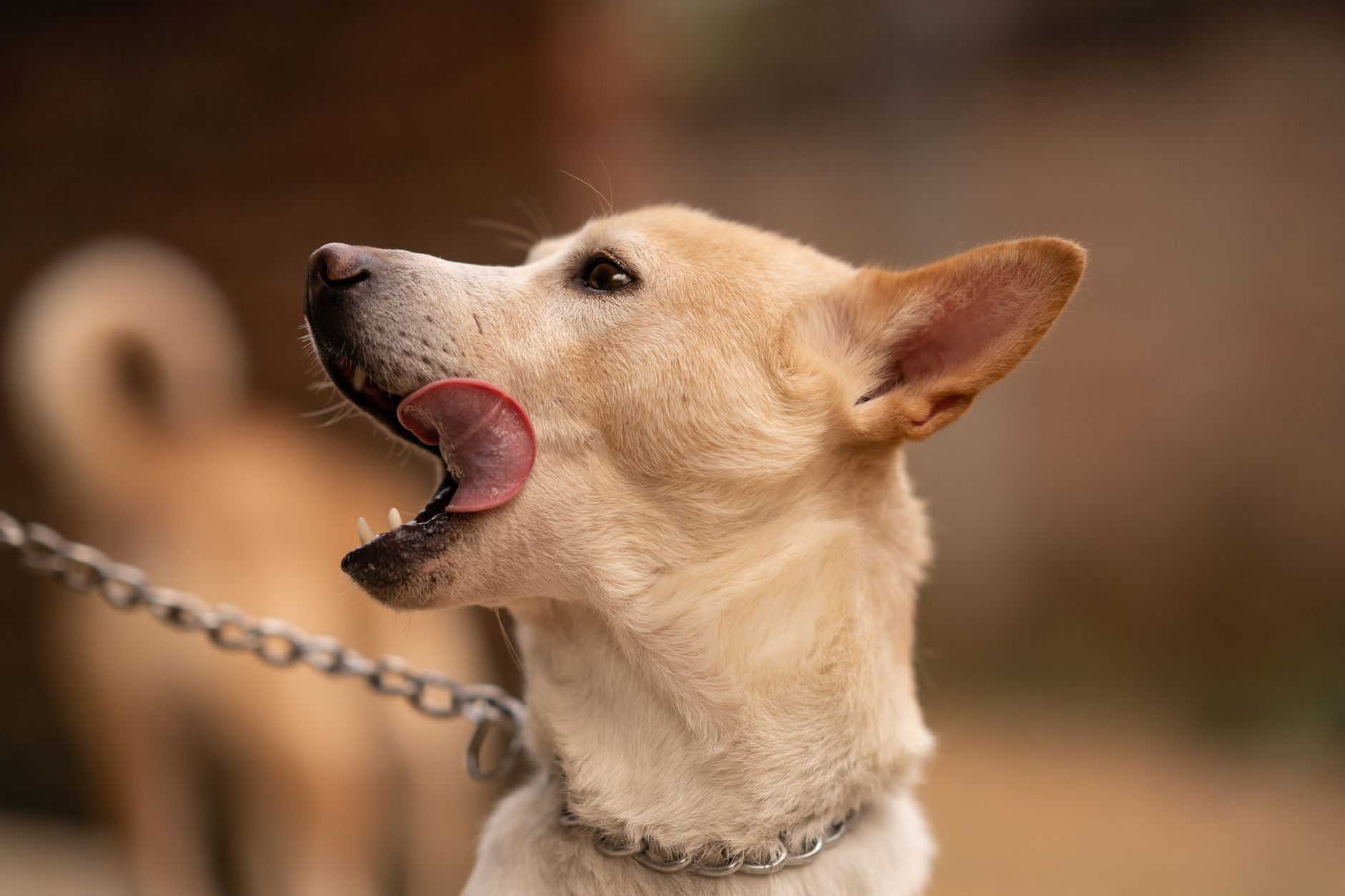
The immediate answer boils down to four distinct canine instincts: showing affection, seeking focused attention, soothing internal anxiety, or simply enjoying the salty taste of human skin. The most important takeaway is that dogs use their tongues exactly like humans use their hands and voices combined. They are actively gathering complex chemical data about human moods, physical health, and recent outdoor activities. Stop interpreting every single wet kiss as pure love, and start reading the subtle canine body language accompanying the slobber.
Why Does My Dog Lick Me Constantly?
Understanding the root cause of this relentless behavior requires looking past human social norms and diving into canine biology. From the very moment a puppy is born, the mother uses her tongue to clean, stimulate, and comfort her entire litter. This early physical contact hardwires the canine brain to associate the physical act of licking with safety, survival, and deep familial bonds.
In our years rehabilitating anxious Staffies and hyperactive Golden Retrievers, we constantly see owners misinterpret frantic facial licking. We once worked with a massive, high-drive Blue Heeler who relentlessly pinned guests to the living room couch with intense, inescapable tongue baths. The owners assumed it was a friendly greeting, but the dog was actually attempting to control physical movement and soothe its own overwhelming stranger anxiety.
When a dog engages in rhythmic licking, their brain actively releases a massive surge of endorphins and dopamine. This neurochemical reward system feels incredibly good to the dog, naturally encouraging them to repeat the behavior whenever they feel overstimulated. For many energetic breeds, applying a wet tongue to human skin acts as a powerful, built-in canine pacifier.
🚨 Vet Fact: Repeatedly pushing a dog away while speaking in a high-pitched, frustrated voice actually reinforces the licking behavior. Dogs often interpret physical pushing as engaging play and high-pitched scolding as exciting attention, virtually guaranteeing they will try to lick again.
Is Dog Licking A Sign Of Affection Or Anxiety?
Differentiating between pure canine affection and nervous displacement behavior is a critical skill for any dedicated pet parent. Affectionate licking is typically slow, incredibly relaxed, and accompanied by soft eyes and a loosely wagging tail. The dog will likely stop immediately if the human shifts away or calmly ignores the physical contact.
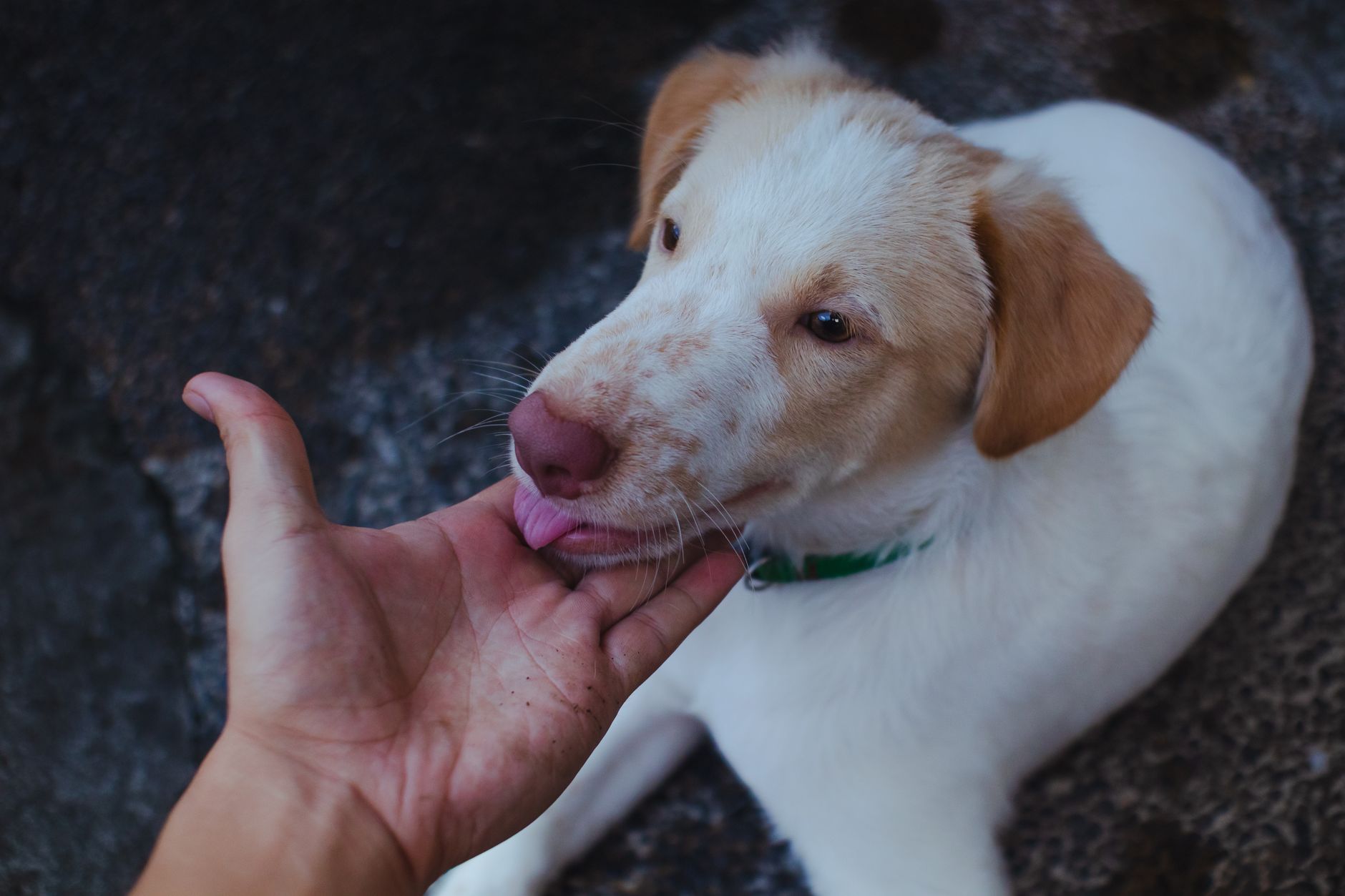
Anxiety-driven licking, however, presents an entirely different, far more intense physical picture. Nervous dogs will exhibit tense facial muscles, pinned-back ears, and a frantic, rapid-fire tongue speed that feels almost obsessive. If the dog forcibly follows a human around the room just to continue licking a knee or an elbow, profound anxiety is likely the driving factor.
How Do Dogs Use Licking To Gather Information?
Here is an advanced biological insight rarely discussed in standard puppy obedience classes. Dogs possess a highly specialized olfactory tool called the Jacobson’s organ, formally known as the vomeronasal organ, located at the bottom of their nasal cavity. This incredible piece of biological hardware detects undetectable pheromones and chemical signals that regular sniffing simply misses.
When asking the question, "why does my dog lick me?", the answer often lies in chemical data collection. The dog is literally using their wet tongue to gather human sweat and skin oils, pushing those molecules directly up into the Jacobson’s organ. They are chemically reading human stress hormones, hormonal shifts, and emotional states with astonishing, pinpoint accuracy.
Why Do Dogs Lick Sweaty Skin After A Walk?
The environment naturally dictates a massive portion of canine behavior, especially during the hottest months of the year. Whether navigating the sweltering humidity of a US summer or surviving the brutal, baking heat of the Australian outback, humans sweat profusely. Human sweat contains a highly concentrated mixture of water, natural salts, and fascinating sebaceous oils.
Because canines only sweat through their paw pads and regulate heat through panting, human skin offers a completely unique flavor profile. To a curious canine, a sweaty human calf or a salty forearm is essentially a giant, fascinating salt lick. They are quite literally tasting the environment the human just walked through.
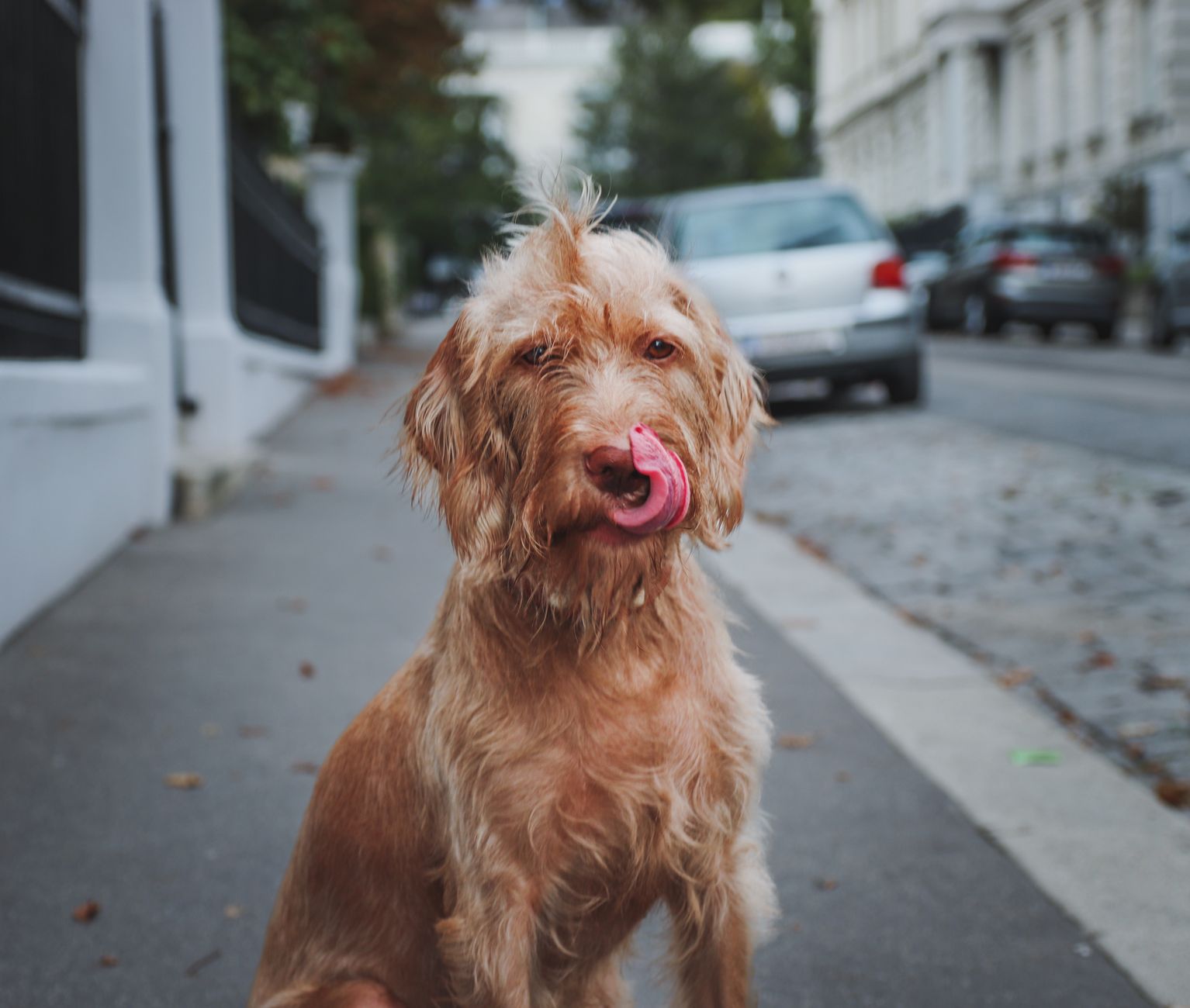
This behavioral quirk is especially prevalent in robust, outdoor-loving breeds that share our active lifestyles. An exhausted Kelpie returning from a long bushwalk will often aggressively lick the ankles of their owner to replenish depleted salts and savor the unique taste. It is entirely harmless, but undeniably gross for the human on the receiving end.
🐾 Snoutbit Pro-Tip: Never let a dog lick human skin immediately after applying sunscreen, heavy bug spray, or topical prescription medications. The harsh synthetic chemicals and toxic active ingredients in these everyday human products can cause violent, immediate gastrointestinal distress in canines.
When Does Licking Become A Behavioral Problem?
While casual grooming is natural, hyper-fixated licking can quickly spiral into a dangerous, deeply ingrained behavioral disorder. Canine Compulsive Disorder (CCD) often manifests as relentless licking of the air, specific furniture pieces, or human appendages. This requires immediate, targeted intervention before the dog begins self-mutilating and creating painful, infected hot spots on their own skin.
Furthermore, there is a hidden, highly advanced gastrointestinal link that most generic training guides completely miss. Many dogs that obsessively lick carpets, floors, or human hands are actually suffering from silent acid reflux, chronic nausea, or delayed gastric emptying. The frantic swallowing of saliva temporarily coats the esophagus and briefly soothes burning stomach acid.
If the licking behavior starts suddenly in an older dog or happens frantically right after eating meals, do not assume it is a training issue. This specific pattern is a massive red flag for underlying physical pain. Booking a comprehensive veterinary exam to rule out inflammatory bowel disease or food allergies is absolutely crucial.
Do Certain Breeds Lick More Than Others?
Genetics play a surprisingly significant role in how frequently a dog utilizes their tongue for communication. High-energy working breeds, bred specifically for intense physical stamina and focus, are highly prone to developing obsessive displacement behaviors if left completely under-stimulated. Left in a sterile backyard all day, these brilliant dogs will often lick their own paws or their owners purely out of mind-numbing boredom.
Conversely, small companion breeds often use licking specifically as an attention-seeking tool. Breeds like Frenchies or Pugs are genetically hardwired to desire constant, unwavering physical proximity to their chosen humans. They quickly learn that placing a wet tongue on a human hand guarantees an immediate reaction, whether that reaction is positive or negative.
🚨 Vet Fact: Canine mouths are absolutely not cleaner than human mouths, despite the persistent, dangerous urban myth. Dog saliva carries millions of zoonotic bacteria, including Capnocytophaga, which can cause severe, life-threatening infections if introduced into an open human wound.
Why Do Dogs Lick Hands And Feet Specifically?
Human extremities are undeniably the most frequent targets for unwanted canine tongue baths. Feet harbor the highest concentration of human sweat glands, trapping incredibly potent scents inside dark, enclosed shoes all day long. When those shoes finally come off, it presents a concentrated, overpowering sensory buffet for a canine nose.
We frequently observe a fascinating pattern during our behavioral consults with overwhelmed new puppy owners. They report their young pups are utterly obsessed with licking bare toes the exact second the family walks through the front door. This happens because those toes are physically carrying a treasure trove of fascinating outdoor dirt and pheromones straight onto the clean living room rug.
Hands are similarly attractive because they constantly interact with the surrounding world. Hands hold delicious dog treats, prepare savory human dinners, and pet other neighborhood animals. A dog licking a human hand is essentially reading a detailed, chemical diary of everywhere that hand has been over the past several hours.
How Can We Safely Stop Unwanted Dog Licking?
The absolute worst way to handle unwanted slobber is by physically punishing the dog or aggressively shouting at them. Punishment severely damages the delicate bond of trust and often increases the underlying anxiety driving the behavior in the first place. The most effective, humane training strategy relies entirely on the immediate removal of all human attention.
The second the dog begins to lick inappropriately, the human must quietly stand up, break eye contact, and calmly walk into another room. Do not speak, do not push, and do not make a fuss. When this exact sequence is repeated consistently, the brilliant canine brain quickly learns that licking causes their favorite human to disappear entirely.
To satisfy the natural, biological urge to chew and lick safely, pet parents must provide vastly superior alternatives. Spreading plain, dog-safe peanut butter or Greek yogurt onto a textured silicone LickiMat and freezing it solid is a phenomenal strategy. This provides an appropriate, exhausting mental workout that successfully redirects the tongue away from human skin.
🐾 Snoutbit Pro-Tip: Keep a small stash of high-value, chewy treats hidden near the front door or beside the living room couch. When the dog approaches with the clear intent to lick, immediately ask them for a "sit" and reward them with the treat instead, effectively rewiring the greeting routine.
What To Do Next
Dealing with endless streams of canine saliva does not have to be a permanent, unavoidable fixture of pet ownership. By correctly identifying the specific emotional or physical triggers, families can gently reshape this natural instinct into far less messy behaviors.
Here are two simple, immediate steps to take today to manage the slobber:
- Audit The Body Language: The next time the dog approaches for a tongue bath, freeze and strictly observe their physical posture. If their ears are pinned back tightly and their eyes are wide, immediately deploy a high-value distraction toy to break their anxious thought loop.
- Create A "Say Hello" Station: Place a small basket of durable, textured chew toys directly next to the main entrance of the home. Train the family to instantly place a toy into the dog's mouth upon entering, physically preventing them from licking while still allowing them to joyfully greet everyone.
Disclaimer: The content on Snoutbit.com is for informational and educational purposes only and is not intended to replace professional veterinary advice, diagnosis, or treatment. Always consult with your veterinarian before making significant changes to your dog’s diet, exercise routine, or health regimen.