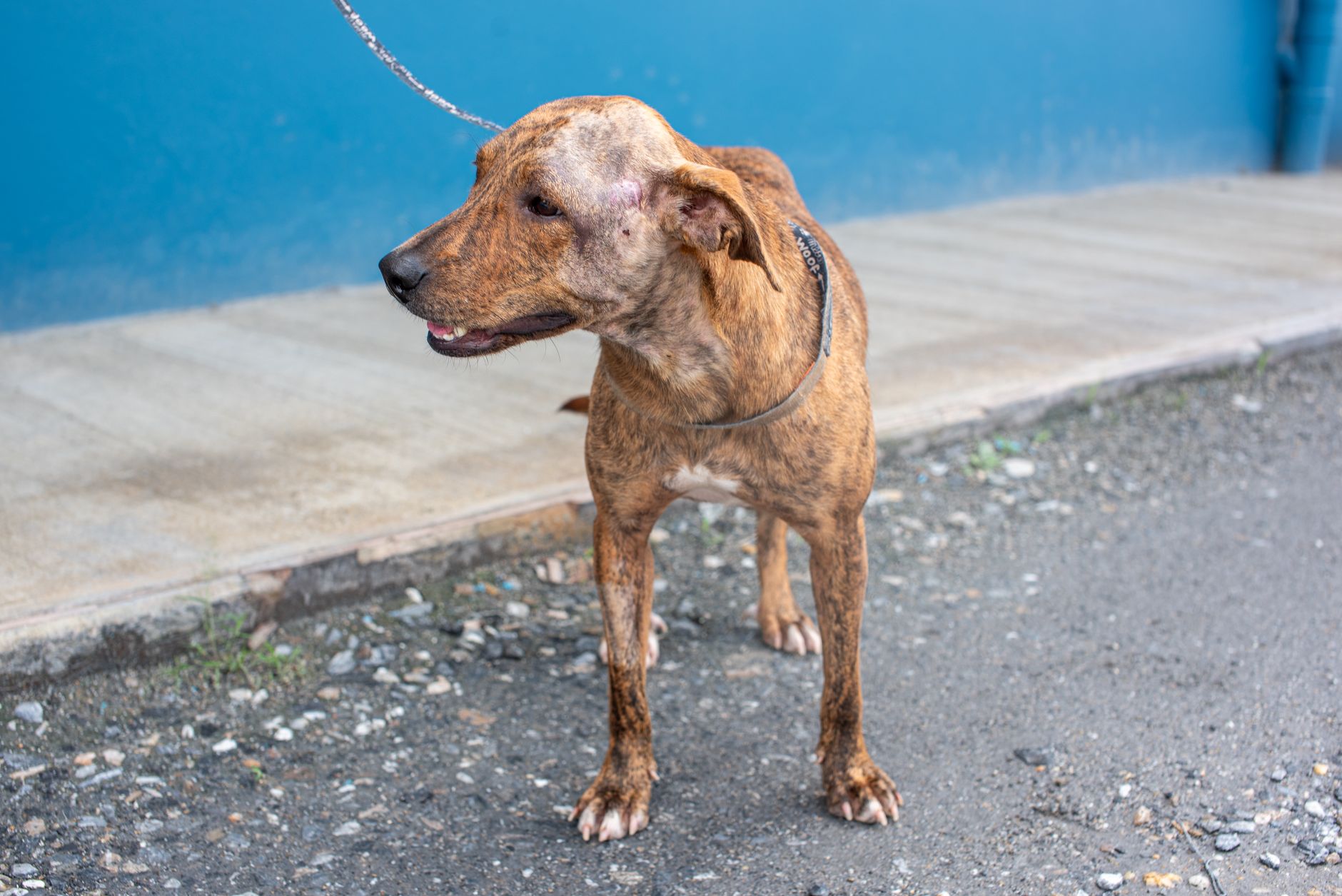
Stray Dog on Last Day Saved by 14-Hour Drive
In a world where countless dogs are abandoned each year, the story of Wabby serves as a poignant reminder of the complexities surrounding pet ownership and the importance of compassion. Wabby, a dog with a powerful and imposing physique, was discovered as a stray, his past a blank canvas of unanswered questions. While the precise reasons for his being on the streets remain elusive [2], a woman named Fina has offered a possible explanation: his appearance may have led someone to mistakenly believe he was an XL Bully, a breed that is heavily restricted in the UK [1]. This hypothesis sheds light on a disturbing reality—dogs are often judged and discarded based solely on how they look, rather than their true temperament. Breed-specific legislation, intended to protect public safety, can inadvertently cause harm to animals that resemble the targeted breeds. As we explore Wabby's situation, we must also consider the millions of dogs like him who suffer due to misconceptions and fear. Their stories underscore the urgent need for education, responsible ownership, and a shift in how we perceive certain breeds. In the following sections, we will examine the context of the UK's XL Bully restrictions, the crisis of stray dogs, the unintended consequences of misidentification, and the vital role of rescue organizations in offering second chances.
The Impact of Breed-Specific Legislation
The United Kingdom has taken a stringent stance on certain dog breeds, most notably the XL Bully. This robust breed, often cited in incidents of aggression, has been subject to a series of restrictive measures, including compulsory muzzling, leash requirements, and eventually a breeding ban. While public safety is a valid concern, such legislation frequently overlooks that individual dogs are not inherently dangerous based on their breed. Instead, it creates a stigma that can spiral into abandonment and neglect. For Wabby, a dog who might not actually be an XL Bully but steadfastly resembles one, the impact of these laws could have been devastating. Fina's belief that Wabby was abandoned because of this mistaken identity [1] provides a chilling example of how a dog can become a victim of misunderstanding. The reality is that many dog owners, when faced with restrictive laws or the fear of penalties from landlords or insurance companies, choose to re-home or dispose of their pets. Shelters across the UK have reported an increase in such dogs being surrendered, leading to overcrowding and a rise in euthanasia rates. This unintended fallout from well-meaning policies underscores the need for a more nuanced and evidence-based approach to dog control, one that prioritizes education and responsible ownership over blanket bans.
The Plight of Abandoned Dogs
Abandonment is a traumatic experience for any dog, and the reasons behind it are often rooted in human decisions rather than the animal's behavior. Economic hardships, relocation, illness, or simply a lack of commitment are common factors. However, when breed restrictions are introduced, they introduce a new and troubling motivation for abandonment. Dogs that look like prohibited breeds may be left on the streets or dumped at shelters as owners attempt to avoid compliance with the law. Wabby's story is a testament to this trend. While the exact reason for his abandonment remains unknown [2], the probability that his appearance played a role is high, given the societal panic surrounding XL Bullies. It is a heartbreaking thought that a dog could be discarded simply because he looks like a breed that has been vilified. This situation is not unique to the UK; across the globe, dogs are being abandoned due to similar legislative measures. The emotional toll on these animals is immeasurable—they undergo confusion and suffering, often ending up in overcrowded shelters where their future is uncertain. To mitigate this crisis, it is essential to recognize the ripple effects of breed-specific legislation and to provide support for owners who may feel forced into such decisions. By addressing the root causes of abandonment, we can begin to reduce the number of dogs like Wabby who find themselves without a home.
The Consequences of Misidentification
One of the most alarming aspects of breed-specific legislation is the prevalence of misidentification. Dogs are often judged by their size, muscle structure, and other physical traits, which can lead to them being incorrectly classified as a restricted breed. Wabby, with his sturdy and imposing demeanor, could easily be mistaken for an XL Bully, even if his DNA tells a different story. This misidentification can have severe repercussions, including being denied housing, attacked by others, or even seized by authorities. In some cases, as Fina suggests, it can lead to abandonment [1]. The repercussions of such identification extend beyond the individual dog; they create a climate of fear and distrust among dog owners and communities. Moreover, they undermine the effectiveness of public safety measures, as dogs are targeted based on looks rather than actual behavioral assessments. Scientific research consistently shows that breed is not a reliable predictor of aggression, and that factors such as socialization, training, and the owner's handling play a much larger role. Yet, these findings are often ignored in favor of simplistic and reactionary policies. To protect dogs and people alike, we must shift our focus from banning breeds to promoting responsible ownership and enforcing leash laws and proper care standards. Only then can we hope to prevent innocent dogs like Wabby from becoming collateral damage in a misguided approach to safety.
The Resilience of Rescue Networks
In the face of such challenges, rescue organizations and individual caregivers become unwavering champions for abandoned and misunderstood dogs. They work day in and day out to provide shelter, medical care, and most importantly, a chance for a new life. Rescuers like Fina are often the first to see the potential in a dog like Wabby, looking beyond his outer appearance to recognize his capability for love and loyalty. The moment a rescuer decides to intervene, they change the trajectory of a dog's life. For Wabby, this intervention was crucial, as he might have otherwise been lost to the system. The process of rescue is not always easy; it requires time, resources, and an immense amount of emotional energy. However, the rewards are immense—witnessing a dog transform from a state of despair to one of joy and trust is profoundly moving. Adoption is the ultimate goal, and by promoting the adoption of dogs that might be overlooked due to their looks, rescuers challenge the stereotypes that led to their abandonment. They also encourage communities to embrace these animals as beloved companions, proving that a dog's worth is not determined by its breed but by its heart. In this way, rescuers not only save individual animals but also work to change public perception and create a more compassionate society.
How You Can Help Dogs Like Wabby
If Wabby's story has touched your heart, you might be wondering how you can make a difference in the lives of stray and abandoned dogs. Here are some actionable steps you can take:
- Adopt, Don't Shop: Consider adopting a dog from a local shelter or rescue group. Many wonderful dogs are waiting for their forever homes. Before you adopt, educate yourself on the responsibilities involved. Read about 7 Brutal Truths: What to Expect First 30 Days After Adopting a Dog to prepare for the challenges and joys.
- Foster a Dog: Fostering provides a temporary home for a dog in need, freeing up shelter space and giving the dog a chance to thrive in a home environment. If you're considering fostering, learn the right questions to ask with Stop the Heartbreak: 11 Mandatory Questions to Ask Foster Before Adopting a Dog.
- Volunteer at a Shelter: Shelters always need helping hands. Even if you're under 18, there are ways to get involved. Check out 5 Hidden Loopholes: How to Volunteer at Local Animal Shelter Under 18 for creative solutions.
- Donate Supplies: Shelters often need more than just money. Find out what items are most needed with Stop Donating Junk: The Truth About What Supplies Are Needed Most By Animal Shelters.
- Spread Awareness: Share stories like Wabby's to educate others about the consequences of breed-specific legislation and the importance of judging dogs as individuals. You can also share information on how to approach stray dogs safely with 7 Silent Signals: Signs a Stray Dog is Friendly and Approachable.
- Support Rescue Organizations: Donate to or fundraise for reputable rescue groups that work tirelessly to save dogs like Wabby. Your contribution can make a significant impact.
The Journey to a New Life: What to Expect When Adopting a Stray
Adopting a stray dog is a rewarding experience, but it comes with unique challenges. Stray dogs may have experienced trauma, and they need time to adjust to indoor living. If you're considering adopting a stray, be prepared for the transition. Learn about the common mistakes to avoid with 5 Fatal Mistakes: The Truth About Transitioning a Stray Dog to Living Indoors. Additionally, understand the financial aspect of adoption by reading 5 Hidden Truths: The Average Adoption Fee for a Dog at Local Shelter Explained. Remember, with patience and love, a stray dog can become a loyal and loving companion.
Conclusion
While the full story of Wabby's abandonment may never be known, his experiences reflect larger systemic issues in our treatment of dogs. Fina's hypothesis that his powerful appearance led to his abandonment due to XL Bully restrictions is a compelling yet heartbreaking explanation [1], but the exact reasons remain a mystery [2]. What is clear is that dogs like Wabby should not be judged or discarded based on superficial characteristics. They deserve love, empathy, and a fair chance at life. As we conclude this exploration, let us consider what we can do to create a more humane world for animals. Whether you are a potential adopter, a rescuer, or simply an animal lover, your actions can make a difference. Commit to learning about responsible pet ownership, advocate for legislation that considers the welfare of all dogs, and spread awareness about the plight of abandoned dogs. If you are moved by Wabby's story, consider reaching out to your local shelter and offering your support—be it through volunteering, fostering, or adopting. Every dog, including Wabby, is more than its appearance; it is a living being with an incredible capacity for love. It is up to us to show them that they are valued and to ensure that stories like Wabby's have a happy ending.
Source: iHeartDogs