Stop Jerking The Leash: The Ugly Truth About Positive Reinforcement Dog Training For Reactive Dogs
Dealing with a dog that violently lunges, barks, and spins at the sight of another animal turns daily walks into a deeply embarrassing, highly stressful nightmare. Frustrated handlers frequently resort to harsh leash pops or choke collars, which actively pour gasoline on a burning fire of canine panic. The absolute best way to permanently stop this dangerous behavior is utilizing positive reinforcement dog training for reactive dogs. The biggest takeaway is that reactivity is driven by sheer terror, and generously rewarding a dog for remaining calm at a safe distance actually rewires their emotional brain. Punishing a terrified dog only confirms their worst fears, while positive reinforcement actively builds a confident, focused companion.
What Causes A Dog To Become Reactive On Leash?
Canine reactivity is almost always rooted in profound fear or deeply ingrained frustration, not a sudden, malicious desire to dominate the neighborhood. When a sensitive Golden Retriever is trapped on a short six-foot leash, their natural biological flight response is completely removed. Feeling physically trapped forces the canine brain into an immediate "fight" response, resulting in explosive lunging simply to scare the terrifying trigger away.
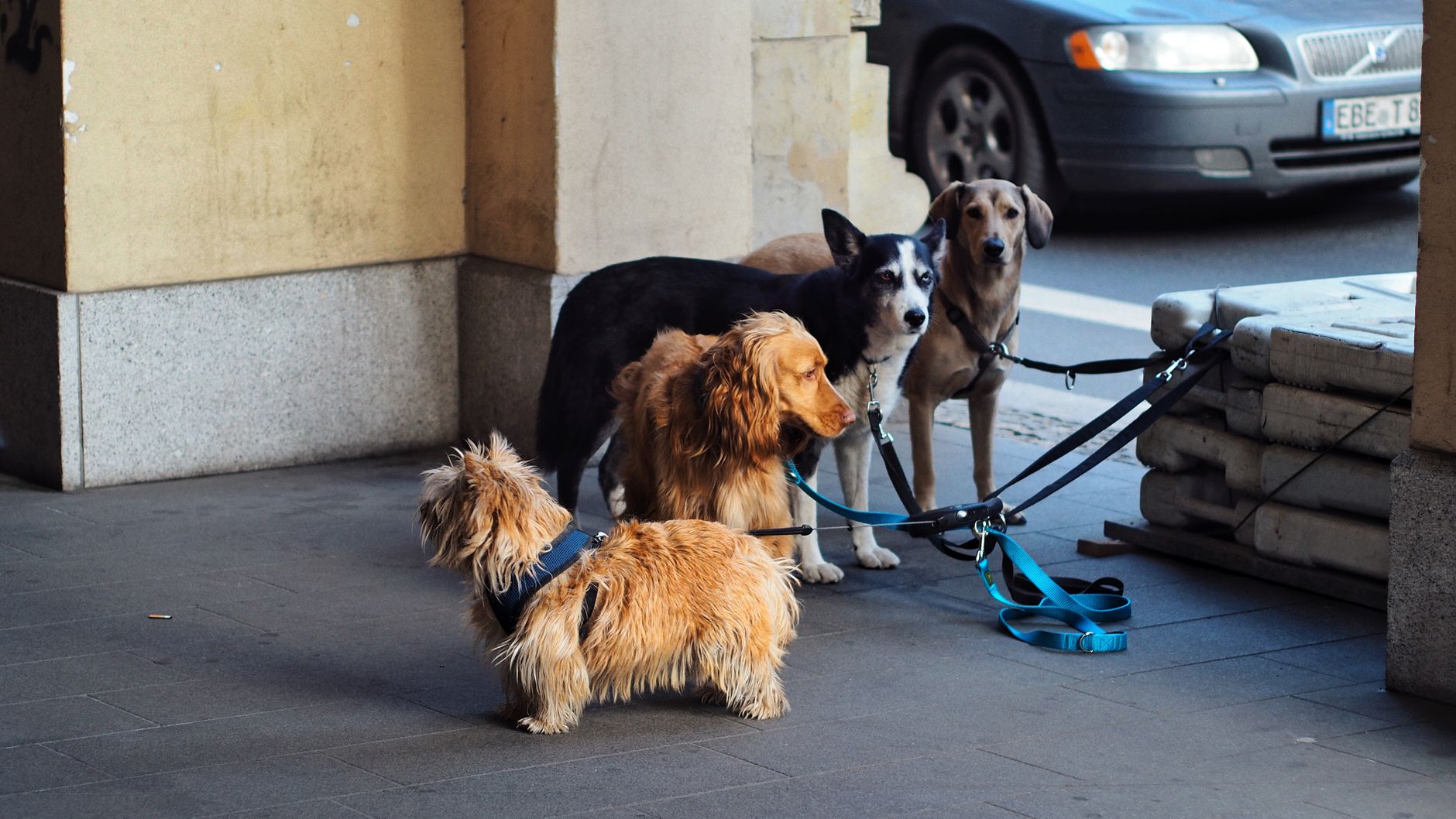
Understanding that a barking dog is asking for distance, rather than looking for a physical fight, completely changes the training approach. When the threat refuses to leave, the dog continues to escalate their outward display of aggression until the trigger finally walks away.
How Does Trigger Stacking Cause Explosive Outbursts?
Understanding trigger stacking is an elite behavioral concept that explains why a dog might ignore a bicycle on Tuesday but violently attack one on Wednesday. Every single stressful event a dog experiences throughout the day acts exactly like water dripping slowly into a bathtub. A loud garbage truck, a tense encounter with the postman, and a dropped pot in the kitchen all continuously raise the dog's internal stress levels.
Once that biological bathtub overflows, the dog experiences a complete behavioral meltdown over a seemingly minor, highly insignificant trigger.
🚨 Vet Fact: When a dog experiences a severe reactive outburst, their body is flooded with cortisol and adrenaline that takes up to 72 hours to fully dissipate. Forcing a dog back into a highly stressful environment the very next day practically guarantees another explosive, aggressive episode.
How Does Positive Reinforcement Fix Dog Reactivity?
Traditional training methods focus entirely on suppressing the outward barking through physical pain, intimidation, or forceful dominance. Positive reinforcement dog training for reactive dogs focuses entirely on changing the underlying emotion causing the explosive outburst in the first place. If the dog truly learns that approaching strangers predict raining hotdogs rather than painful collar corrections, the fear completely evaporates.
What Is The "Look At That" Training Game?
Generic advice often tells handlers to forcefully shove a treat in front of a reactive dog's nose to distract them from an approaching threat. This completely fails because the dog remains terrified of the hidden trigger and will eventually stop eating to scan the environment frantically. The "Look At That" (LAT) game actually encourages the dog to look directly at the scary trigger from a completely safe, manageable distance.
- Allow the dog to look at the distant trigger calmly.
- The split second the dog looks at the trigger without barking, click or use a verbal marker word.
- Instantly deliver a high-value reward directly to their mouth.
This advanced technique teaches the dog that looking at scary things and then immediately making eye contact with the handler is highly profitable.
Why Is Distance The Ultimate Training Tool?
No amount of premium freeze-dried liver will stop a terrified Blue Heeler from reacting if a strange dog is standing two feet away. The canine brain possesses a specific threshold, which is a physical boundary where the dog transitions from nervous observation into blind, uncontrollable panic. Effective positive reinforcement requires keeping the dog completely "sub-threshold," meaning they are far enough away from the trigger to comfortably accept food.
Consider the highly realistic case of a rescued Blue Heeler that violently lunged at passing skateboards, nearly pulling the handler into traffic. The training began in an empty parking lot, a full football field away from a friend slowly rolling on a skateboard. By rewarding the dog heavily at that massive distance and slowly closing the gap over four weeks, the Heeler eventually learned to walk past skateboards without a single flinch.
🐾 Snoutbit Pro-Tip: If a dog suddenly refuses a high-value treat like roast chicken or cheese, they have officially crossed their stress threshold. Immediately turn around and create at least fifty feet of physical distance from the trigger until the dog is willing to eat again.
How Does Local Climate Affect Reactive Dogs?
Local environmental extremes heavily dictate exactly how and when behavioral modification sessions should safely occur. During the brutal, sweltering heat of an Australian outback summer or a highly humid US August, a dog's frustration tolerance plummets drastically. Thermal stress forces the canine body to focus entirely on panting and survival, making them incredibly irritable and far more likely to react aggressively.
Training sessions for reactive, flat-faced breeds like Frenchies must be strictly limited to the cool, early dawn hours to ensure absolute safety. Furthermore, heavy coastal tick seasons frequently force handlers to avoid wide, open grass fields where creating necessary distance from triggers is easiest.
Are Indoor Training Sessions Effective For Reactivity?
When extreme weather or intense tick seasons make outdoor training dangerous, bringing the desensitization process entirely indoors is highly effective. Play audio recordings of neighborhood dogs barking or street traffic noises at an incredibly low volume while the dog eats their evening meal. Slowly increasing the volume over several weeks safely desensitizes the dog to environmental sounds without ever exposing them to extreme weather.
Can Diet Influence A Dog's Reactivity Levels?
Behavior and nutrition are deeply intertwined, a reality often completely overlooked by frustrated pet parents dealing with explosive leash pulling. Feeding a highly reactive dog a diet loaded with cheap, simple carbohydrates creates massive blood sugar spikes that directly fuel hyperactive, anxious energy. Transitioning to a high-quality, protein-dense diet stabilizes blood sugar and naturally lowers baseline anxiety significantly.

One notable behavioral case involved a highly anxious Kelpie that redirected their frustration by aggressively biting the leash whenever passing traffic approached. The dog was consuming a heavily processed, corn-based kibble that kept their digestive system constantly inflamed and physically uncomfortable. Upgrading the diet to a fresh, human-grade protein source significantly cooled the internal inflammation, noticeably reducing the dog's frantic outdoor pacing within two weeks.
🚨 Vet Fact: The canine gut microbiome produces nearly ninety percent of the body's serotonin, a crucial neurotransmitter responsible for mood regulation and calmness. Feeding a premium, multi-strain canine probiotic actively supports the gut-brain axis, making reactive dogs significantly more receptive to behavioral modification.
What Gear Is Essential For Reactive Dog Training?
Walking a reactive dog on a standard flat collar is a massive safety hazard that frequently results in crushed tracheas and slipped collars. Upgrading to a heavy-duty, properly fitted martingale collar or a front-clip harness prevents a terrified dog from backing out and escaping into traffic. This specialized gear provides massive physical leverage for the handler without inflicting the terrifying pain associated with prong or choke collars.

Never utilize a retractable leash when working with a highly reactive, unpredictable animal. These thin cords offer absolutely zero physical control during an explosive lunge and frequently cause severe friction burns to human hands. A sturdy, six-foot leather or biothane leash provides the ultimate security required to navigate stressful environments confidently.
How Do You Handle An Unexpected Reaction?
Even the most meticulously planned neighborhood walk will occasionally feature an off-leash dog sprinting out from behind a parked car. When a massive reaction is entirely unavoidable, immediately abandon the training session and execute an emergency retreat. Do not stand there yelling commands at a panicked dog; simply turn around and rapidly walk in the opposite direction.
The sole objective during an unexpected ambush is physically removing the dog from the terrifying situation as swiftly as possible. Once safely back home, allow the dog to completely decompress in a quiet, dark room with a frozen puzzle toy to flush out the circulating cortisol.
🐾 Snoutbit Pro-Tip: Teach an "Emergency U-Turn" cue in the living room using high-value cheese or hotdogs. When yelled on a walk, the dog should instantly whip around and sprint the opposite direction for a massive food jackpot.
What To Do Next
Rehabilitating a reactive dog is a deeply rewarding journey that builds an unbreakable foundation of mutual trust and respect. Ditching painful corrections in favor of scientifically proven emotional conditioning transforms chaotic, terrifying walks into peaceful outdoor adventures.
Here are two simple, immediate steps to take today to start the healing process:
- Audit The Walking Gear: Inspect the current collar and leash setup right now. Throw away any retractable leashes or painful prong collars, and order a secure, escape-proof martingale collar or front-clip harness this afternoon.
- Establish The Sub-Threshold Distance: During the very next walk, carefully observe exactly how far away a trigger must be before the dog begins to stare hard or stiffen up. Write that exact distance down in a notebook, as this measurement dictates precisely where all future positive reinforcement training must begin.
Disclaimer: The content on Snoutbit.com is for informational and educational purposes only and is not intended to replace professional veterinary advice, diagnosis, or treatment. Always consult with your veterinarian before making significant changes to your dog’s diet, exercise routine, or health regimen.