Resource Guarding Training for Dogs: The Step-by-Step Guide to Stop Food and Toy Aggression Fast
The living room is perfectly peaceful until someone walks a little too close to the dog's food bowl, triggering a deep, menacing growl. The immediate human reaction is sheer panic, followed quickly by the terrifying realization that a severe bite could happen at any moment.

Living with a dog that guards resources feels exactly like walking through a heavily armed minefield. The absolute biggest takeaway for resource guarding training is to never punish the warning growl or forcefully take the item away. True rehabilitation requires completely changing the dog's emotional response by playing the "trade-up" game, tossing extremely high-value treats from a safe distance, and proving that humans are providers, not thieves.
To instantly visualize this complex behavioral strategy, here is a quick overview mind map.
🦴 Overview Mind Map: The Resource Guarding Matrix
- The Root Cause: Deep biological insecurity; the dog fears losing access to a highly valuable survival resource.
- The Danger Zone: Food bowls, high-value chews, stolen laundry, and even specific couch cushions.
- The Worst Response: Yelling, pinning the dog, or forcibly ripping the item out of their mouth.
- The Clinical Solution: Desensitization, counter-conditioning, and the proactive "trade-up" game.
- The Prevention Tool: Extreme environmental management and opaque storage bins.
The Alpha Roll Myth and Why Force Fails
Many television shows convince desperate owners that they must physically dominate a guarding dog to establish control. Taking a food bowl away mid-meal to "prove dominance" is the exact action that creates resource guarding in the first place. The dog learns very quickly that humans are unpredictable thieves who constantly steal dinner.
When a dog is pinned to the ground or harshly corrected for holding a toy, their underlying fear skyrockets. They do not learn to share; they simply learn that the human approaches mean intense physical conflict. This outdated methodology permanently destroys the fragile bond of trust between the pet and the household.
🐾 Snoutbit Pro-Tip: Never punish a dog for growling. A growl is a polite, early warning system communicating extreme discomfort. If the growl is actively punished, the dog will skip the warning entirely next time and move straight to a level-four hospital bite.
The Golden Retriever Winter Case Study
A normally sweet Golden Retriever living in the snowy US Midwest developed a terrifying habit of stealing winter socks. The dog would drag the stolen laundry under the dining room table and fiercely defend the space. The owners initially chased the dog and pried the dog's jaws open, resulting in punctured, bleeding hands.
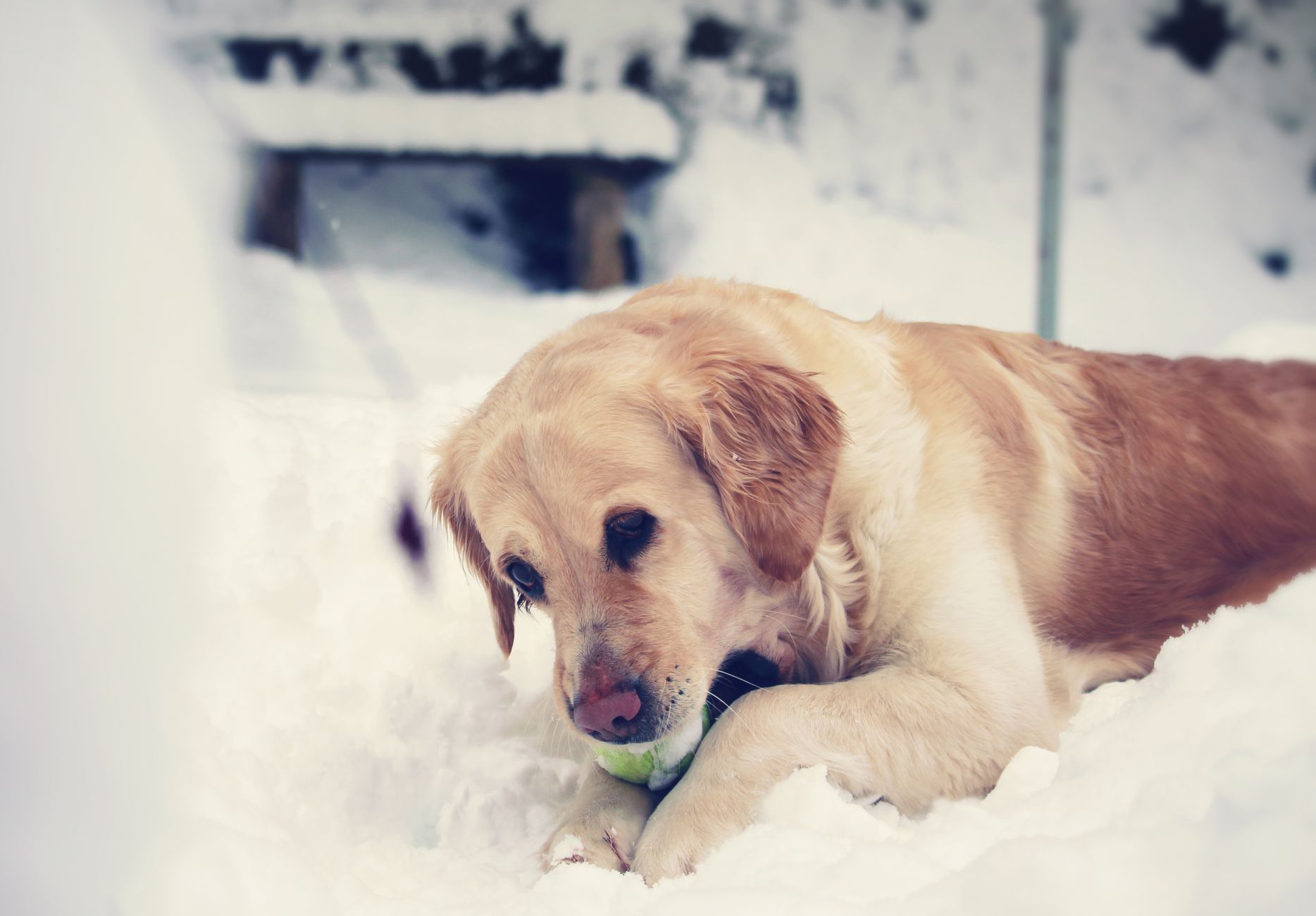
The behavioral intervention completely removed the conflict from the equation. Instead of aggressively confronting the dog, the owners implemented the "Walk Away" drop protocol. They silently walked by the table, tossed a piece of premium hot dog on the floor several feet away from the sock, and kept walking without stopping.
The dog quickly realized that humans approaching meant free hot dogs, not a terrifying confrontation over laundry. The Golden Retriever began voluntarily dropping the stolen socks and running out from under the table to eagerly greet the owners.
Advanced Insight #1: The Danger of Forced Hand-Feeding
Generic pet guides often tell owners to hand-feed a guarding dog to forcibly build trust. However, making a highly fearful dog take food directly from a human hand can cause immense anxiety. The dog is forced into a terrifying proximity just to survive.
Instead of forced hand-feeding, utilize the highly effective "Drive-By" method. Give the dog their regular kibble in a standard bowl and let them eat in total peace. While they are eating, casually walk past at a very safe distance and toss a small piece of roasted chicken directly toward the dish without stopping.
This completely shifts the dog's emotional state without forcing them over their fear threshold. The dog's brain slowly rewrites the narrative: footsteps approaching the food bowl magically produce premium, unexpected upgrades.
🚨 Vet Fact: Sudden, uncharacteristic resource guarding in an adult dog is a massive red flag for underlying physical pain. A dog suffering from an undiagnosed ear infection or severe hip arthritis will fiercely guard their resting space simply to prevent anyone from accidentally touching their painful body.
Advanced Insight #2: Management is Not Failure
Top-tier canine behaviorists know that extreme environmental management is the absolute foundation of guarding rehabilitation. If a dog intensely guards rawhide bones or pig ears, those specific items must be permanently removed from the house today. Replacing them with safer, lower-value chew toys immediately stops the daily rehearsal of the aggressive behavior.
Consider an energetic Frenchie in a busy Texas household that violently guarded the empty food bowl long after dinner was finished. The constant anxiety over the empty bowl kept the dog's cortisol levels dangerously spiked all evening. The solution was simply picking the empty bowl up the exact second the dog walked away.
By completely eliminating the trigger from the environment, the Frenchie's nervous system was finally allowed to decompress. Environmental management is not "giving up" on the training process. It is a mandatory biological reset that keeps everyone safe while the formal training takes root.
Mastering the "Trade-Up" Game
To teach a dog to willingly surrender stolen items, the reward offered must be significantly better than the item they currently hold. A dog will never trade a stolen steak for a piece of dry, boring kibble. The payment must match the value of the crime.
- Step 1: Identify the dog's absolute favorite, irresistible treat (e.g., freeze-dried liver, plain cheese, or boiled chicken).
- Step 2: Give the dog a remarkably low-value item they do not heavily guard, like a boring rubber toy or an empty cardboard box.
- Step 3: Approach from a safe distance, cheerfully say "Trade," and toss a handful of the premium treats onto the floor.
- Step 4: While the dog eats the treats, simply walk away; let them keep the original toy to build massive trust in the exchange.
🐾 Snoutbit Pro-Tip: Keep small, airtight jars of highly pungent treats hidden in strategic locations around the house, like the living room mantle or the laundry room shelf. This ensures you are always heavily armed and ready to execute a flawless trade the second a dog steals a forbidden item.
The Multi-Dog Household Challenge
Resource guarding does not solely happen between dogs and humans; dog-to-dog guarding is incredibly common and highly dangerous. A peaceful household can erupt into a violent dog fight over a single stray piece of kibble dropped on the kitchen floor. Managing multiple dogs requires strict structural boundaries.
Never feed multiple dogs in the exact same room if tension is present. Feed them in entirely separate rooms behind closed doors, or utilize heavy-duty wire crates for every single meal. Pick up all the food bowls immediately after mealtime is over.
If offering high-value chews, physically separate the dogs with sturdy baby gates. This removes the intense, competitive pressure from the environment entirely. Each dog can finally relax and enjoy their chew without constantly staring down their sibling.
Advanced Insight #3: Recognizing the Canine Warning Ladder
Dogs possess a highly sophisticated, constantly escalating language of discomfort when guarding an object. Aggression is incredibly rarely an instantaneous, completely unpredictable event. Humans simply miss the subtle, polite canine warnings entirely until it is too late.

The ladder of aggression starts with silent, anxious signals like rapid lip licking, "whale eye" (showing the whites of the eyes), and rigidly stiffening the body over the item. If those initial signals are ignored, the dog escalates to a hard, unblinking stare. The vocal warnings, like low rumbling growls or sudden air-snapping, are the final pleas for space.
If a dog freezes completely while holding a stolen item, immediately stop moving forward. Back away slowly, avert eye contact, and go retrieve high-value treats to initiate a safe trade. Pushing past a freeze guarantees a severe bite.
🚨 Vet Fact: Severe resource guarding is highly genetic and deeply rooted in canine survival instincts. Using veterinary behavioral medications, such as fluoxetine, is never a failure. It simply lowers the dog's baseline panic so they can actually focus on learning new, healthy coping mechanisms.
What To Do Next
- Remove High-Value Triggers: Do a complete sweep of the living room and backyard today. Immediately pick up and securely hide any specific toys, bones, or heavily guarded items that trigger the dog's aggression to halt the behavior rehearsal.
- Prep the Trade Stations: Dice up a cup of plain, boiled chicken breast or low-sodium hot dogs. Place the pieces in small, airtight containers on high shelves in the rooms where the guarding most frequently occurs, ensuring a safe trade is always within arm's reach.
Disclaimer: The content on Snoutbit.com is for informational and educational purposes only and is not intended to replace professional veterinary advice, diagnosis, or treatment. Always consult with your veterinarian before making significant changes to your dog’s diet, exercise routine, or health regimen.