The Ultimate List of Essential Gear for Protecting Your Miniature Dachshund's Spine
You are sitting on the couch, and your Miniature Dachshund suddenly leaps off to chase a toy. Your heart immediately drops into your stomach. If you own a wiener dog, the constant, lingering fear of a sudden spinal injury is emotionally exhausting.
What is the best way to protect your Miniature Dachshund's spine? You must invest in a strict environmental management toolkit, including low-incline ramps (under 25 degrees), deep Y-shaped chest harnesses, high-density orthopedic beds, and non-slip floor runners. In my 15 years as a pet behaviorist, I have seen countless owners spend $10,000 on emergency IVDD (Intervertebral Disc Disease) surgery, completely unaware that their own living room was a biomechanical trap. Here at Snoutbit, we believe in preventing the medical crisis long before it happens. This is the ultimate, veteran-approved list of essential gear to bulletproof your Doxie's back.
Why Do People Also Ask How to Protect a Dachshund's Back?
Miniature Dachshunds are a chondrodystrophic breed. This means they possess a specific genetic mutation that intentionally dwarfs their leg bones while allowing their spine to grow to a normal length.
This unique, elongated geometry creates immense, constant mechanical stress on their intervertebral discs. By the time they are just a year old, these shock-absorbing discs begin to prematurely calcify and turn brittle.
When a brittle disc faces a sudden burst of force—like jumping off a bed in your US suburban home or slipping on slick tile in your Australian townhouse—it can easily rupture. This herniated disc material crushes the spinal cord, leading to agonizing pain and potential hind-leg paralysis.
Pro-Tip: The "Flat-Spine" Handling Rule
Before you buy any new gear, you must fix how you lift your dog. Never pick up a Miniature Dachshund by their armpits, leaving their heavy, long spine to dangle and stretch. Always keep their back perfectly level by placing one hand firmly under their deep chest and using your other hand to securely support their hindquarters.
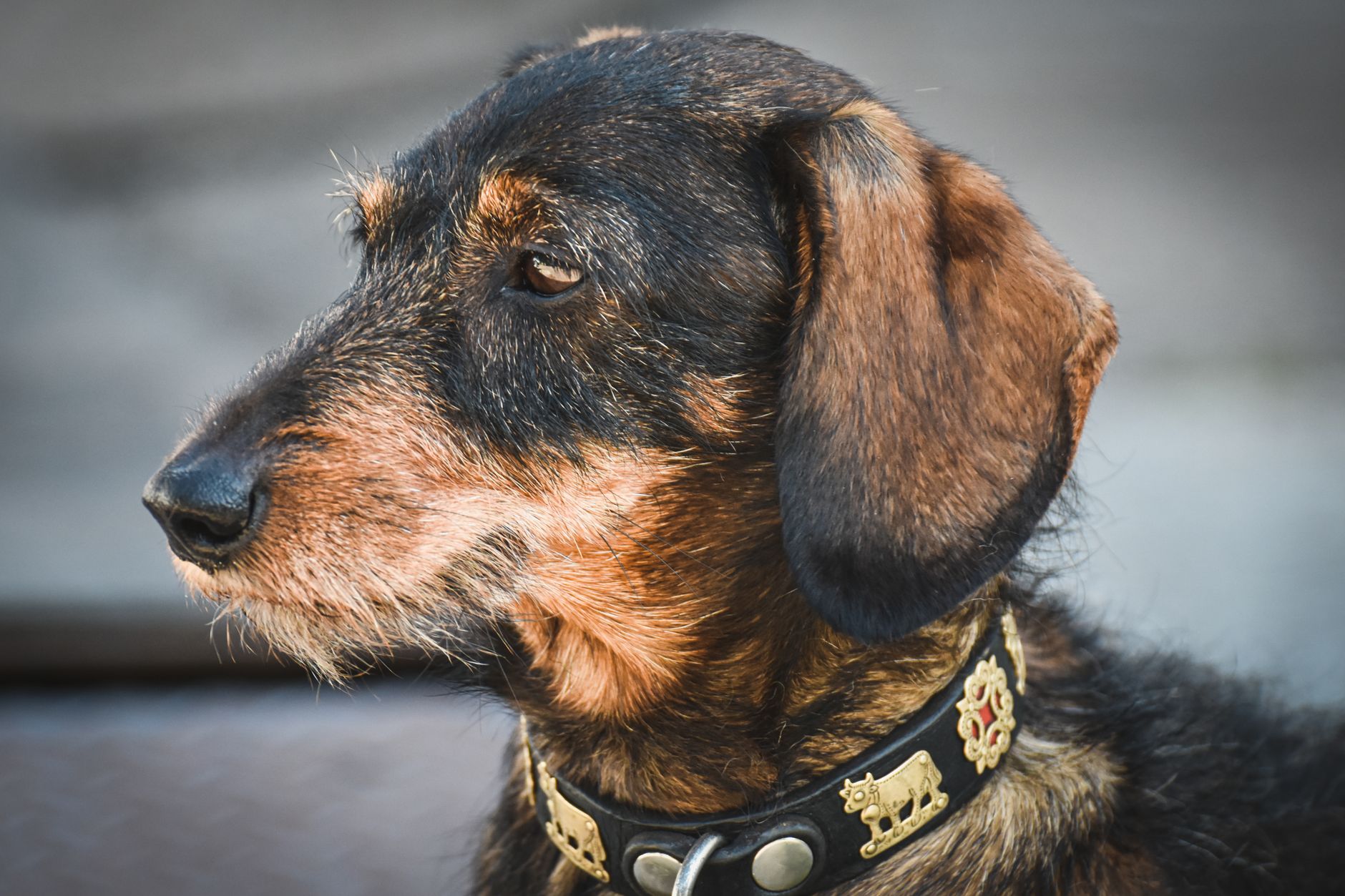
The Ultimate List of Essential Gear for Miniature Dachshunds
If you want to avoid a catastrophic veterinary emergency, you have to spend a little money upfront to modify your home environment. You need to look at your living room as an extreme obstacle course that must be actively neutralized.
1. Low-Incline Indoor Ramps (Not Pet Stairs)
Pet stairs are incredibly popular, but they are secretly terrible for a long-backed dog. Stairs force a Dachshund to repeatedly compress their spine like an accordion with every single step they take.
You must use smooth, high-traction ramps instead. However, buying just any ramp is a massive mistake I see clients make constantly.
Here is a crucial piece of biomechanical information: The ramp's incline must be less than 25 degrees. If you buy a steep, short ramp to save floor space, the severe downward braking force required to walk down it will actively destroy your dog's carpal (front wrist) joints. Choose long, gradual ramps that extend far out from the furniture to ensure a safe, slow descent.
2. Deep Y-Shaped Chest Harnesses
Walking a Dachshund on a standard neck collar is a recipe for a crushed trachea and cervical spine trauma. You absolutely need to use a harness, but the shape of the harness dictates their structural health.
You must avoid popular "no-pull" harnesses with horizontal straps that sit straight across the chest. Because Dachshunds have severely shortened legs, a horizontal strap restricts their shoulder extension, actively altering their natural gait. This forced short-striding causes compensatory muscle spasms radiating up their entire back.
Always look for a deep "Y-shaped" harness that drops vertically between their front legs. This design distributes pulling force safely across their robust sternum while allowing complete, unrestricted shoulder movement.
Pro-Tip: The "Two-Finger" Harness Fit
Because of their unique barrel chests, finding a harness that fits a Dachshund without slipping off is notoriously difficult. Once the harness is buckled, you should be able to comfortably slide exactly two fingers under the straps at the neck and girth. If it is any looser, your clever hound will easily back out of it if they spot a squirrel.
3. High-Density Orthopedic Dog Beds
We all love spoiling our dogs with fluffy, marshmallow-style donut beds. Unfortunately, these ultra-plush beds provide zero structural support for a long spine.
When a Dachshund sleeps in a soft, unstructured bed, their heavy midsection sinks deeply into the material. This creates a "hammock effect" that bows their spine uncomfortably all night long. Imagine sleeping on a severely sagging mattress; you would wake up with a terrible backache.
You must invest in a bed made from solid, high-density orthopedic memory foam. A firm sleeping surface keeps their spine neutrally aligned, allowing their inflamed discs to actually decompress and heal while they rest.

4. Non-Slip Rugs and Yoga Mats for Hard Floors
Slippery hardwood, laminate, or polished concrete floors are an invisible menace to chondrodystrophic breeds. Every time your Dachshund scrambles for traction when the doorbell rings, they are causing dangerous micro-tears in their spinal ligaments.
You do not need to carpet your entire house, but you must create safe "runways" in high-traffic areas.
Buy inexpensive yoga mats or aesthetic non-slip carpet runners and lay them down in your hallways, at the bottom of all ramps, and near the front door. Giving them a secure grip prevents the sudden wipeouts that frequently trigger IVDD flare-ups.
Pro-Tip: The Winter Climate Hack
If you live in a cold US state or experience frosty winters in Tasmania, Australia, cold weather physically stiffens your dog's joints and spinal fluid. Before they run outside, put them in a high-quality, insulated fleece jacket that covers their long back completely. A warm, pliable muscle is infinitely less likely to tear than a freezing, stiff one.
5. Supportive Canine Carriers and Slings
Miniature Dachshunds are fiercely loyal companions that want to go everywhere with you. However, extended walking, especially in crowded urban environments, can overtax their short legs and fragile joints.
A high-quality pet sling or structured backpack carrier is an essential piece of gear for outdoor adventures.
Ensure the carrier you select has a firm, solid base insert. If the carrier acts like a soft, hanging sack, it will force their spine into a curved "C" shape. A rigid bottom allows them to sit flat or lie down with proper spinal alignment while you do the heavy lifting.
What Equipment Should You Never Use for a Wiener Dog?
Protecting your dog is just as much about what you throw away as what you buy. You need to purge your home of items that encourage dangerous biomechanics.
- Retractable Leashes: These are incredibly dangerous for Doxies. If they bolt after a rabbit and hit the end of a 15-foot retractable cord, the sudden, violent jerk can easily rupture a cervical disc in their neck. Stick to a standard 6-foot fixed leash.
- Agility Jump Hurdles: While Dachshunds love having a job to do, standard agility jumps are out of the question. You can teach them low-impact nose-work or tunnel running, but vertical jumping should be strictly forbidden.
- Unsupervised Access to Stairs: If you have a multi-level home, baby gates are absolutely non-negotiable. Running up and down flights of stairs daily causes cumulative, repetitive stress trauma to their lower lumbar vertebrae.
What to Do Next to Safeguard Your Dog
You now have the specialized, data-backed knowledge required to protect your dog's spine before a medical crisis occurs. Do not wait for your dog to start limping to validate the need for intervention.
Your Actionable Next Steps:
- Conduct a Home Audit: Walk through your house right now and identify every piece of furniture your dog is allowed to access. Order a low-incline ramp for every single one of those locations today.
- Audit the Toy Box: Ensure they have plenty of mental enrichment toys like snuffle mats and Kongs. Exhausting their brain indoors reduces the frantic, zooming behavior that often leads to slip-and-fall injuries.
- Implement Strict Weight Control: The best gear in the world cannot save an obese dog. Every extra pound your Dachshund carries creates devastating mechanical torque on their back. Use a digital kitchen scale to measure their kibble, keeping them incredibly lean so you can easily feel their ribs.
Disclaimer: This article is for informational purposes only and does not constitute veterinary medical advice. Always consult with a licensed veterinarian before altering your pet's diet, starting a new training regimen, or addressing health concerns.