Are You Risking Her Spine? The Shocking Truth On How To Take Care Of A Pregnant Dachshund
Discovering a beloved, low-riding companion is expecting a litter brings immense joy, but it instantly triggers sheer panic regarding her fragile spine. Allowing a pregnant dog to navigate stairs or jump onto living room furniture practically guarantees a catastrophic, paralyzing disc injury as her belly rapidly expands. The absolute most critical takeaway for how to take care of a pregnant dachshund is enforcing strict, total spinal immobilization protocols. Handlers must permanently block all household stairs, utilize specialized ramps, and completely withhold extra calories until day forty-two. Mastering this strict physical and nutritional management ensures the expecting mother avoids agonizing spinal shearing and safely delivers her vulnerable puppies.
How Does Pregnancy Affect A Dachshund’s Back?
A dachshund's unique anatomy makes gestation incredibly taxing compared to standard, robust canine breeds. While a sturdy American Golden Retriever or an athletic Australian Kelpie easily carries extra fetal weight evenly across a strong, proportional frame, a "wiener dog" is built entirely differently. This specific breed carries every single ounce of expanding puppy weight directly on a suspended, highly vulnerable spinal column.
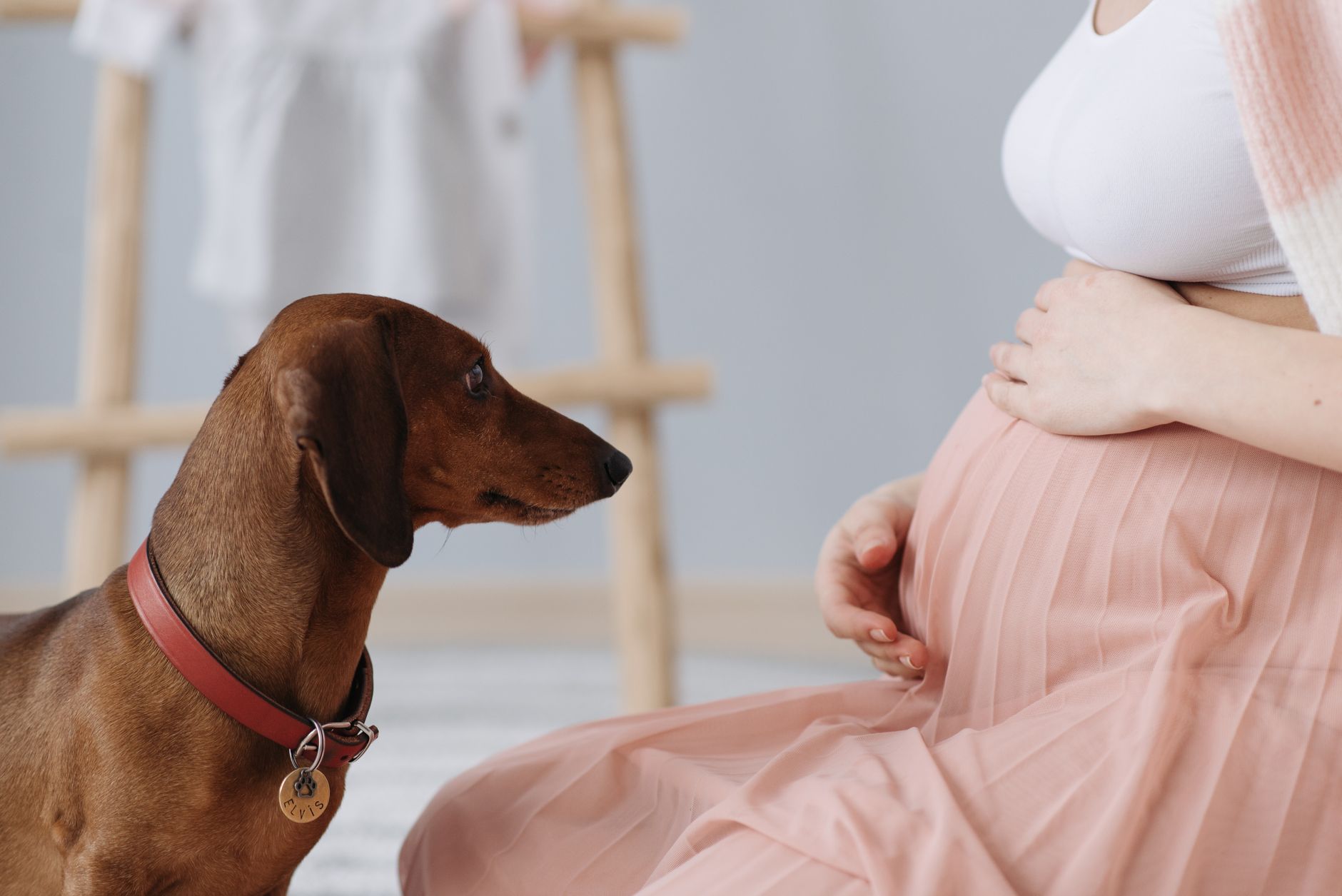
As the pregnancy progresses, the heavy uterus physically pulls the mother's stomach downward, creating a severe, unnatural arch in her lower back. This constant gravitational pull places excruciating pressure directly on the delicate discs resting between her vertebrae. A single, sudden impact from jumping off a low couch can instantly rupture these compressed discs, causing permanent hind-leg paralysis.
🚨 Vet Fact: Intervertebral Disc Disease (IVDD) strikes one in four dachshunds during their lifetime, and the massive, rapid weight gain of pregnancy exponentially multiplies this catastrophic biological risk.
What Is The Horizontal Scoop Lifting Method?
A highly advanced, frequently overlooked safety protocol involves exactly how humans physically interact with the expecting mother. Picking up a pregnant dachshund by hooking hands underneath her front armpits is a highly dangerous, potentially lethal habit. This vertical lifting motion stretches the already heavily weighted spine, actively tearing the supportive ligaments surrounding the spinal cord.
Handlers must exclusively utilize the "horizontal scoop" method to safely transfer the dog off the floor.
- Slide one flat hand firmly underneath her front chest, directly behind the front legs.
- Simultaneously scoop the other hand entirely underneath her heavy, expanding hindquarters.
- Lift the dog while keeping her back completely parallel to the ground, entirely preventing the spine from sagging downward.
Should You Change A Pregnant Dachshund’s Diet Early?
Owners naturally want to pamper the expecting mother by immediately switching her to a calorie-dense puppy formula the week they confirm the pregnancy. However, overfeeding a small breed during the first forty days causes the fetuses to grow dangerously large, creating a highly lethal situation. A dachshund possesses a notoriously narrow pelvic canal, and oversized puppies guarantee a terrifying, highly expensive emergency C-section.
The mother should remain entirely on her standard, high-quality adult maintenance diet for the first two-thirds of the gestation period. Once she hits day 42, her nutritional requirements skyrocket as the puppies enter a phase of massive, rapid exponential growth. Transitioning her slowly to a premium puppy kibble at this exact moment provides the vital calcium required to safely support the developing bones.
🐾 Snoutbit Pro-Tip: During the final two weeks of gestation, the massive uterus severely compresses the mother's stomach, making standard meals physically painful to digest. Transition to feeding five tiny, highly concentrated micro-meals spread evenly throughout the day to prevent intense acid reflux.
What Are The Hidden Dangers Of Summer Pregnancies?
Local environmental extremes act as massive multipliers for physiological stress and dictate exactly how a pregnant dog should be managed. During the brutal, sweltering heat of an Australian outback summer or a highly humid US August, a heavily pregnant dachshund faces a unique thermal threat. Because her belly rests mere inches from the ground, she absorbs massive amounts of radiant heat directly from hot pavement or sun-baked dirt.

A dedicated family living in Queensland nearly lost their expecting miniature dachshund because they allowed her to casually sunbathe on a hot concrete patio. The intense thermal stress rapidly halted reproductive development, causing a terrifying medical scare that required immediate, heavily air-conditioned intervention. Providing continuous access to chilled indoor rooms completely prevents fatal heatstroke and keeps the unborn puppies safely protected from thermal damage.
Can Tick Preventatives Harm Developing Puppies?
Heavy coastal tick seasons frequently expose vulnerable, pregnant dogs to severe vector-borne diseases that aggressively attack the central nervous system. Diseases like Lyme or toxins from paralysis ticks trigger massive inflammatory responses that can instantly induce premature, fatal labor. Managing pregnant breeds like sturdy Staffies or delicate dachshunds requires utilizing completely pregnancy-safe tick defense protocols.
Never apply over-the-counter chemical tick preventatives to a pregnant dog without direct veterinary approval. Many common topical toxins actively cross the fragile placental barrier and cause catastrophic neurological damage to the developing fetal nervous system. Always consult a veterinary professional to locate a heavily tested, pregnancy-safe tick defense protocol well before the brutal summer parasite season explodes.
How To Prepare The Perfect Dachshund Whelping Box?
Setting up a secure, highly controlled environment guarantees the mother feels perfectly safe when the active labor contractions finally begin. However, a standard whelping box designed for a robust French Bulldog or a Blue Heeler will completely fail a laboring dachshund. Because dachshunds have incredibly short legs, the safety mechanisms inside the box must be heavily customized to their specific clearance height.
A frantic owner recently set up a beautiful whelping area but failed to adjust the internal safety rails for their dog's tiny legs. The exhausted mother rolled over during a long labor, accidentally trapping a newborn pup beneath a rail that was simply installed two inches too high. Customizing the exact height of the "pig rails" to the mother's specific physical dimensions actively prevents these devastating, silent tragedies.
- Construct or purchase a heavy-duty box with raised rails running along the inside perimeter.
- Ensure the rails are mounted low enough to block the mother's back, but high enough for a tiny puppy to slide underneath safely.
- Line the absolute bottom with thick, highly absorbent, washable whelping pads rather than loose towels that puppies can easily become tangled beneath.
🚨 Vet Fact: Canine labor is biologically triggered by a massive surge of cortisol released entirely by the stressed puppies when they run out of uterine space. A dachshund carrying a single, lone puppy frequently requires a planned C-section because one fetus cannot produce enough hormone to safely start contractions.
What Is The Temperature Drop Secret?
Guessing the delivery day based strictly on heavy panting or restless nesting behaviors frequently leads to massive human sleep deprivation. The absolute most scientifically accurate method to predict impending canine labor is meticulously tracking the mother's core body temperature. A dog's normal resting temperature hovers consistently around 101 to 102.5 degrees Fahrenheit (38.3 to 39.1 degrees Celsius).

Begin taking the dog's temperature using a digital rectal thermometer two to three times a day starting exactly on day 58 of the pregnancy. Record every single reading on a written chart to establish the dog's unique, baseline biological temperature.
Exactly twelve to twenty-four hours before the very first abdominal contraction begins, the dog's core temperature will plummet drastically. The reading will drop well below 99 degrees Fahrenheit (37.2 degrees Celsius) and remain completely lowered. This massive temperature crash is the definitive, biological alarm bell that active labor is officially starting within the next day.
What To Do Next
Navigating a high-risk dachshund pregnancy requires abandoning all guesswork and embracing precise, highly protective physical management. By understanding the strict dietary timeline and aggressively protecting the fragile spinal column, households ensure a completely safe, successful delivery environment.
Here are two simple, immediate steps to take today to perfectly prepare for the impending litter:
- Deploy The Ramp System: Walk through the entire house this afternoon and completely block off all staircases using heavy-duty baby gates. Set up sturdy, non-slip canine ramps next to the primary couch and bed, forcing the expecting mother to stop jumping immediately.
- Schedule The Whelping X-Ray: Call the local veterinary clinic tonight and schedule a radiograph appointment exactly for day 55 of the dog's pregnancy. Securing an exact puppy count completely eliminates the terrifying risk of an unborn puppy remaining trapped inside the uterus after the physical labor finishes.
Disclaimer: The content on Snoutbit.com is for informational and educational purposes only and is not intended to replace professional veterinary advice, diagnosis, or treatment. Always consult with your veterinarian before making significant changes to your dog’s diet, exercise routine, or health regimen.